
Sapphire Contains Multitudes
September’s birthstone, sapphire, has been convincing people it's the color blue for centuries. It's only sort of telling the truth.
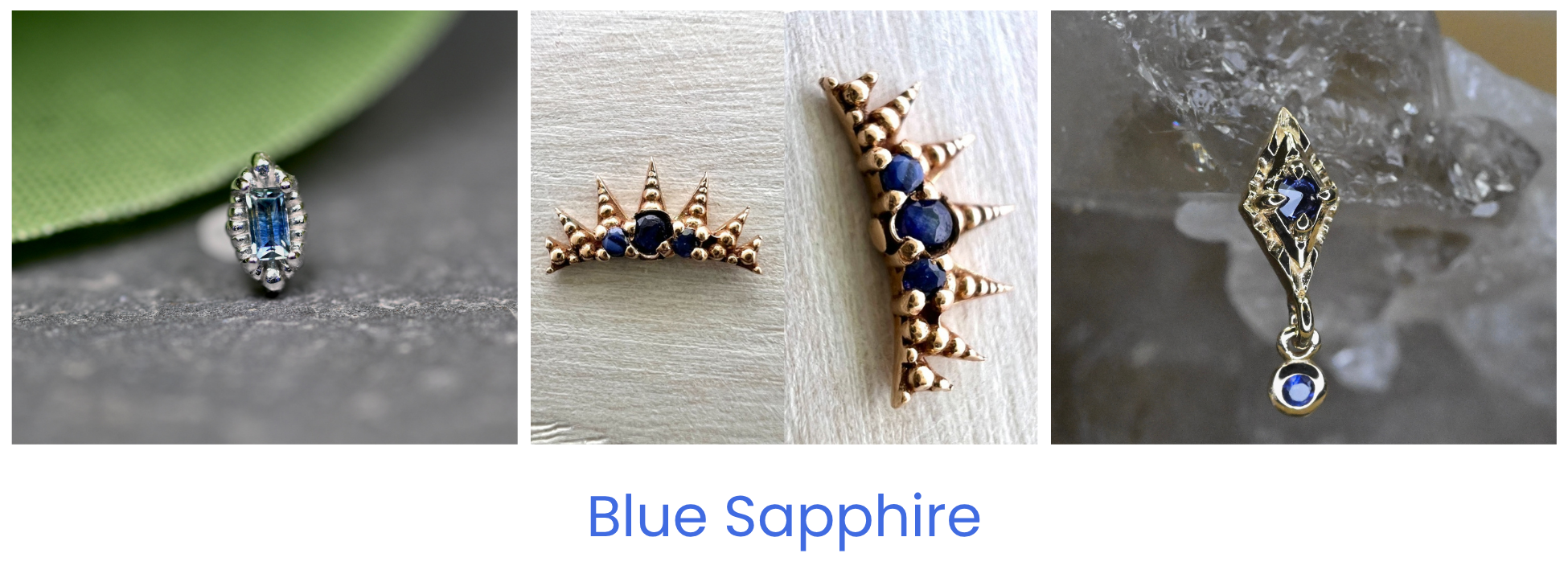
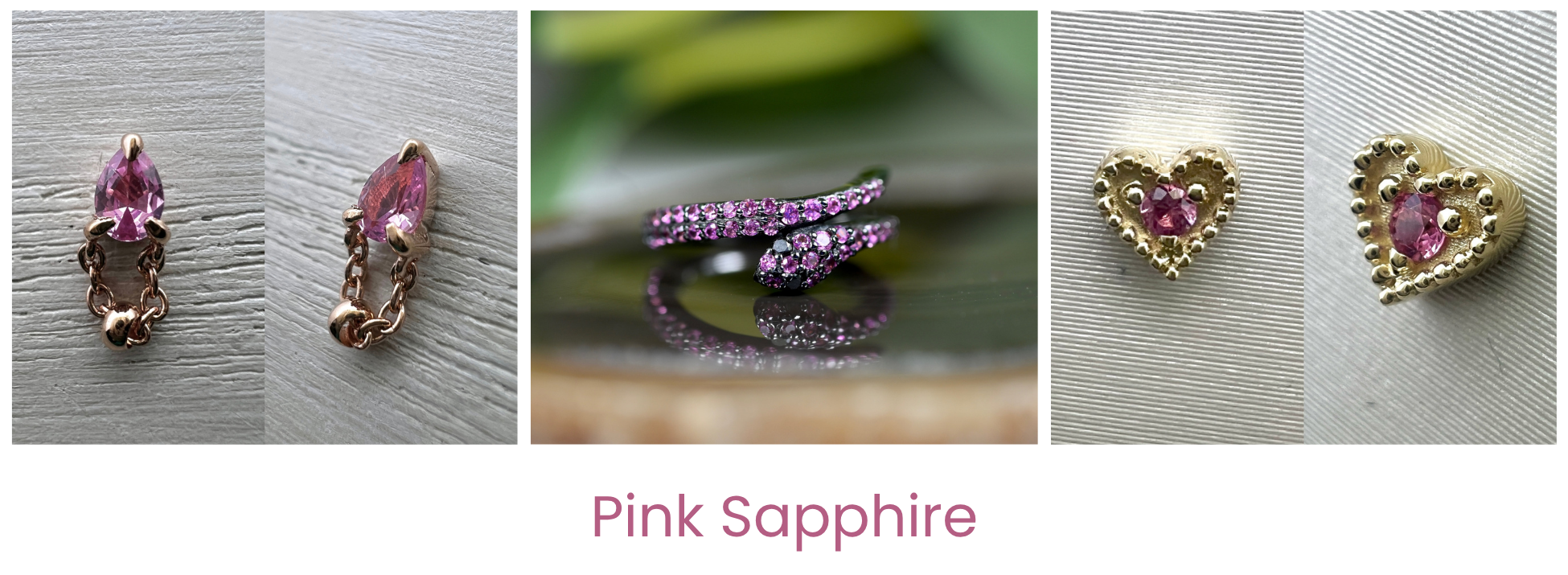
Say "sapphire" and most people picture the same thing: a deep, velvety blue. But sapphire actually comes in nearly every color except red. Pink, yellow, green, purple, even a color-changing variety that shifts under different light. The red version of this exact same mineral gets its own name entirely: ruby. Blue just happens to be the one that stuck in everyone's imagination.
What makes sapphire sapphire?
Sapphire is a variety of the mineral corundum, the same family as ruby. What separates the two, and what determines sapphire's color, comes down to trace elements. Iron and titanium together produce that classic blue. Different trace elements shift things toward pink, yellow, or green. The most prized blue sapphires have a rich, velvety, medium-to-deep tone, not too dark and not washed out, often described as "cornflower blue" when a stone hits it just right.
On the Mohs scale, sapphire sits at a 9, second only to diamond. That makes it one of the toughest gemstones available, resistant to scratching and built to hold up to daily wear without babying. It's about as close to worry-free as a stone gets.
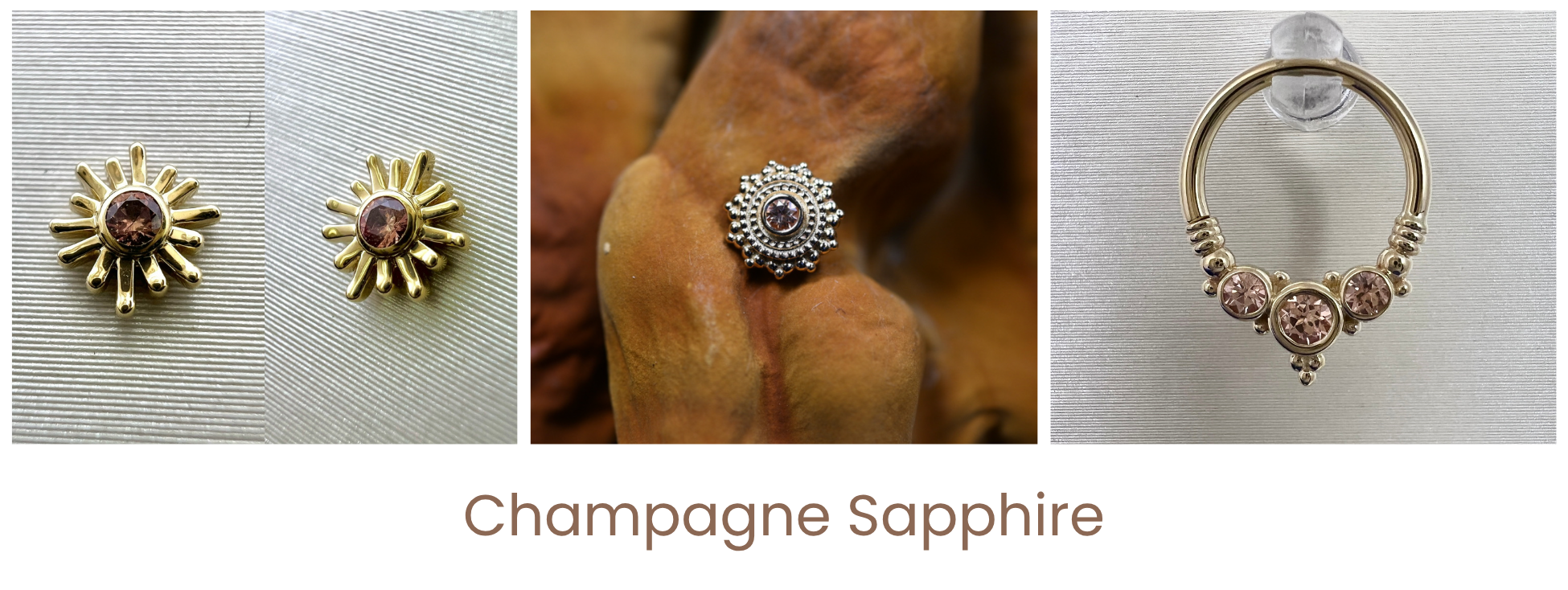
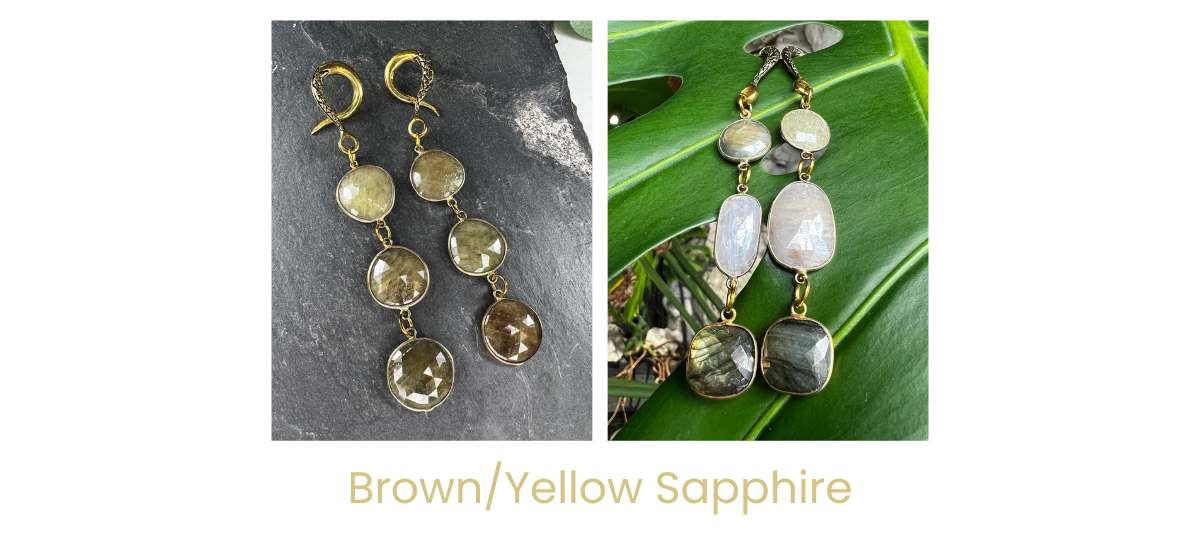
Not all sapphire costs the same, and color is the biggest reason why. Blue is the most in-demand color, so it commands the highest prices, with saturated pinks and the rare pink-orange padparadscha sitting right up there alongside it. Yellows, greens, browns, and champagnes are much more approachable, mostly because fewer people ask for them, not because they are lesser stones.
A stone with a reputation to protect.
Sapphire has spent a long time being associated with things like wisdom, loyalty, and protection, and it's not hard to see why people reached for those words. Ancient royalty believed sapphire protected its wearer from envy and harm. Clergy throughout history wore sapphire as a symbol of heaven and divine favor. Its most famous modern moment might be Princess Diana's sapphire engagement ring, now worn by Kate Middleton, one of the most recognized pieces of jewelry in the world and a fitting reminder that sapphire has always run in royal circles. Even Abraham Lincoln reportedly gave a sapphire ring to his wife, Mary Todd Lincoln. Whether or not the stone actually protects anyone from anything, it has clearly done a very good job protecting its own reputation.
A stone that occasionally shows off.
Some sapphires contain tiny needle-like inclusions that, when cut just right, create a star effect right on the surface of the stone. These "star sapphires" catch the light in a way that looks almost too deliberate to be natural, which is exactly the point. Specialty gems like this are available by special order.
A sapphire that does not look like a sapphire.
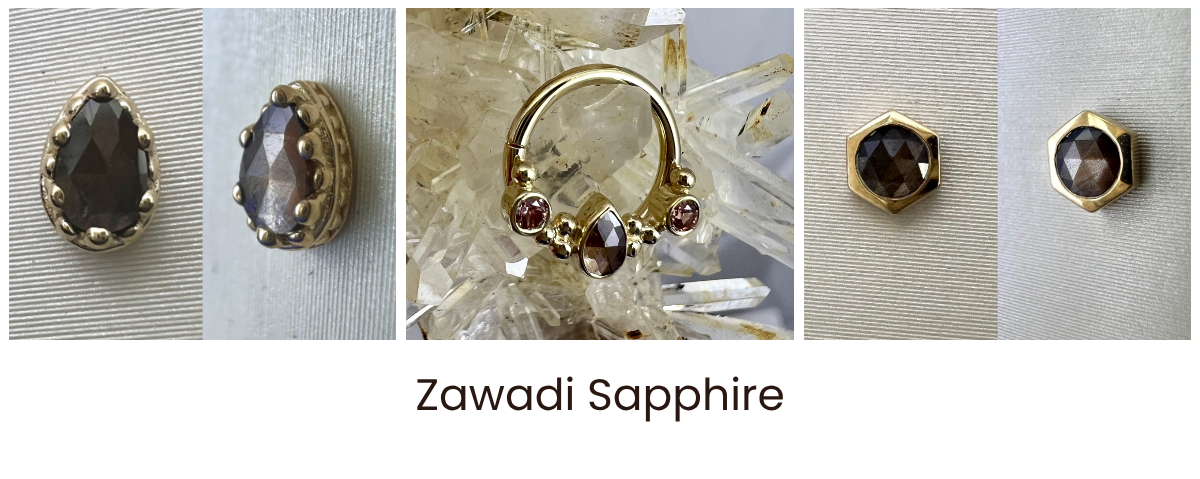
Zawadi sapphire is the odd one out of the group. It comes from an area in Kenya, near Mwingi in Kitui County, and it only reached the gem market around 2009. The trade name arrived later, coined in 2014, and "zawadi" is Swahili for gift. Instead of the transparency people expect from sapphire, Zawadi is opaque, with a dark chocolate body color and a bronze-gold sheen that rolls across the surface as it moves. That shimmer comes from hematite and rutile inclusions lined up with the crystal's own growth structure, and the stones are untreated. Same mechanism as a star sapphire, just distributed differently.
Cutting it is its own problem. Orientation decides whether the sheen shows up at all, and because the material is opaque, the polish has to be excellent or the effect falls flat. The lapidary work took well over a year to figure out. One source, limited supply, and cutting that has to be exactly right. There is not much of it, and there is nothing else quite like it.
Why sapphire works in body jewelry.
That Mohs rating we talked about is the reason sapphire is an excellent choice for jewelry that gets worn every day. It resists scratches and does not need the careful handling softer stones do. The color range means you are not boxed into one look either. Blue reads timeless against white or yellow gold, pink and yellow bring warmth and personality. Pick the color you most want to look at every day. The stone will hold up regardless.
Ready to make sapphire part of your collection?
Whether you're celebrating a September birthday or just partial to a stone that's been royalty-approved for centuries, we'd love to help you find the right piece. Book your appointment here and let's see what speaks to you.
