
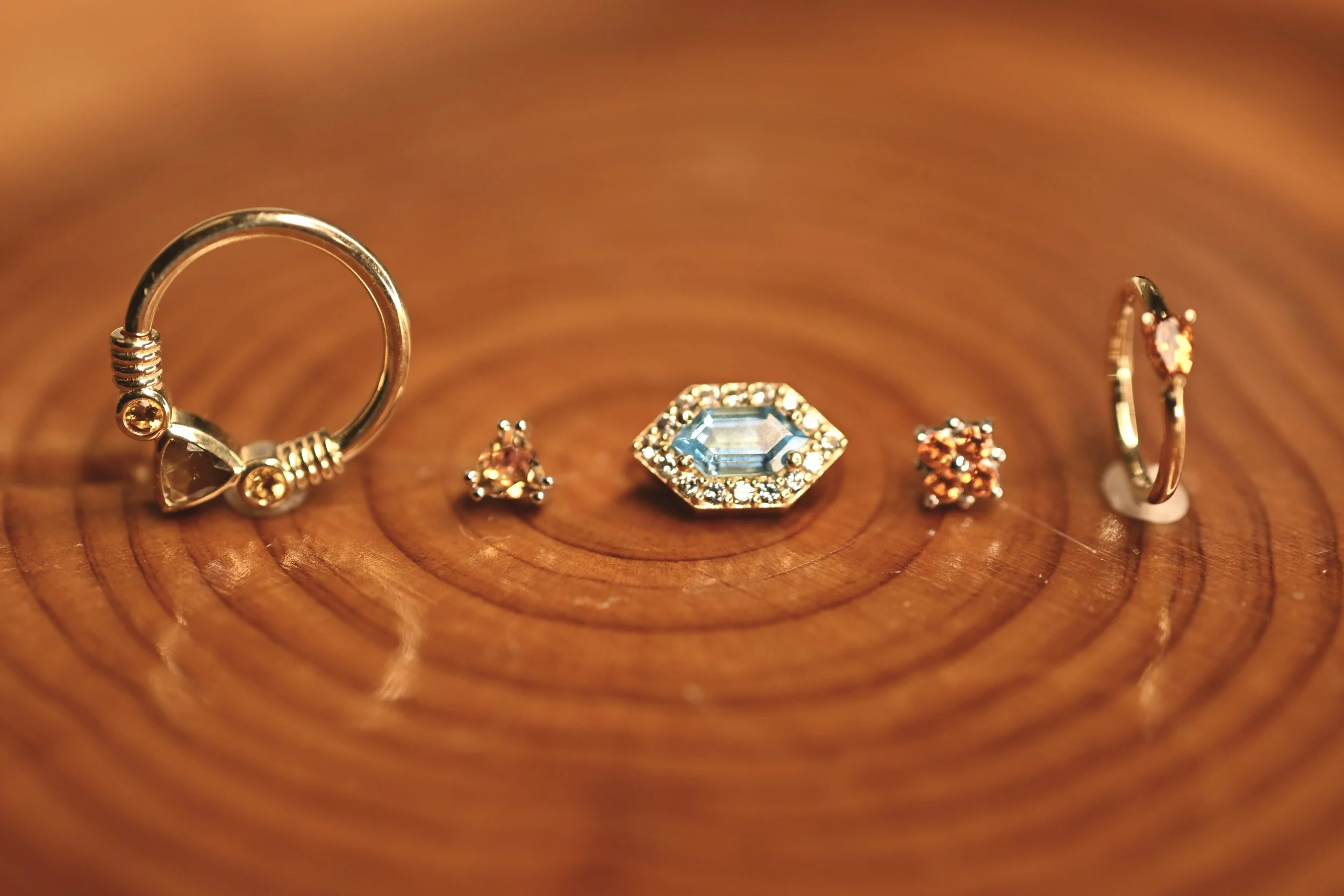
Where do topaz and citrine get their stories?
Topaz may take its name from the Sanskrit word for "fire." Ancient Greeks believed it gave them strength, and in Renaissance Europe it was thought to break spells and calm anger.
Citrine's name is believed to come from citron, the French word for lemon. Golden topaz and citrine can look almost identical, so for centuries people mixed them up. Citrine was even thought to share topaz's powers, including calming the wearer.
Where do they sit on the Mohs scale?
The Mohs scale runs from 1 (talc) to 10 (diamond). Topaz ranks 8 and citrine ranks 7, so both resist everyday scratches well. They're actually harder than the titanium and gold they're set in.
What makes them different from other gemstones?
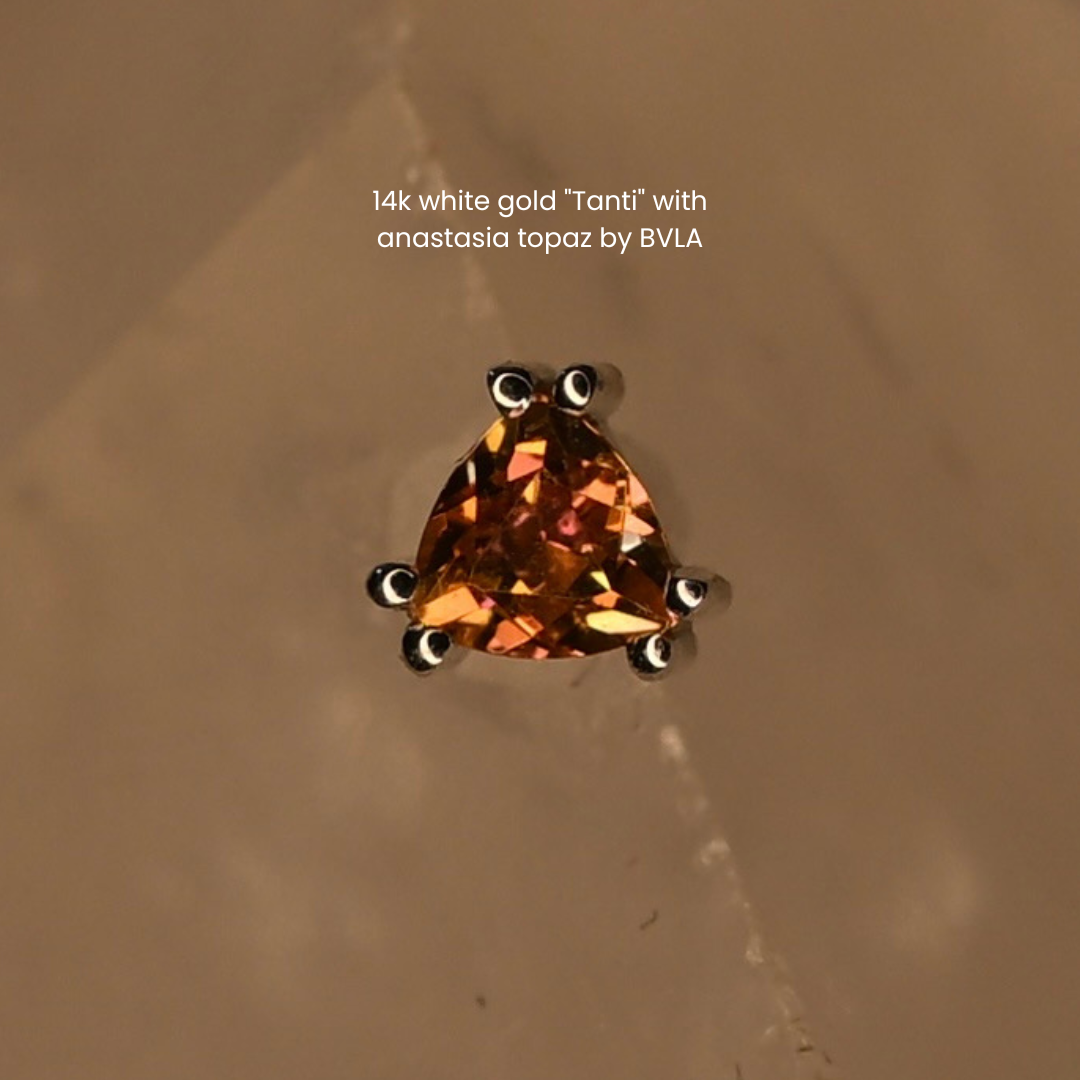
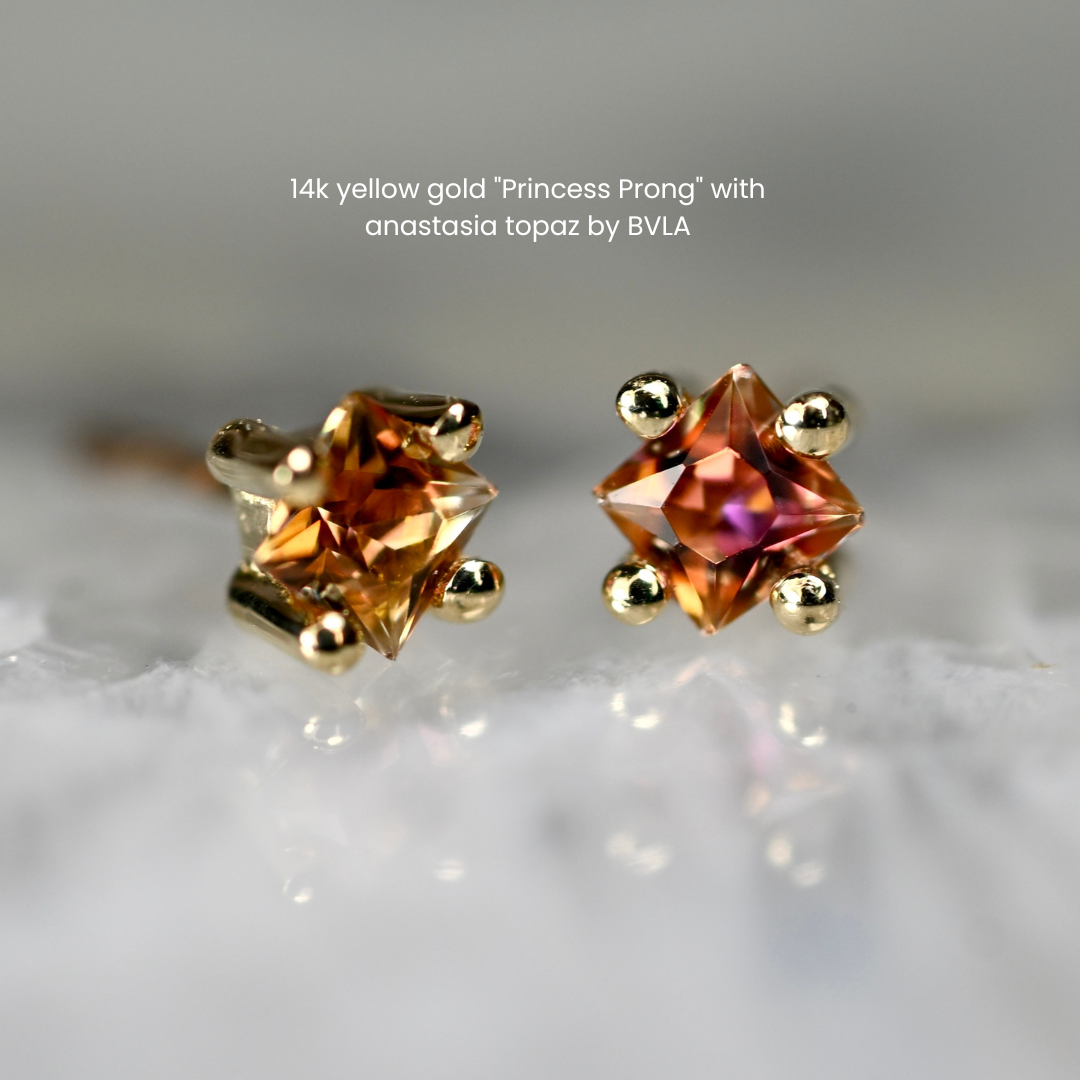
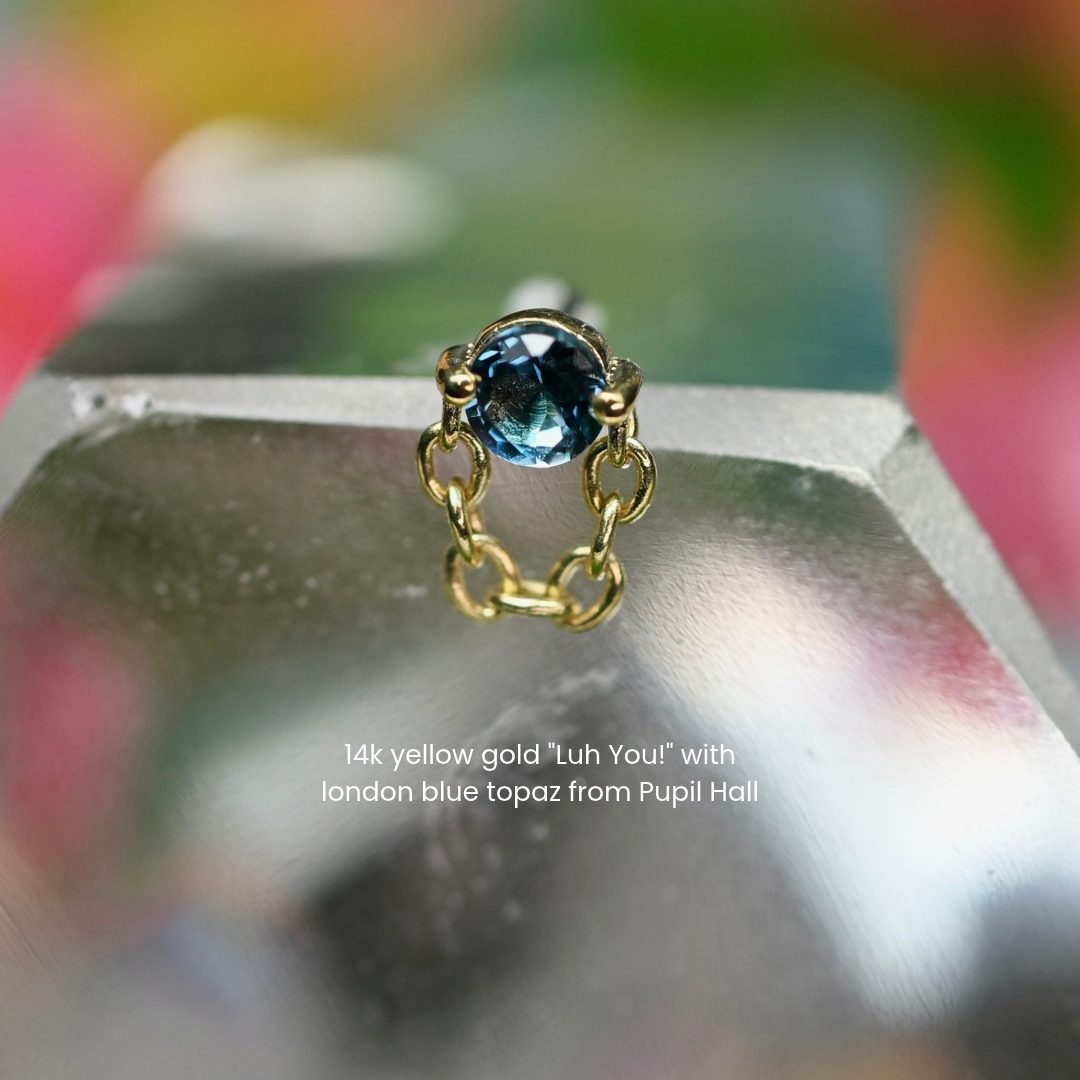
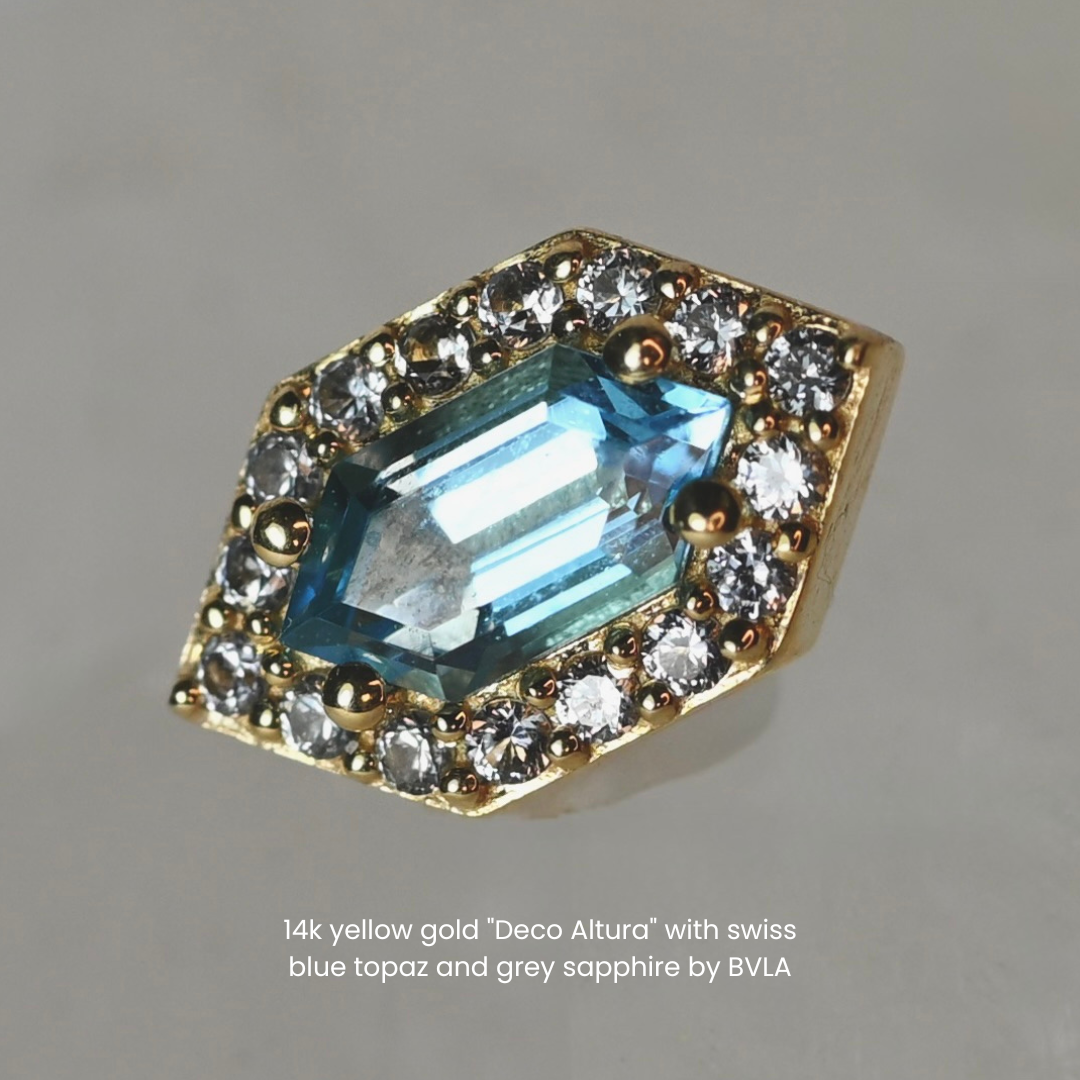
Topaz comes in a rainbow of colors, from honey yellow and fiery orange to pink, purple, and icy blue. It takes such a high polish that it feels slightly slippery to the touch. Most blue topaz starts out colorless and is treated to turn it blue, and the color is permanent. In our cases, we mostly focus on these three:
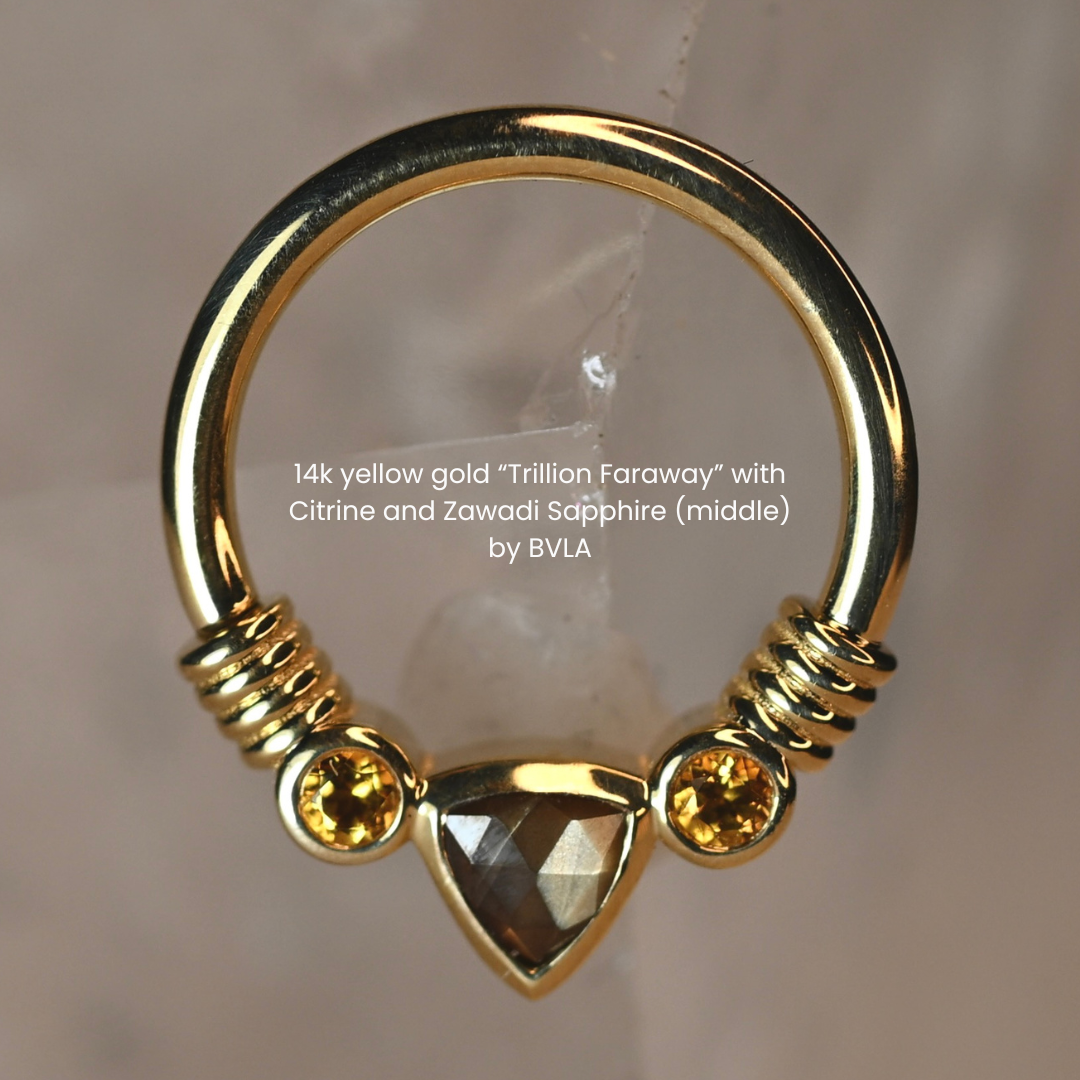
Anastasia topaz: a warm blend of golden orange, yellow, and pink, like a sunset. Its color comes from heat treatment and irradiation.
London Blue: a deep, moody blue with a hint of steel
Swiss Blue: a bright, vivid blue, a few shades lighter than London Blue
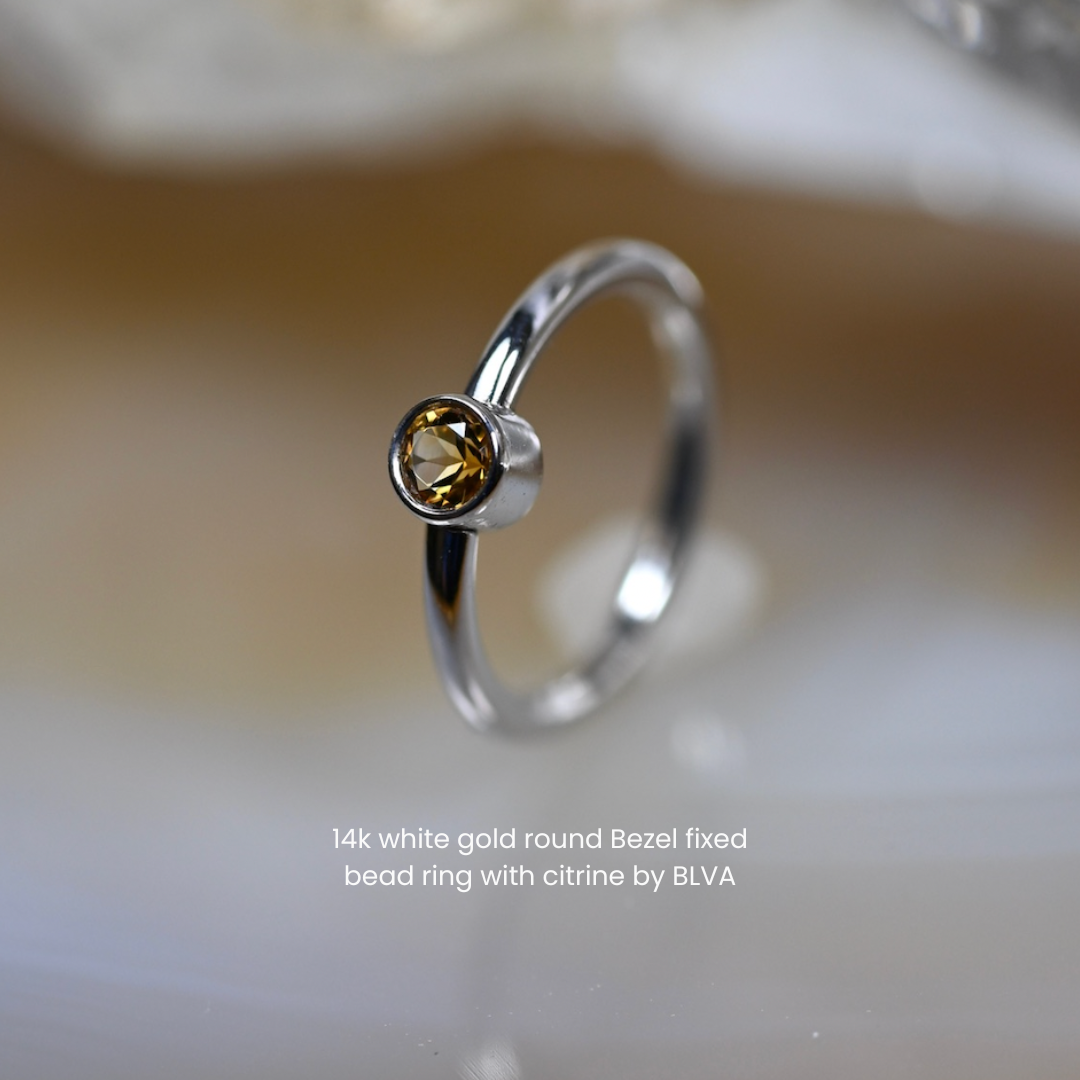
Citrine is a type of quartz, the same family as amethyst. Natural citrine is rare, and most citrine began as amethyst that was gently heated until its purple turned gold. It's one of the most affordable yellow gems, even in larger sizes.
Are your topaz and citrine genuine?
Yes. Every topaz and citrine in our cases is genuine, formed naturally in the earth. Like nearly all blue topaz and most citrine sold today, they may be treated to bring out their color. That's standard across the industry, and we'll always tell you about any treatment when you're picking out a stone.
What metals are they set in?
Both titanium and gold. Our selection changes often, so stop in to see what's in the cases right now.
Are topaz and citrine good choices for body jewelry?
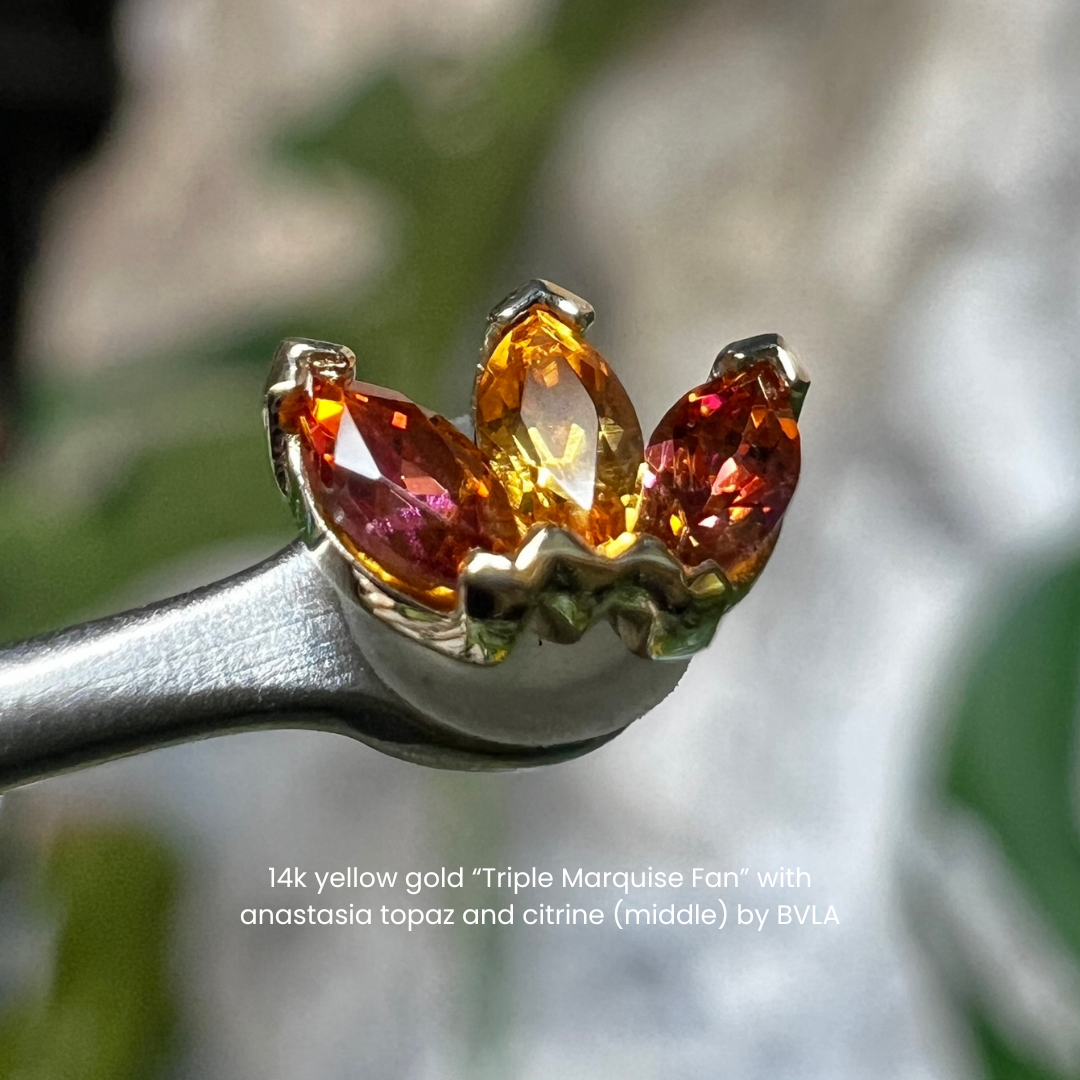
Yes. Both are hard enough for everyday wear, and both can be autoclaved, so they go into new piercings fully sterile.
A little care keeps them sparkling:
Clean with warm, soapy water.
Skip harsh cleaners and chemicals.
Topaz can chip if it takes a hard hit, so change jewelry over a towel, not bare tile.
Would you like to make topaz or citrine part of your collection?
November birthday or not, if a cool blue or a little winter sunshine sounds good, book an appointment and see our topaz and citrine in person.