
August's Birthstone: Getting to Know Peridot
Most gemstones borrow their color, but not peridot.
Most gemstones owe their color to trace impurities: tiny amounts of chromium, iron, or copper that sneak into the mineral's structure and shift the hue. Peridot is different. Its green comes from the stone's own chemical makeup, not from outside influence. That means every peridot, regardless of where it was found or how it was formed, is green. There's no other version of it. And within that green, there's more range than you might expect.
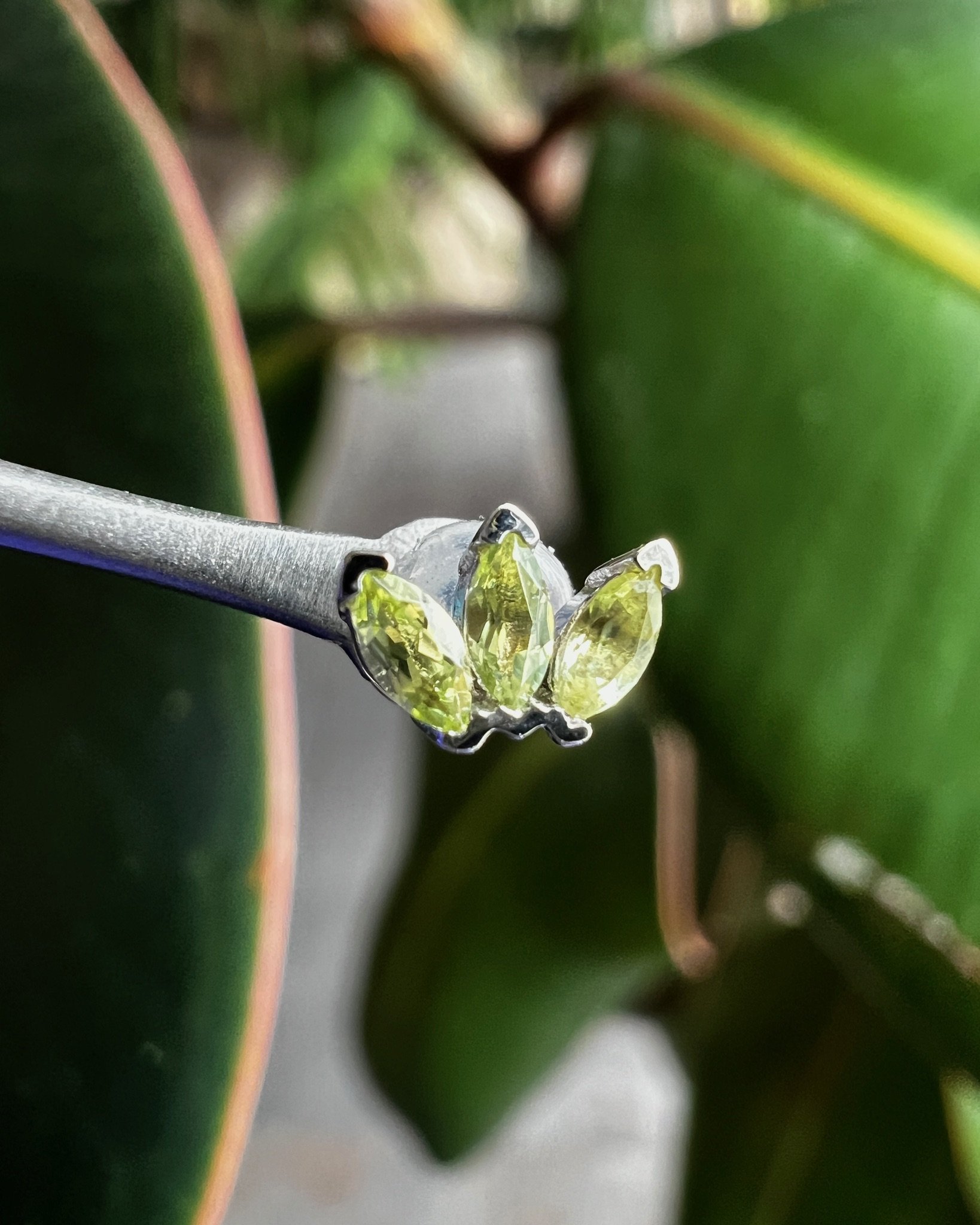
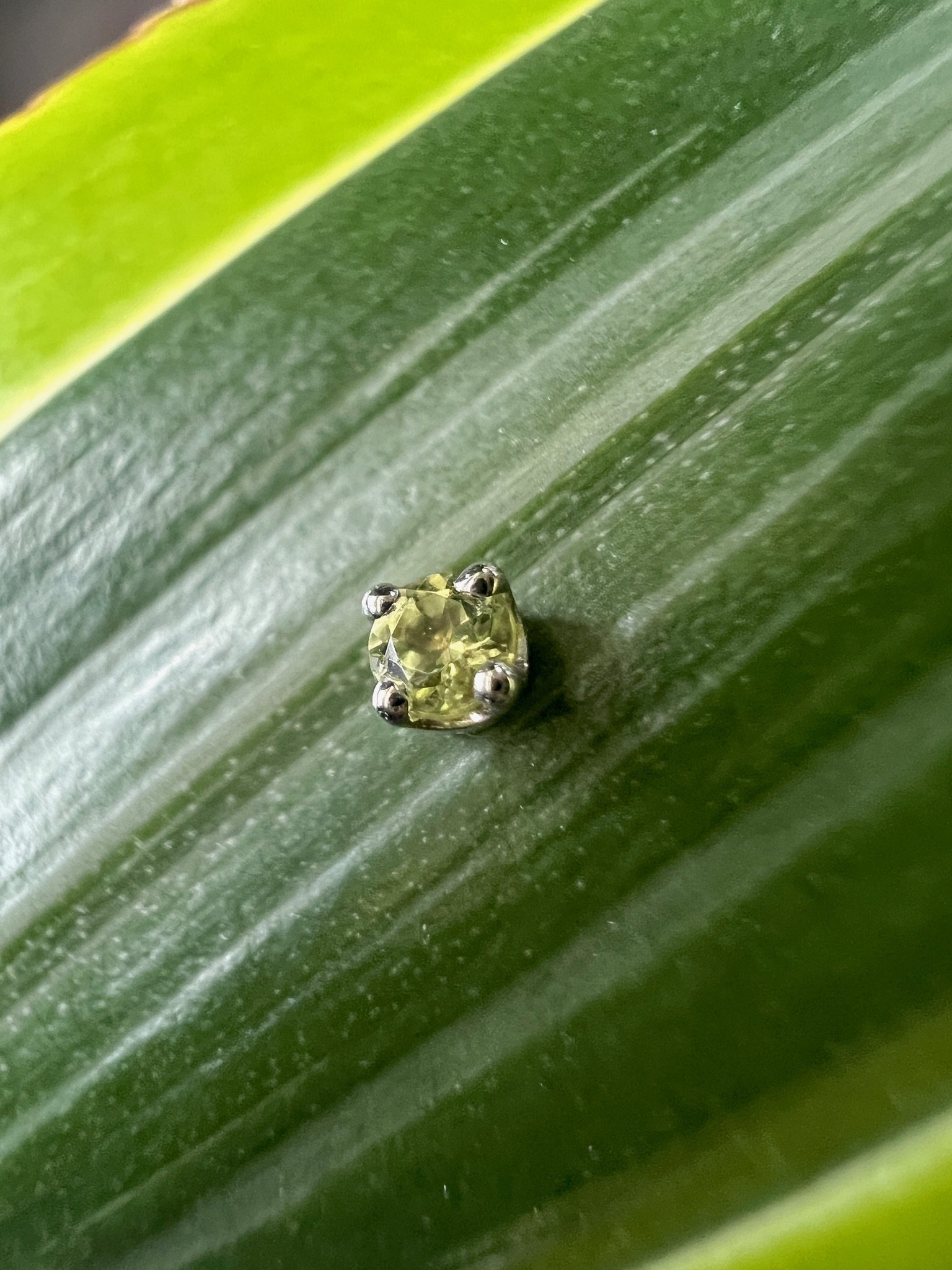
What makes peridot peridot?
Peridot is the gem-quality form of the mineral olivine. The color runs from a bright, almost electric lime to a deeper, more saturated olive, and where a stone falls on that spectrum depends on its iron content. Higher iron pushes it toward yellow-green; lower iron reads richer and more intense. The most prized stones have a vivid, pure green with minimal yellow, though the lighter, livelier shades have their own appeal.
On the Mohs scale, peridot sits at a 6.5 to 7. That's solid for jewelry wear, though it's worth treating it with a little care: avoid harsh chemicals, skip the ultrasonic cleaner, and clean it with warm water and a soft cloth. It's not fragile, but it rewards mindfulness.
Unlike ruby or emerald, peridot is rarely treated. The color you see is the color the stone grew into, which makes it a refreshingly straightforward choice in a market full of enhancements and disclosures.
Where it comes from.
This is where peridot gets particularly fascinating. Most gemstones form in the earth's crust. Peridot forms deeper, in the mantle (the layer beneath the crust), and reaches the surface through volcanic activity. Some of the finest peridot in the world comes from a single island in the Red Sea, Zabargad, which has been mined for over 3,500 years. It has also been found in meteorites, which is either a great cocktail party fact or a very compelling reason to consider it for your next piece of jewelry, depending on who you ask.
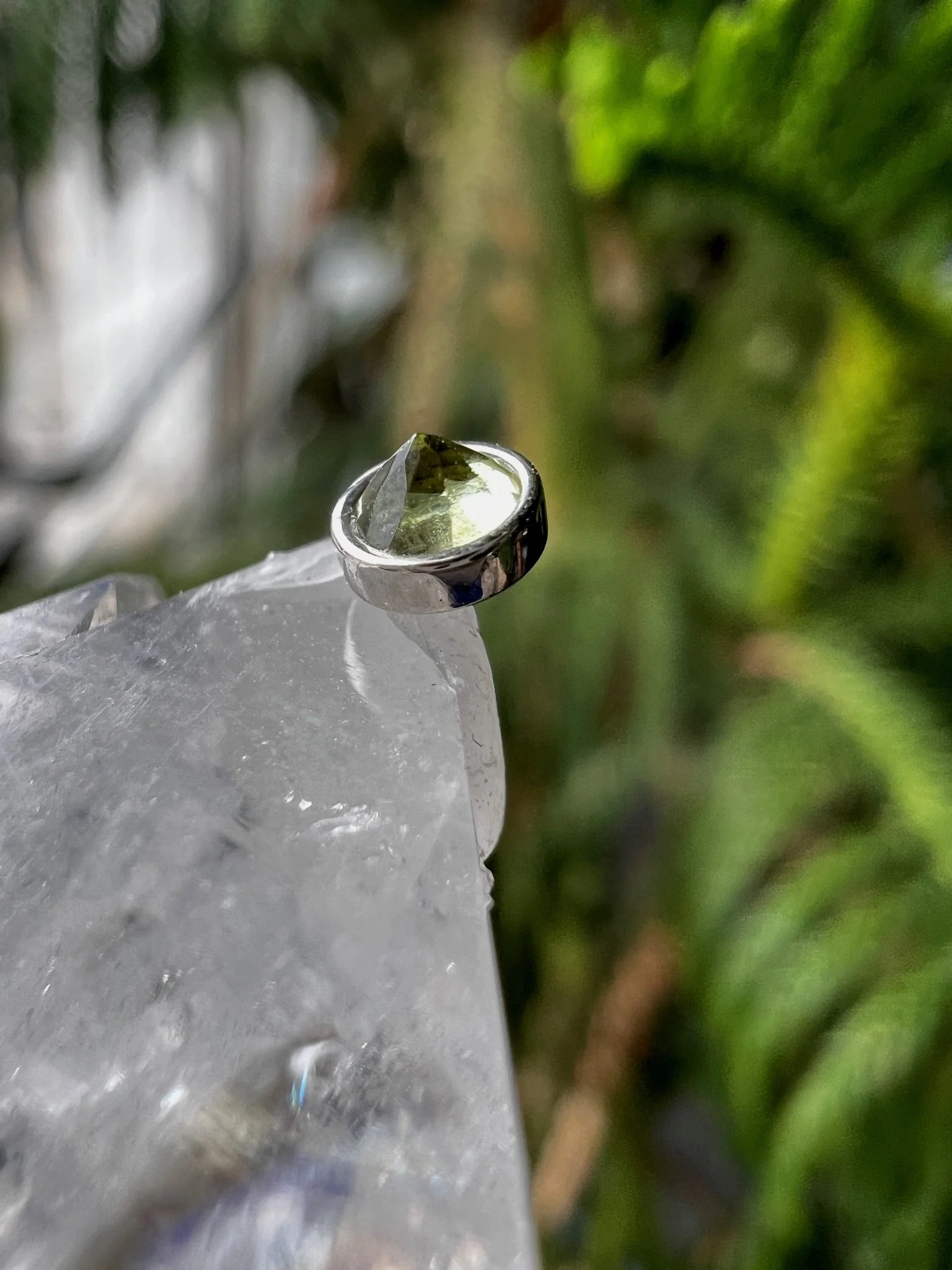
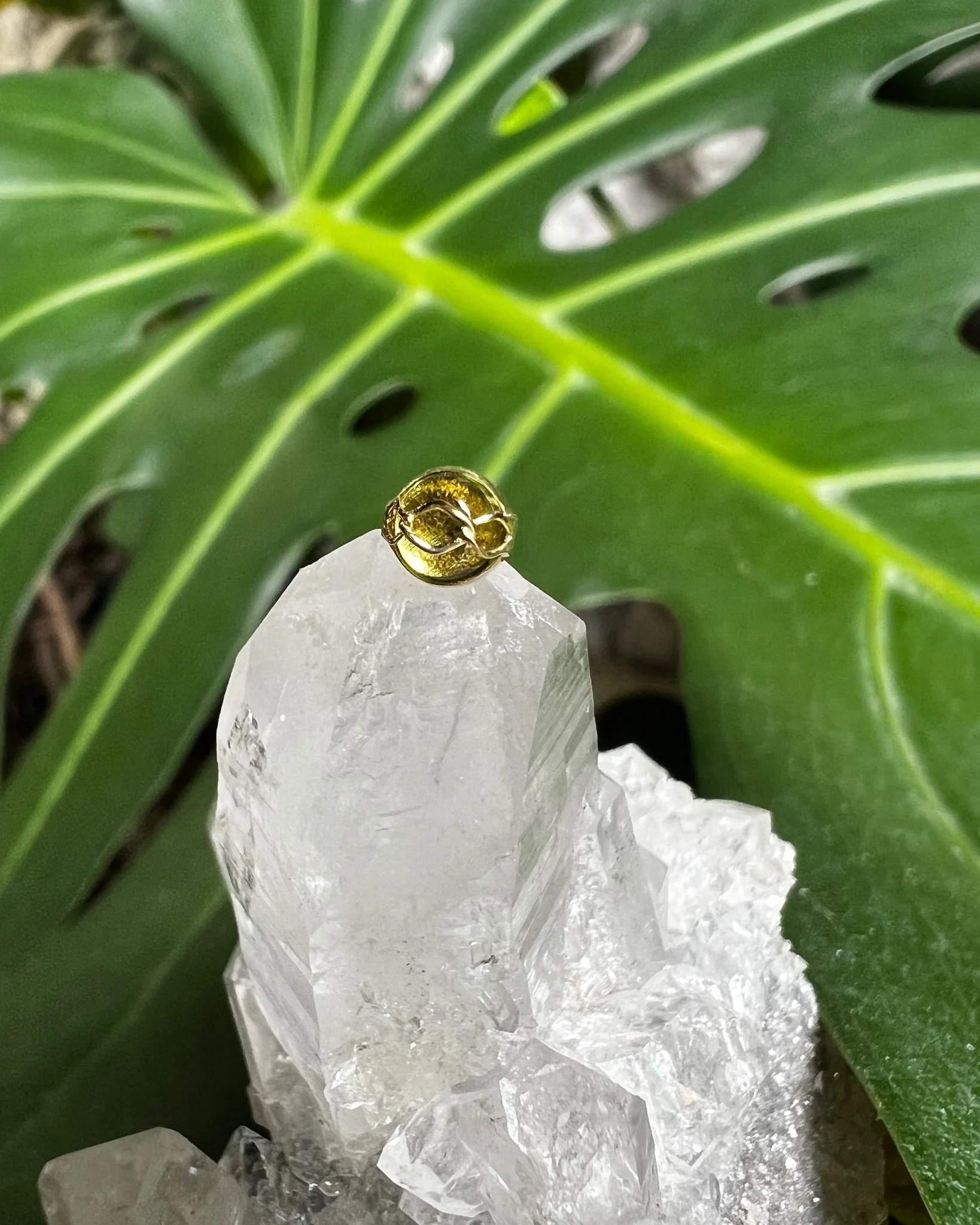
Why peridot works in body jewelry.
Peridot's yellow-green reads beautifully against gold: warm tones complement each other in a way that feels intentional rather than accidental. It's a color that stands out without competing, which makes it a strong choice for a curated collection where you want each piece to hold its own.
If you're building something layered, peridot adds a note that most stones don't. It's not trying to be emerald. It's not trying to be anything other than what it is. That confidence is exactly what makes it interesting.
Ready to add some green to your collection?
If you're celebrating an August birthday or just drawn to a stone with a slightly extraterrestrial backstory, we'd love to help you find the right piece. Book your appointment here and let's see what speaks to you.
