
October's Birthstone: Opal, the Gem That Holds Every Color
Opal is October's birthstone, and no two are exactly alike. Each one flashes its own mix of color, so an opal in your jewelry is truly one of a kind.
Where does opal's story begin?
The Romans called it opalus, meaning "precious stone," and saw it as a symbol of love and hope. The scholar Pliny wrote that a single opal could hold the colors of ruby, emerald, topaz, sapphire, and amethyst all at once, so the Romans considered it the most precious gem of all. Arabic legends said opals fell from the sky in flashes of lightning, and in Europe opal came to stand for hope, purity, and truth. Today most of the world's opal comes from Australia.
Heard that opal is bad luck unless you were born in October? That idea comes from a 19th-century novel, not from any real lore.
Where does opal sit on the Mohs scale?
Natural opal ranks 5 to 6.5 on the Mohs scale, which runs from 1 (talc) to 10 (diamond). That puts it on the softer side for a gemstone, and it can scratch or chip more easily than many stones in our cases. It's still a lovely gem to wear.
What makes opal different from other gemstones?
Most gems get their color from what they're made of. Opal gets its color from how it's built. It's made of tiny silica spheres stacked like Ping-Pong balls in a box. When light passes between them, it bends and splits into flashes of color. Smaller spheres create violet and blue, and larger spheres create orange and red, the rarest and most prized.
Opal also holds water, up to 20% of its structure. Like the rest of us, it doesn't love a hot car. Too much heat, dryness, or direct sunlight can dry it out and cause fine cracks called crazing.
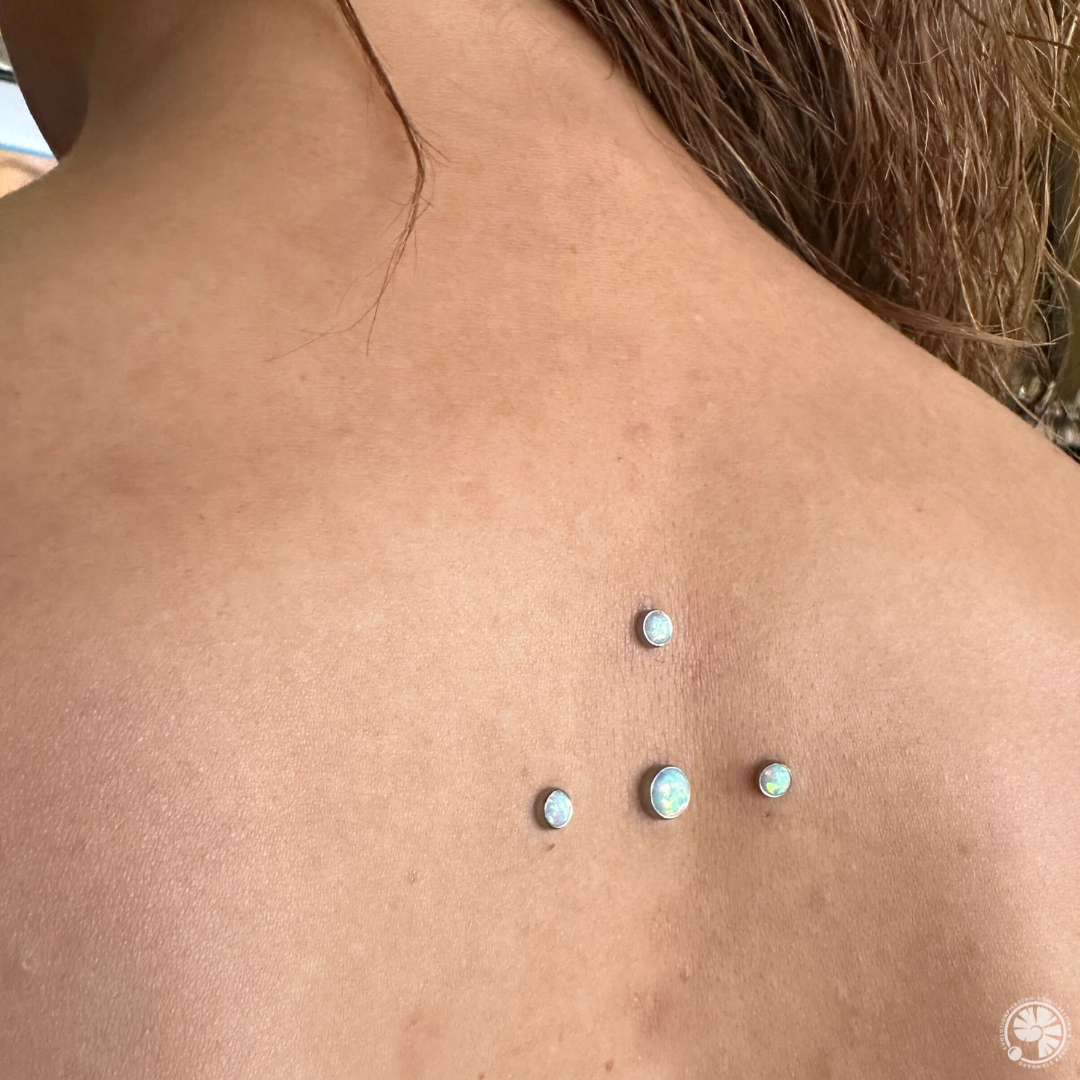
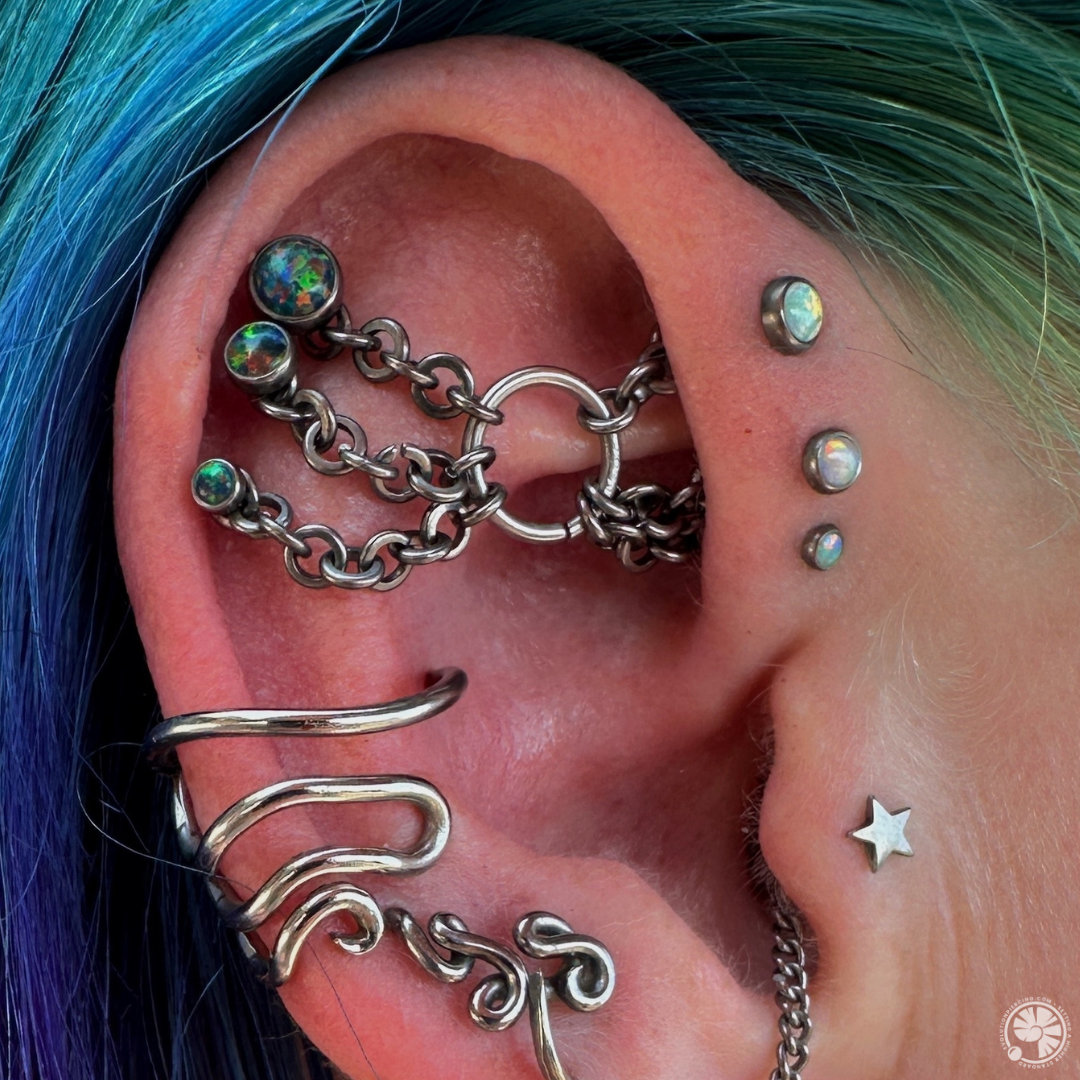
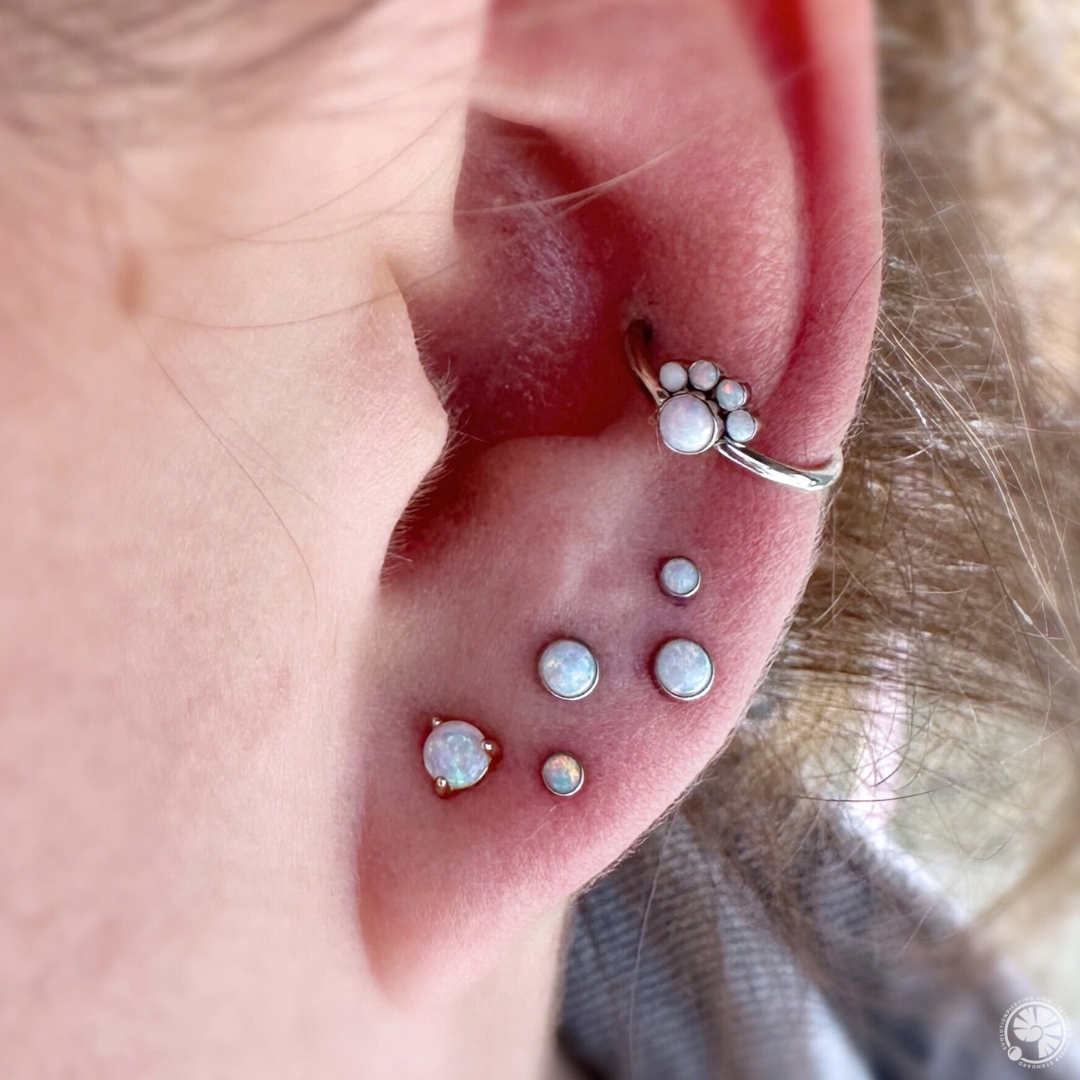
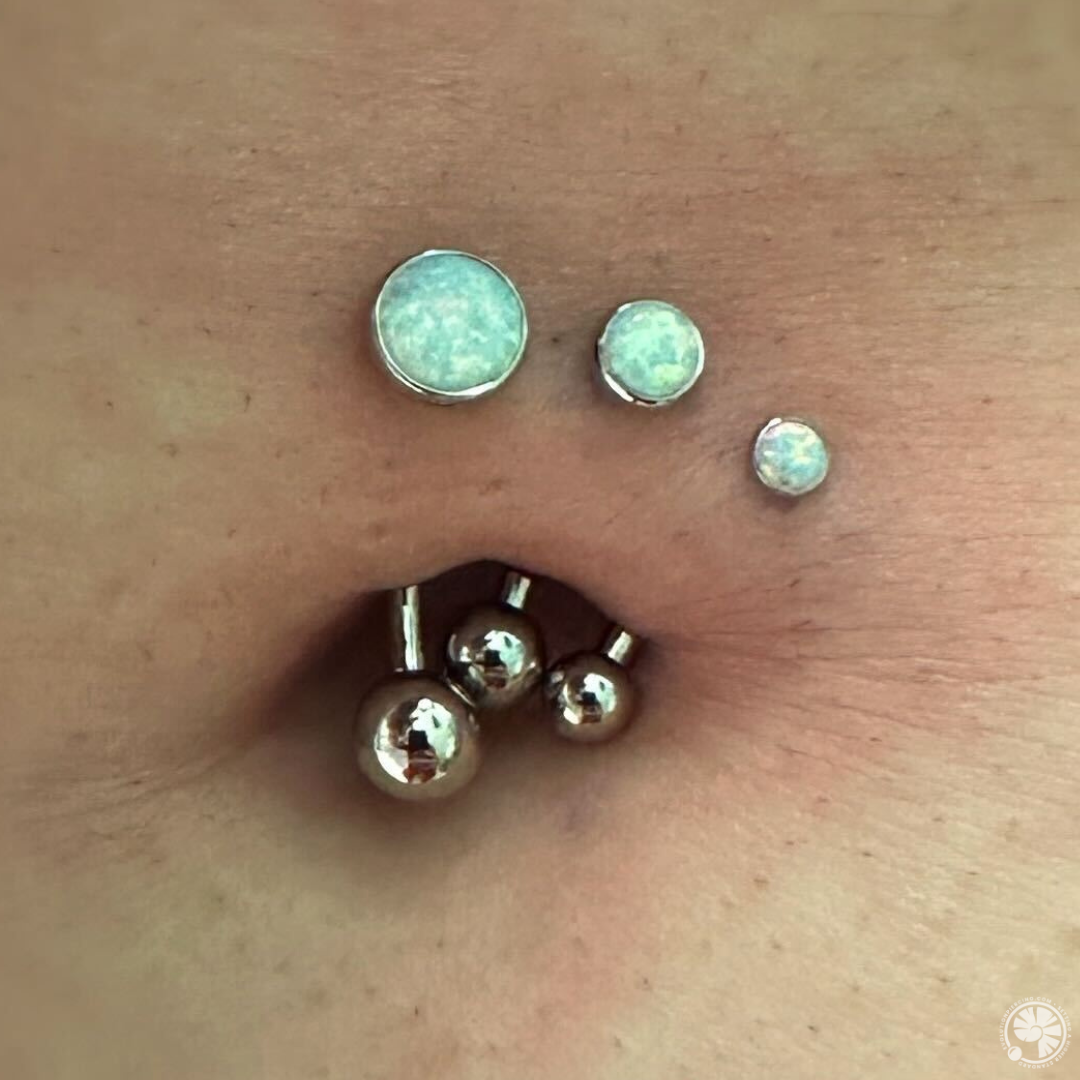
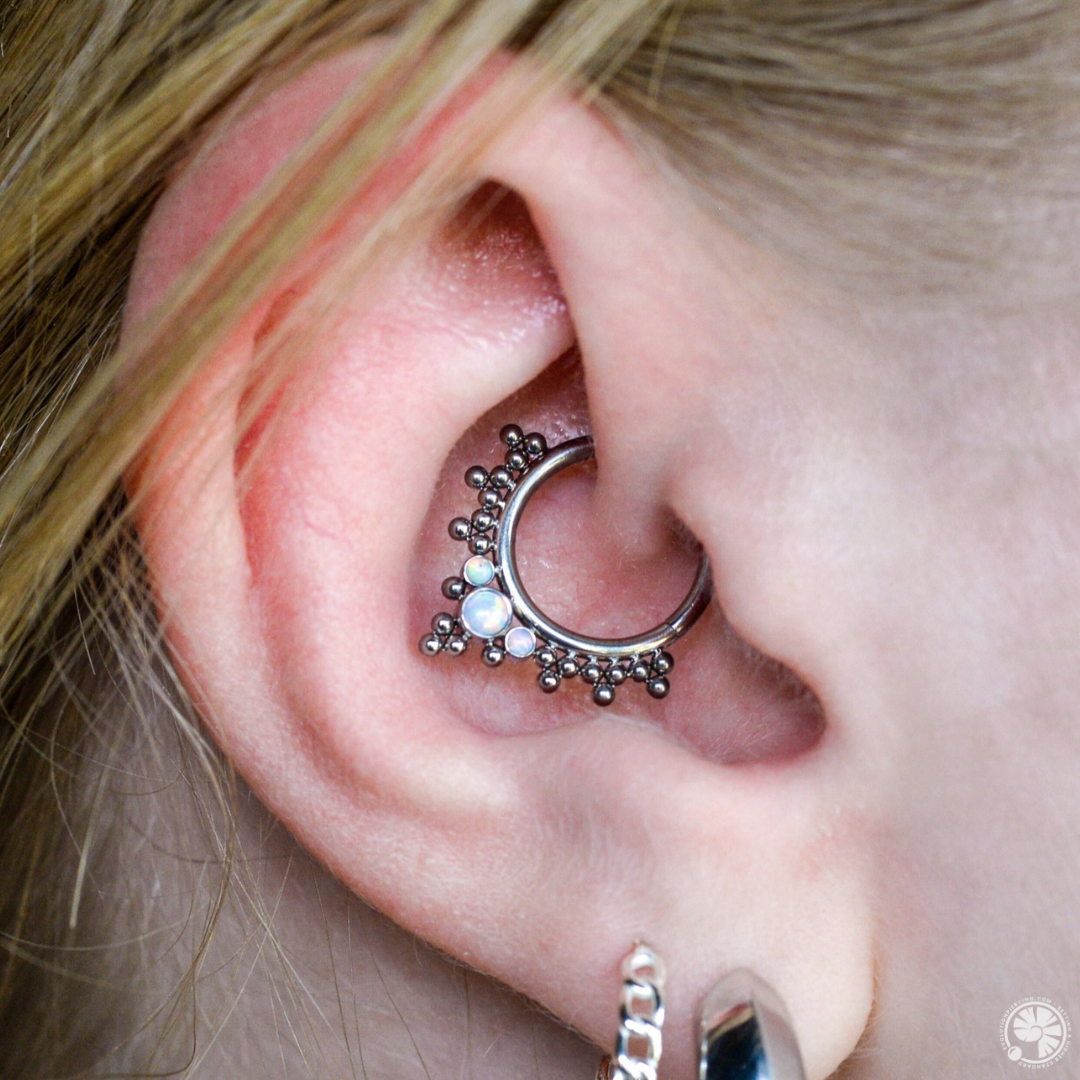
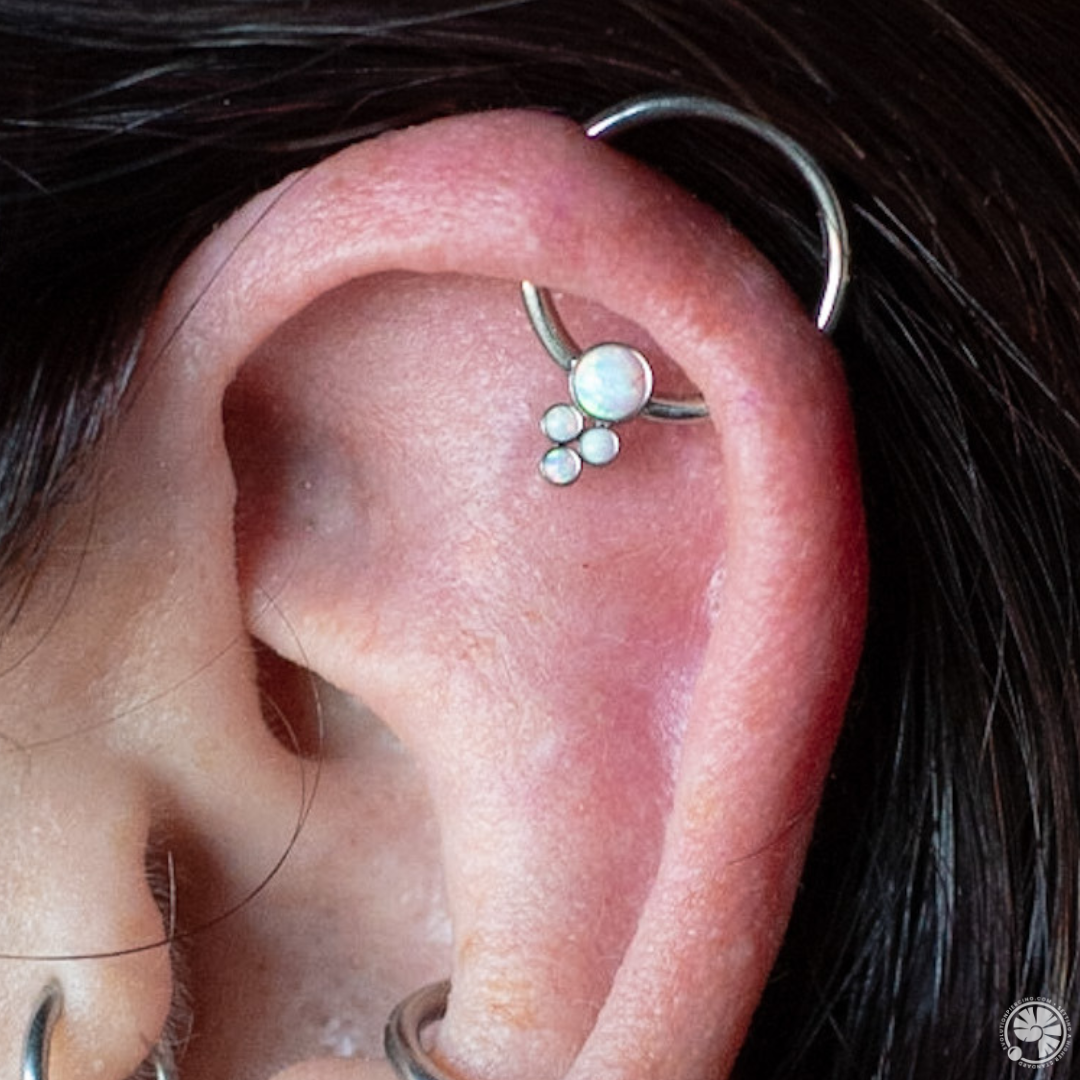
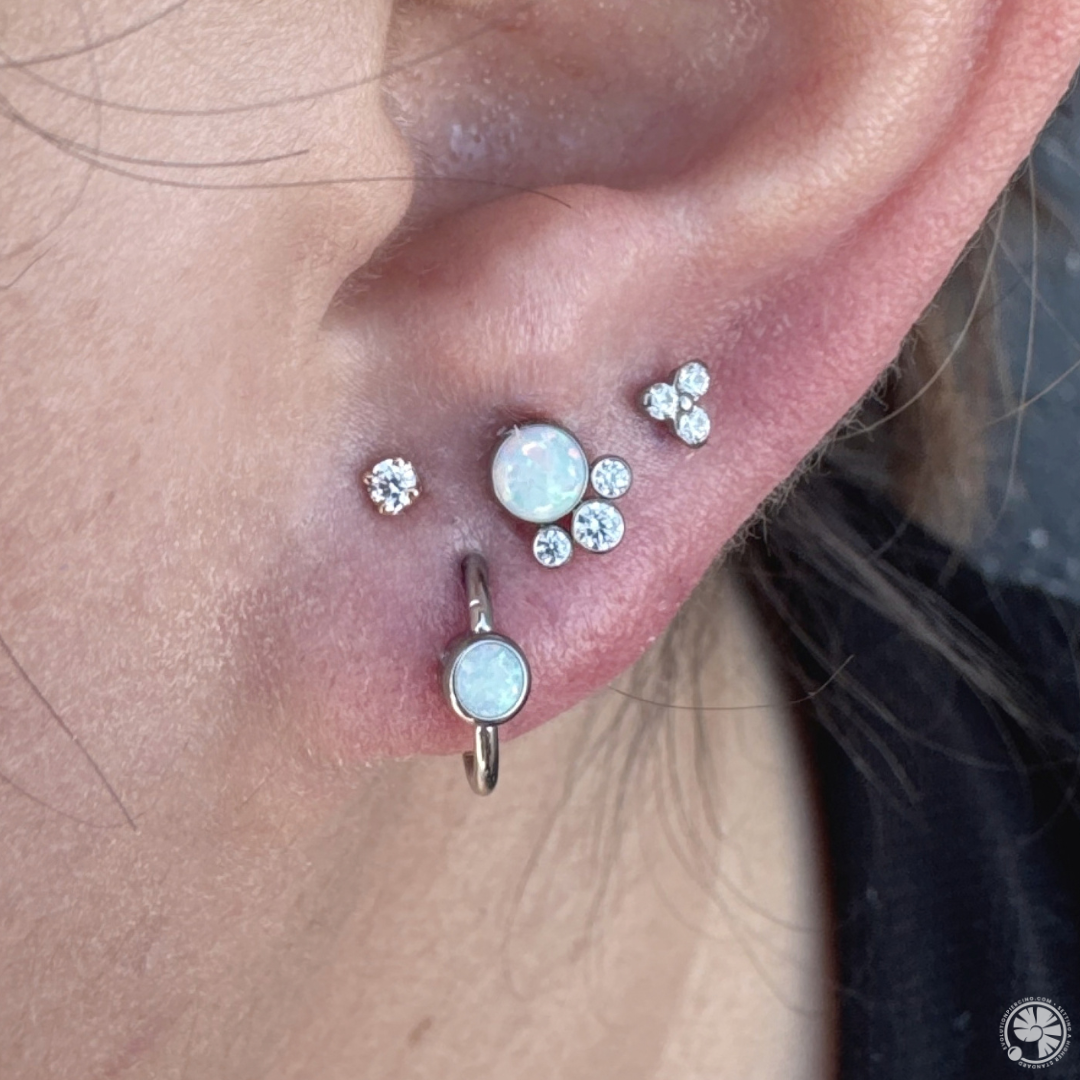
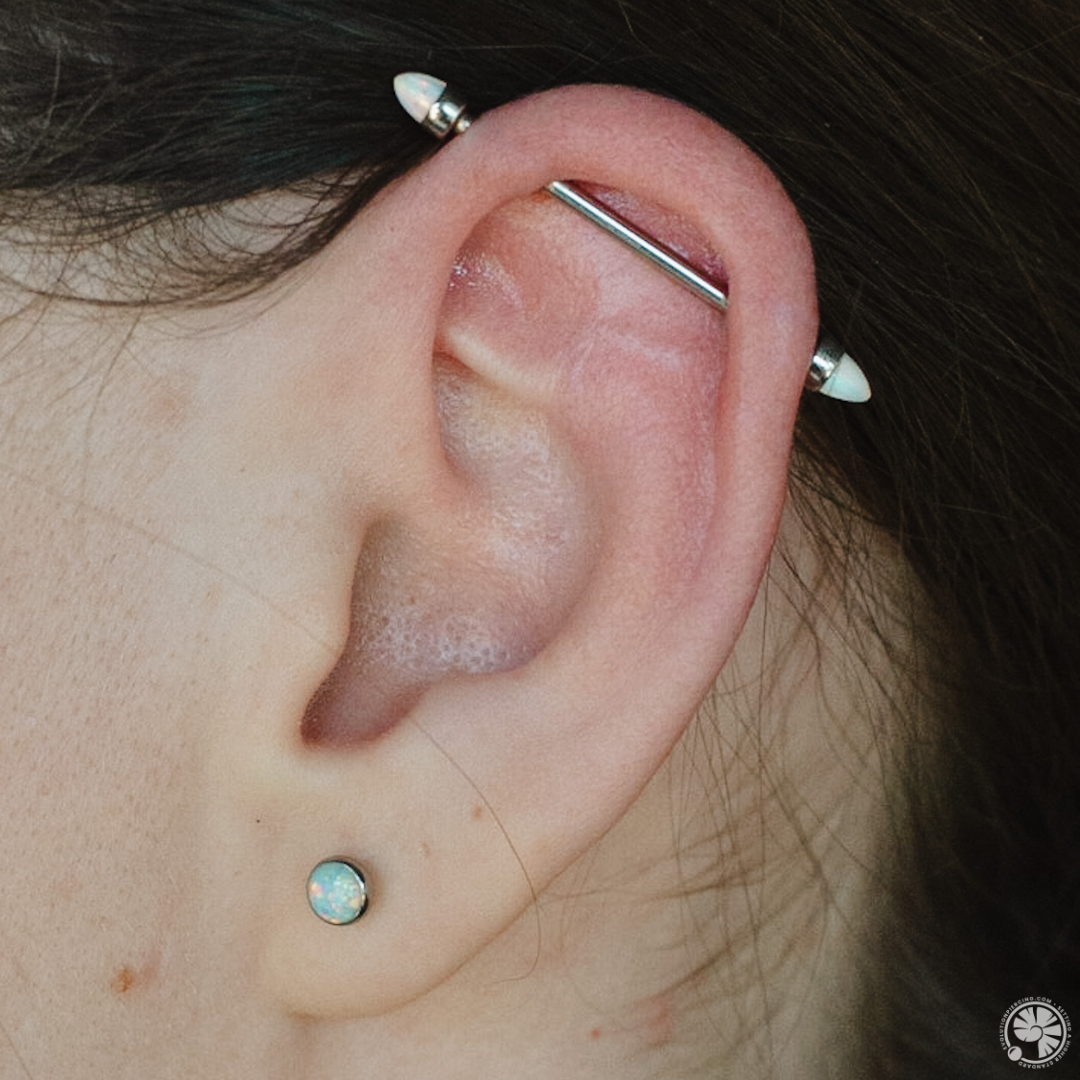
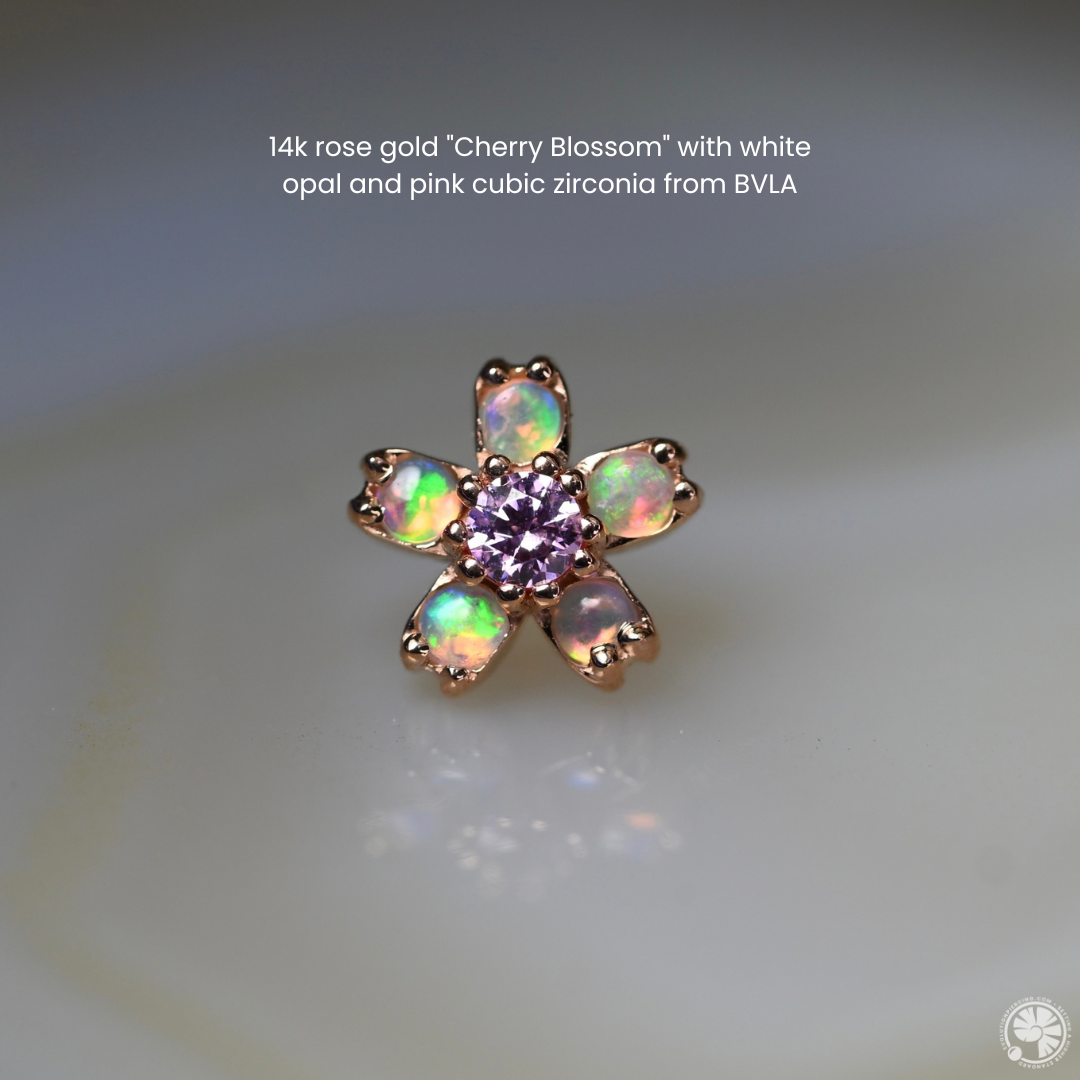
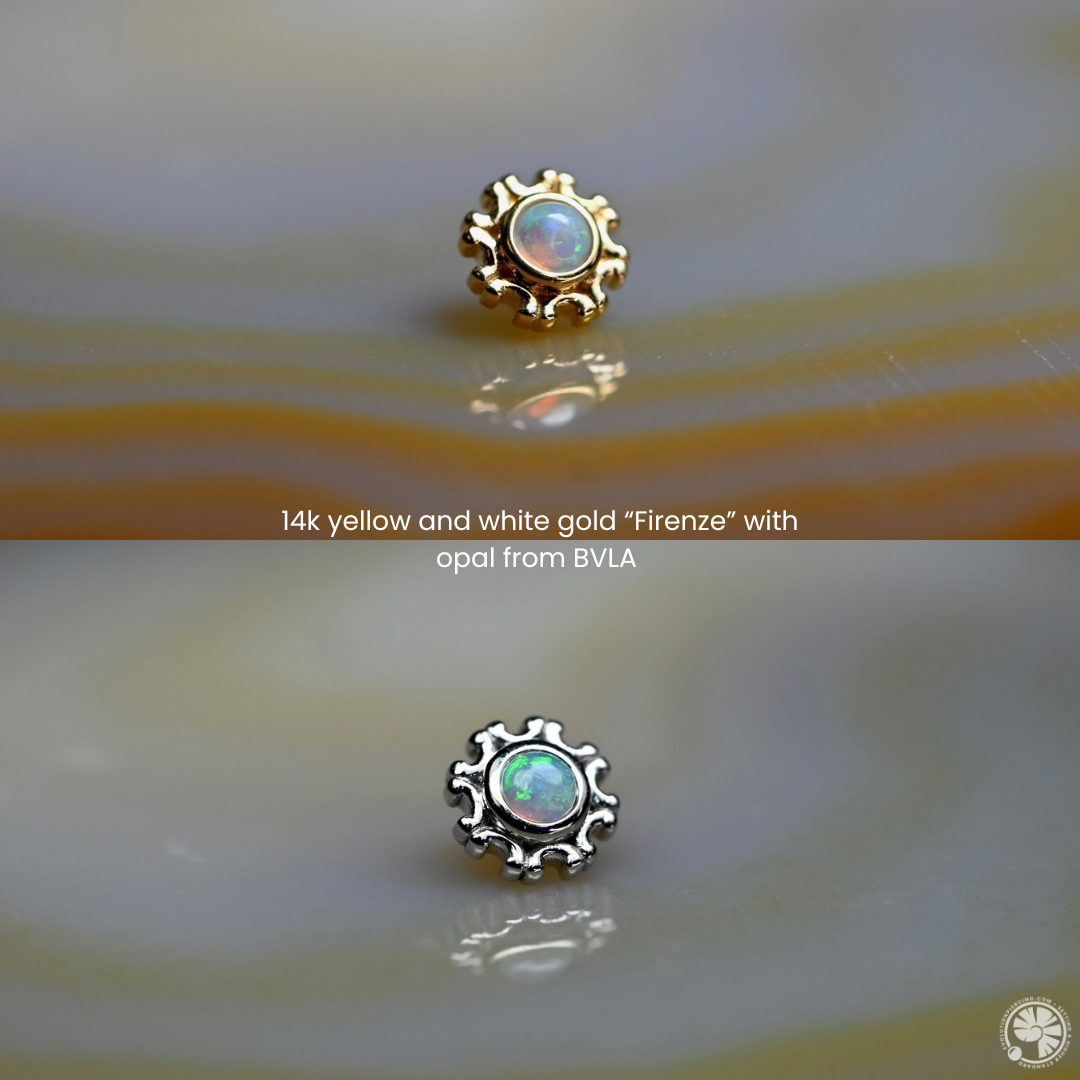
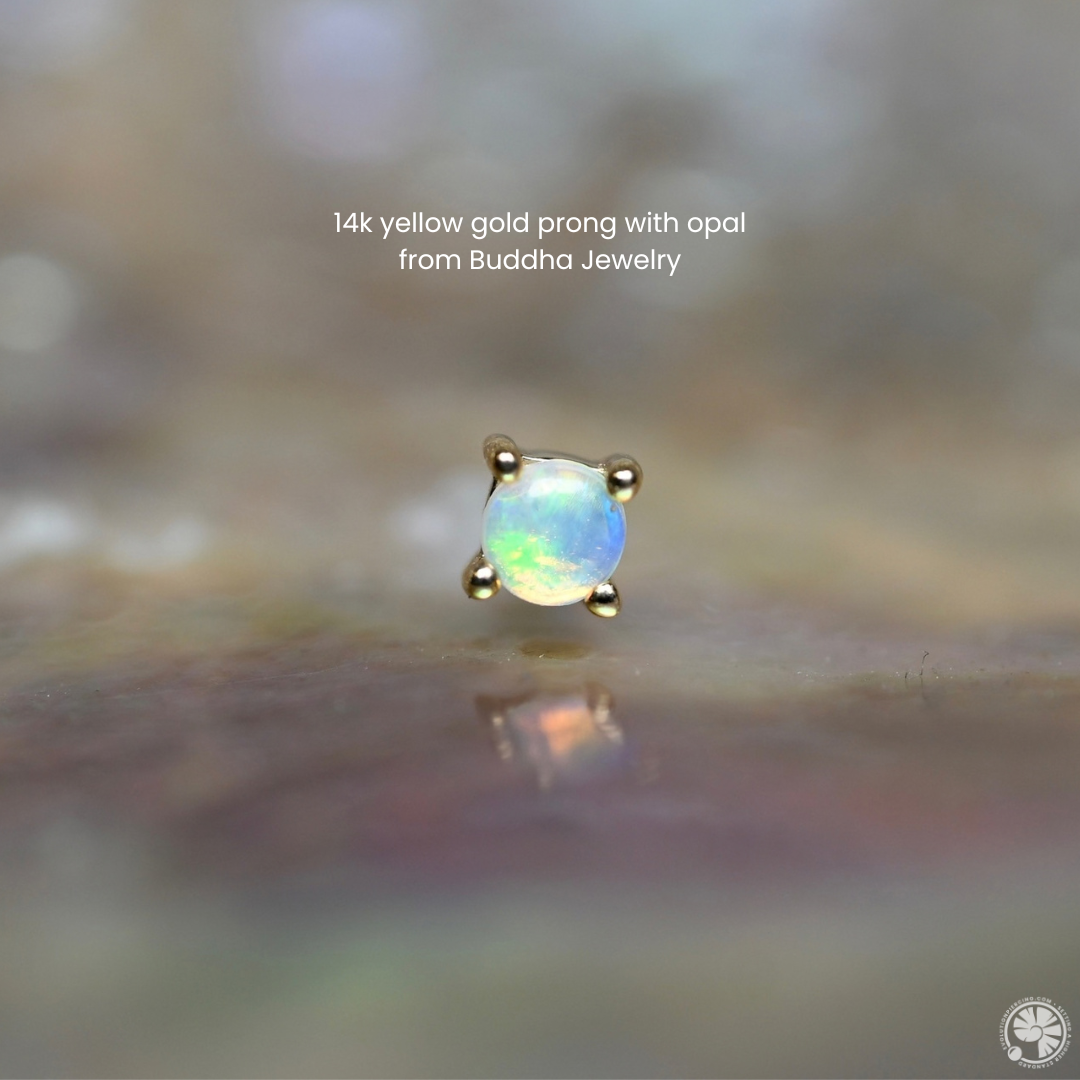
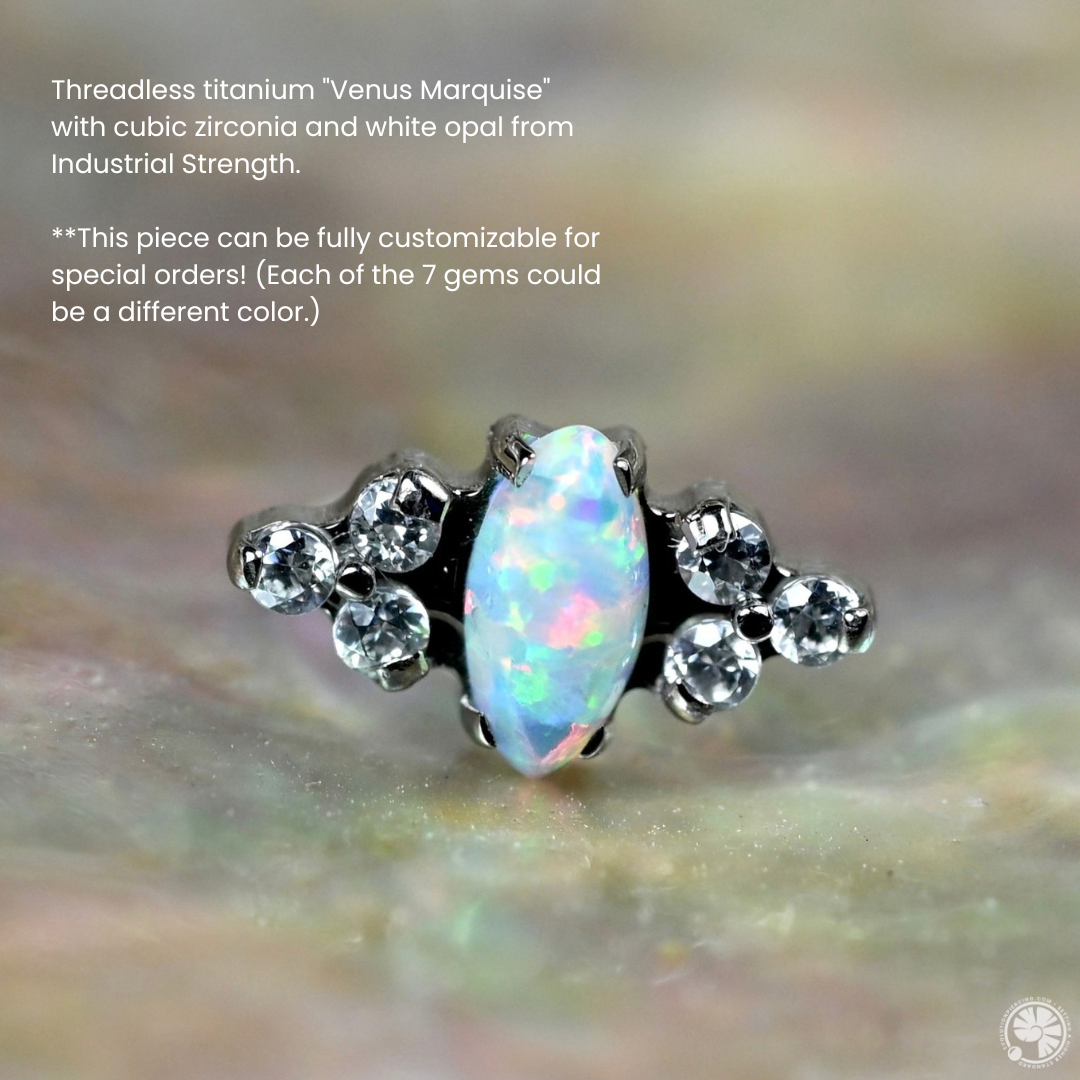
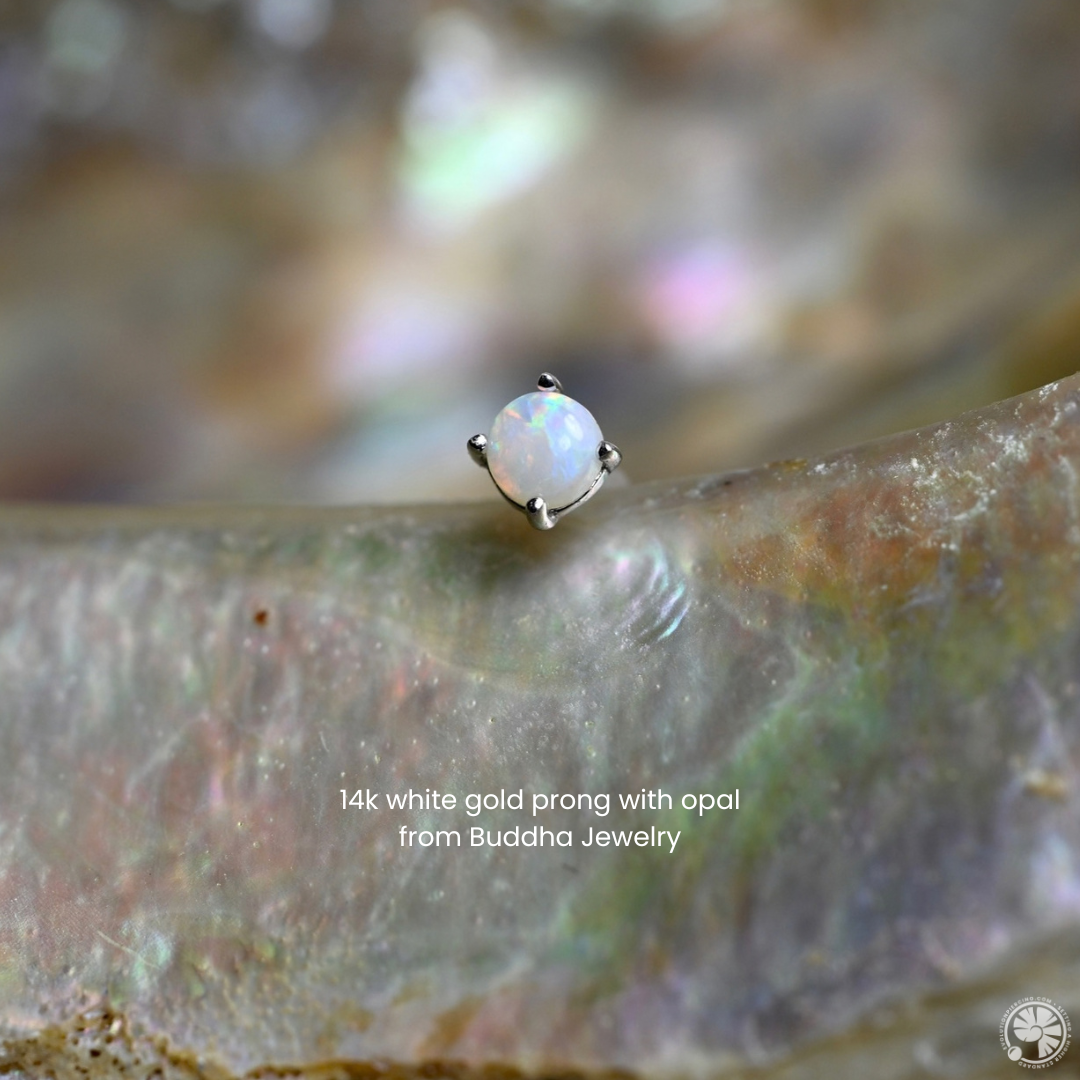
Opal comes in several types, including black opal with its dramatic dark background. The genuine opal in our cases right now is white opal, which shows flashes of color on a soft, light background.
What's the difference between genuine and synthetic opal?
Genuine opal forms naturally in the earth. Every stone is unique, and its color and pattern can never be repeated. That also makes it a bit of a gamble: some stones flash with bright color, and others are more subtle. Because we sterilize jewelry in an autoclave, our vendors send us genuine opals that have been heat and pressure tested to handle it. That makes them sturdier than the opal in a typical ring, though they're still a softer stone.
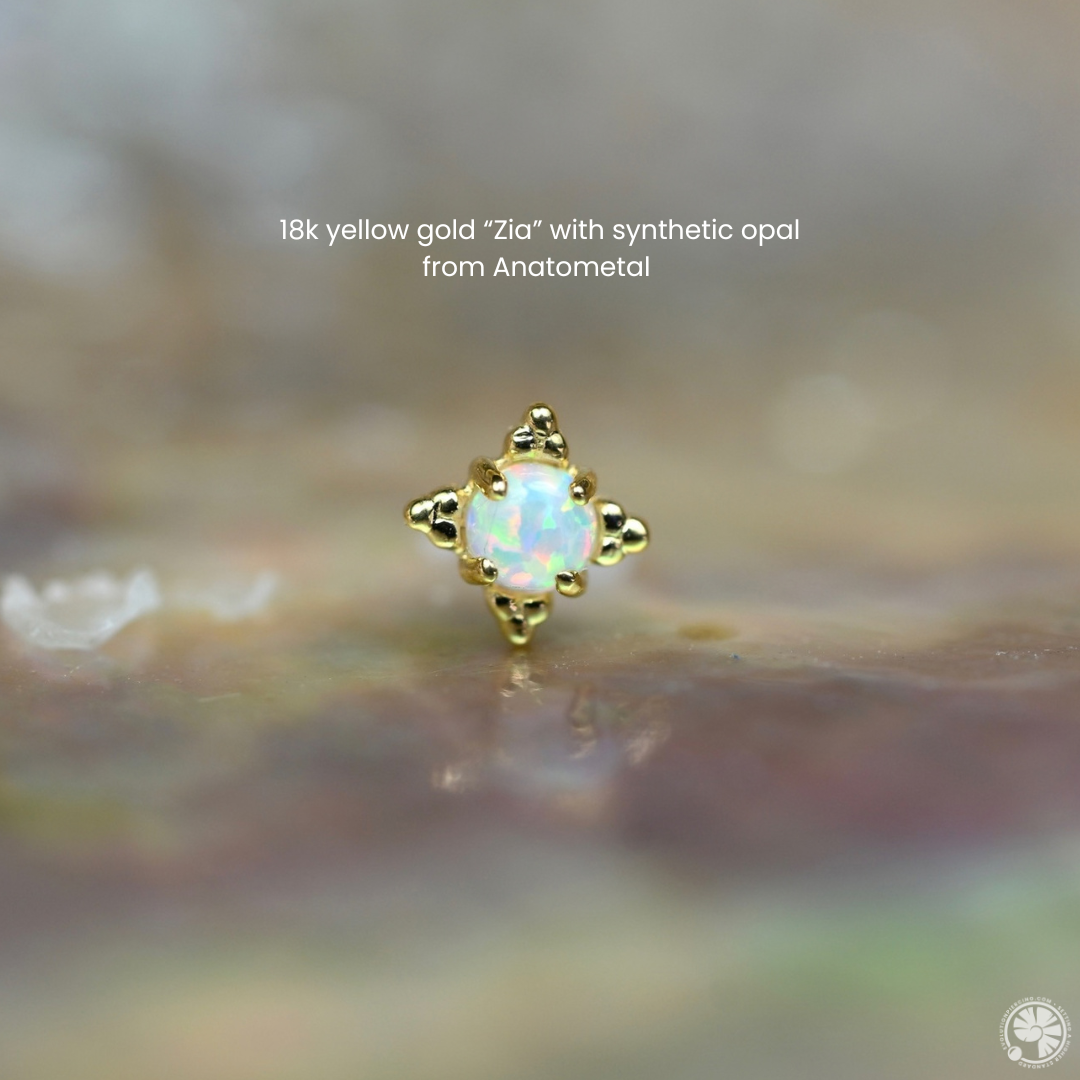
Synthetic opal is made in a lab. It's always bright and full of iridescent flashes, so you know exactly what you're getting, and its consistent color makes it easy to match across a whole curation. It's also much more robust, with no worry about cracking or breaking.
You'll find plenty of synthetic opal in our cases for exactly those reasons. We also carry genuine opal, usually in a bezel setting, where a rim of metal wraps around the stone. A bezel protects the stone's edges and keeps debris from collecting around it.
What metals is opal set in?
Our synthetic opal is often set in titanium, and our genuine opal is set in gold. Opal looks beautiful against white, yellow, and rose tones alike, so the best pairing is simply the one you love.
Is opal a good choice for body jewelry?
Yes. Synthetic opal is the worry-free everyday pick, and the natural opals we carry are autoclave safe, so they can be worn in any piercing.
Whichever you choose, a little care goes a long way:
Clean it with warm, soapy water.
Skip harsh cleaners and chemicals.
Would you like to make opal part of your collection?
Whether you're an October birthday, love a little color that moves with you, or want a piece no one else has, book an appointment and see our opal jewelry in person. It really is best seen in the light.
Ready to add some opal?