
June Has Three Birthstones. Here's What to Know About Each One.
June's Birthstone Situation Is Interesting
Most months get one birthstone. June gets three: pearl, alexandrite, and moonstone. That's not indecision, it's just history. Birthstone lists have been revised multiple times over the centuries, and June picked up stones along the way that were too good to remove. Each one is genuinely distinct in how it forms, how it looks, and what makes it valuable. If you were born in June, you have options. Let's break them down.
Pearl: The Only Birthstone That's Alive
Pearl is the oldest of June's three stones, and it's the only gemstone in the world that comes from a living creature. A natural pearl forms when an irritant such as a grain of sand, a parasite, or a fragment of shell enters a mollusk, and the animal responds by coating it in layers of nacre; the same iridescent substance that lines the inside of the shell. Over months or years, those layers build up into a pearl.
Natural pearls, the kind formed entirely without human intervention, are quite rare. Most pearls on the market today are cultured, meaning a technician intentionally introduces the irritant to start the process, but the mollusk still does all the actual work. Cultured does not mean fake, it means farmed.
Pearls are measured a bit differently than other gemstones. Because they're organic, quality is evaluated by luster (the depth and intensity of that glow), surface quality, shape, and nacre thickness. Luster is the one that matters most. A pearl with strong luster catches the light from within; a low-luster pearl looks chalky and flat by comparison.

Pearl comes in a wider range of colors than most people expect: white, cream, silver, gold, peach, lavender, and the deep, greenish-black of Tahitian pearls. The variety is one of its strongest selling points.
Pearls sit at about a 2.5 to 4.5 on the Mohs scale, which makes them the softest of June's three stones. They're sensitive to acids, perfume, hairspray, and prolonged exposure to water. At Evolution, we use only materials that can withstand the heat and pressure of autoclave sterilization for initial piercings. Body jewelry styles featuring genuine pearls that can meet these standards can be rare, so we don’t carry a large selection in studio. We do custom order them for healed piercings for our clients who love pearls.
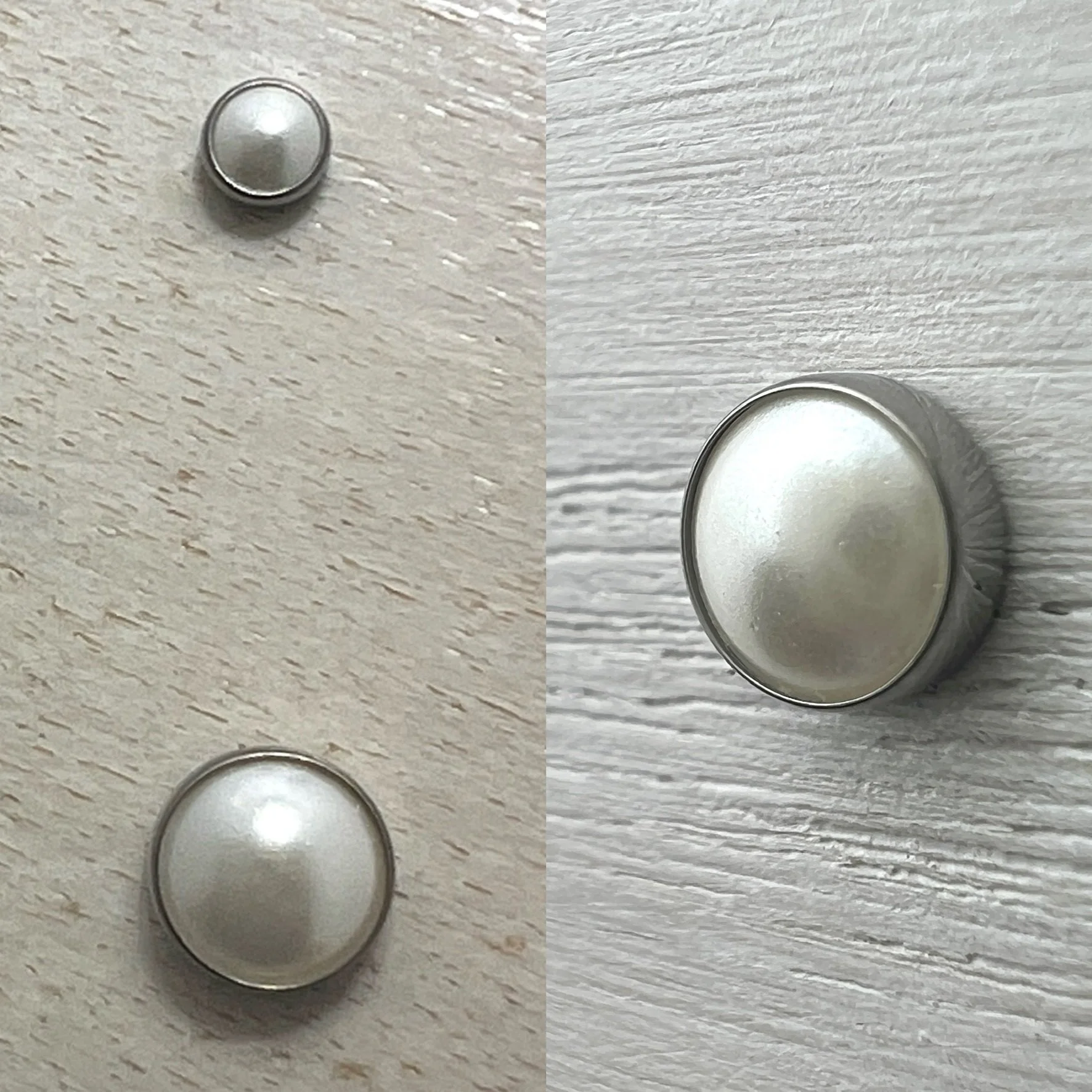
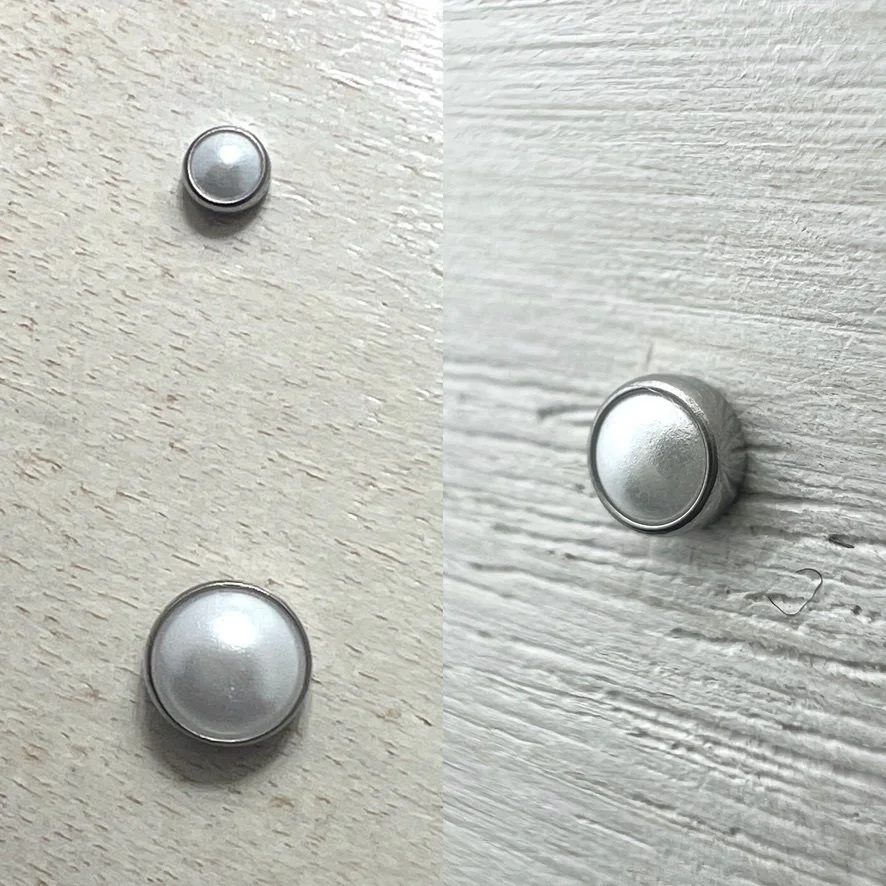
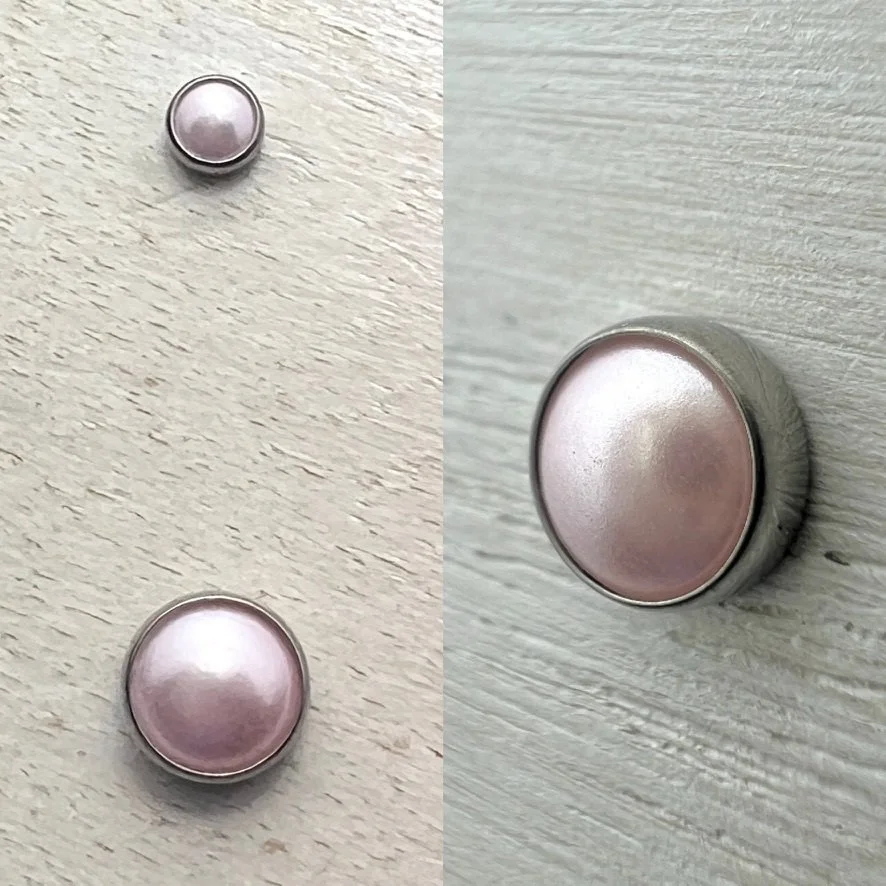
That said, one of our trusted vendors, Neometal, recently came out with a limited edition faux pearl titanium threadless end that can be autoclaved for use in initial piercings. In their words, “Neo-pearls are not genuine, but we've sourced them from Swarovski's Crystal Pearl collections. These pearls are going to be a Cubic Zirconia crystal with a pearlescence coating.” We only have a few of these left at our Carlisle location, so if pearls are your jam 😉 hurry in before they’re gone!
Alexandrite: The Stone That Changes Color
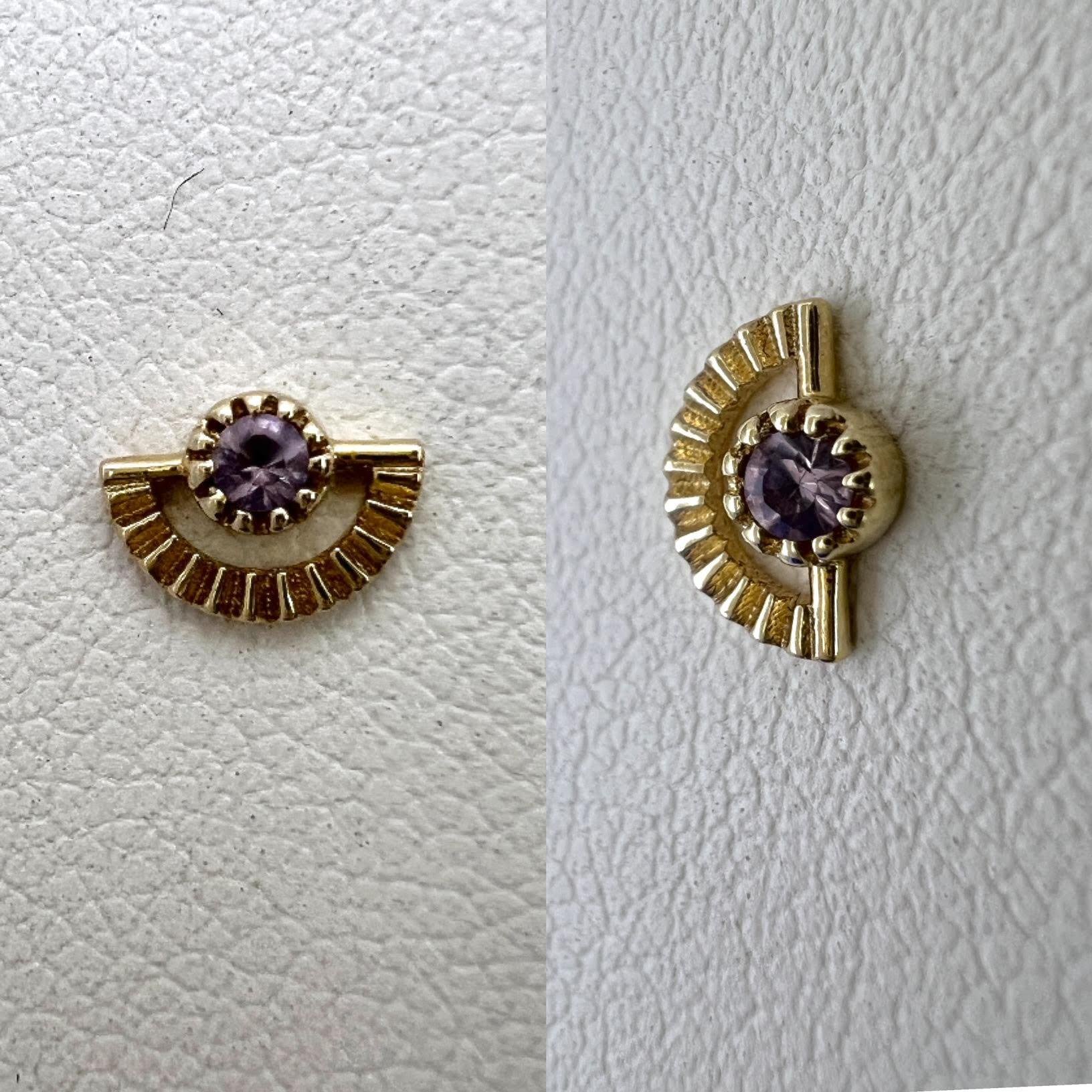
Alexandrite was discovered in Russia's Ural Mountains in the 1830s, and the timing of its discovery, allegedly on the future Tsar Alexander II's birthday, is how it got its name. It became the national stone of imperial Russia almost immediately.
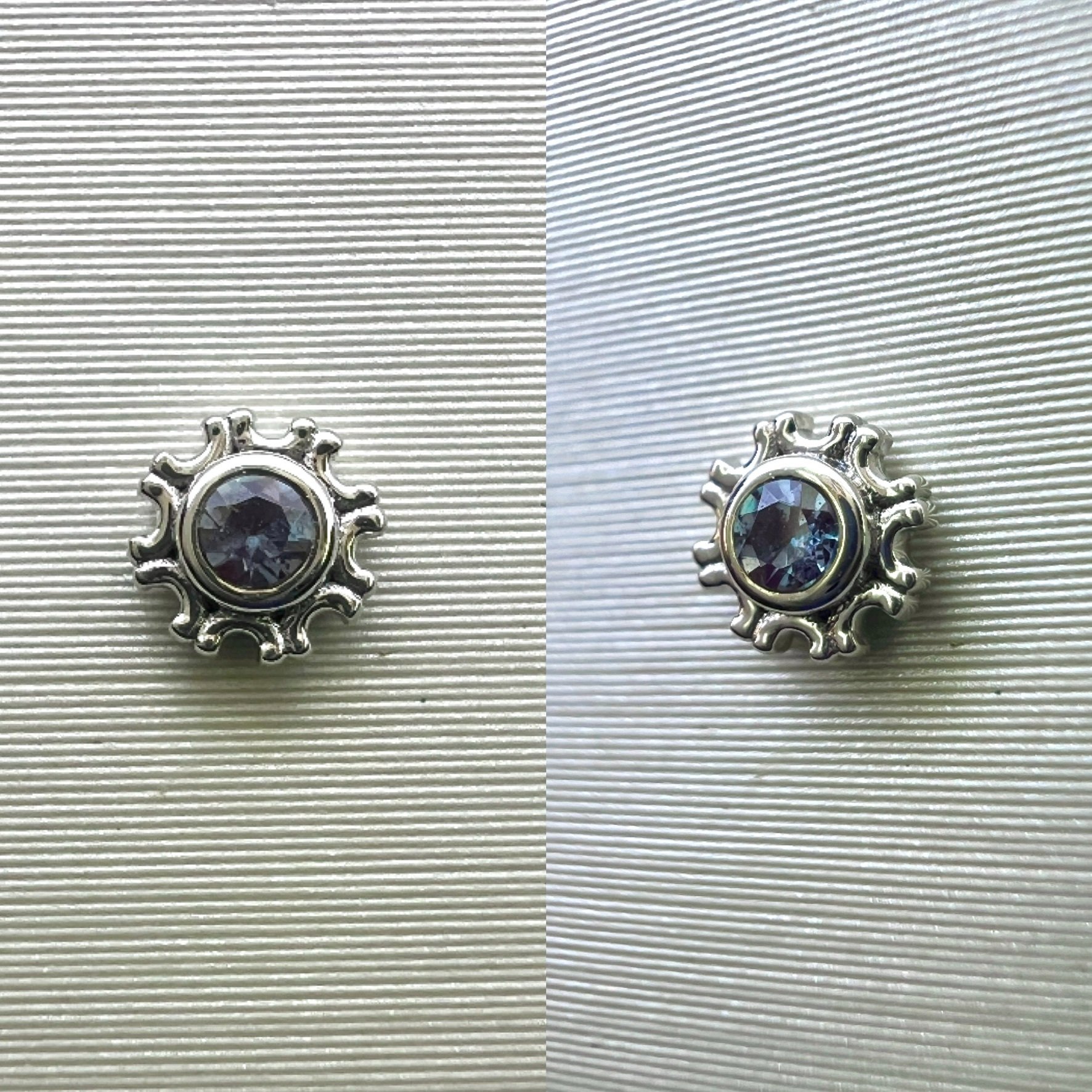
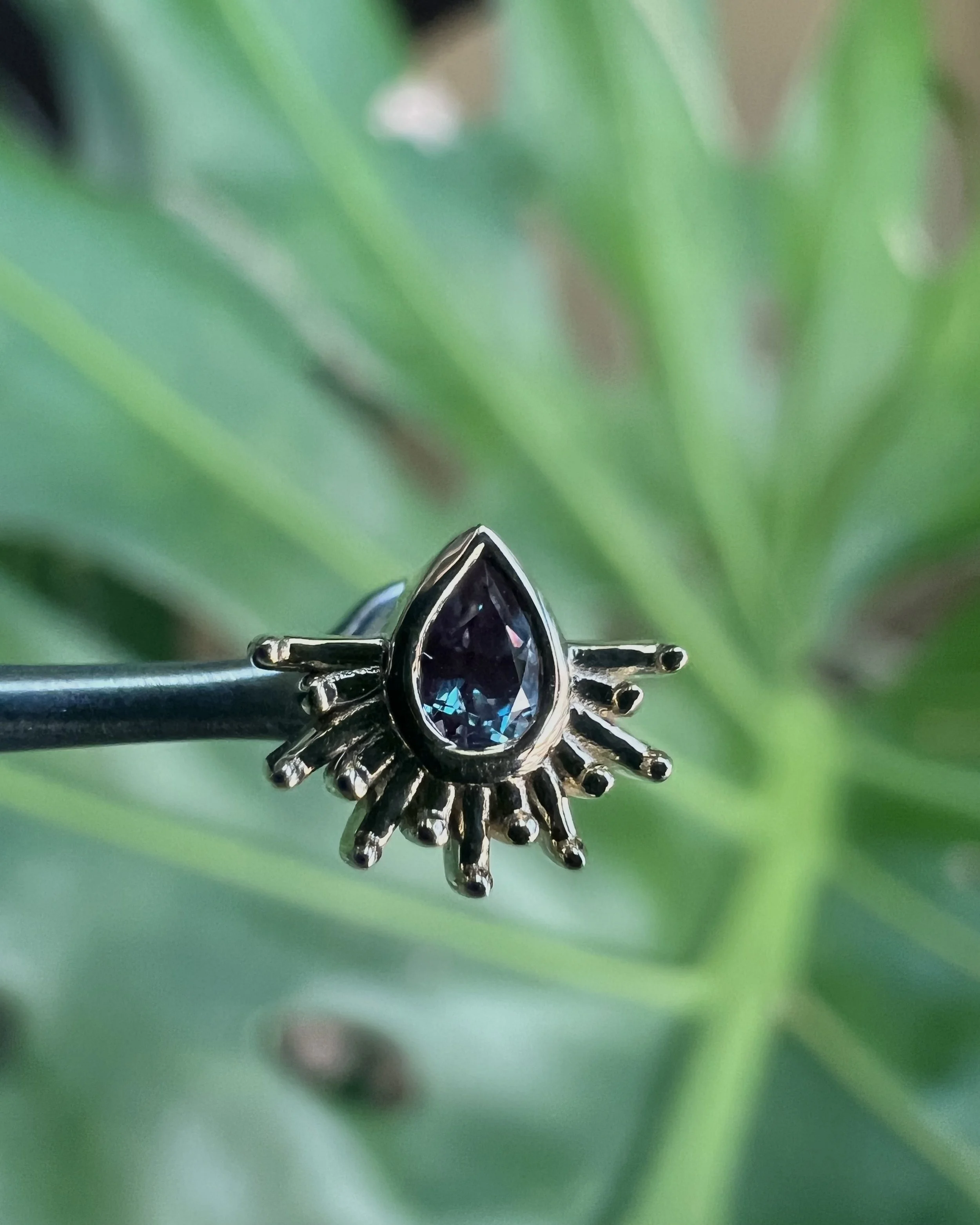
Here's the thing about alexandrite: it looks like two different stones depending on the light. In daylight or fluorescent light, it reads green to blue-green. Under incandescent light, it shifts to red, purplish-red, or raspberry. That shift is called the alexandrite effect, and it's one of the most dramatic optical phenomena in the gem world. The strength and quality of the color change is a major factor in how a stone is valued.
Alexandrite is a variety of chrysoberyl, and it gets its color-changing behavior from the way its crystal structure absorbs light across the spectrum. On the Mohs scale it sits at an 8.5, making it one of the harder gemstones available which means it has excellent durability for everyday wear.
Natural alexandrite is genuinely rare and can be expensive as a result. Lab-created alexandrite is widely available, chemically identical to the natural stone, and shows the same color shift. For body jewelry purposes, lab-created alexandrite is a completely legitimate option and a practical one.
Moonstone: The Glow That Moves
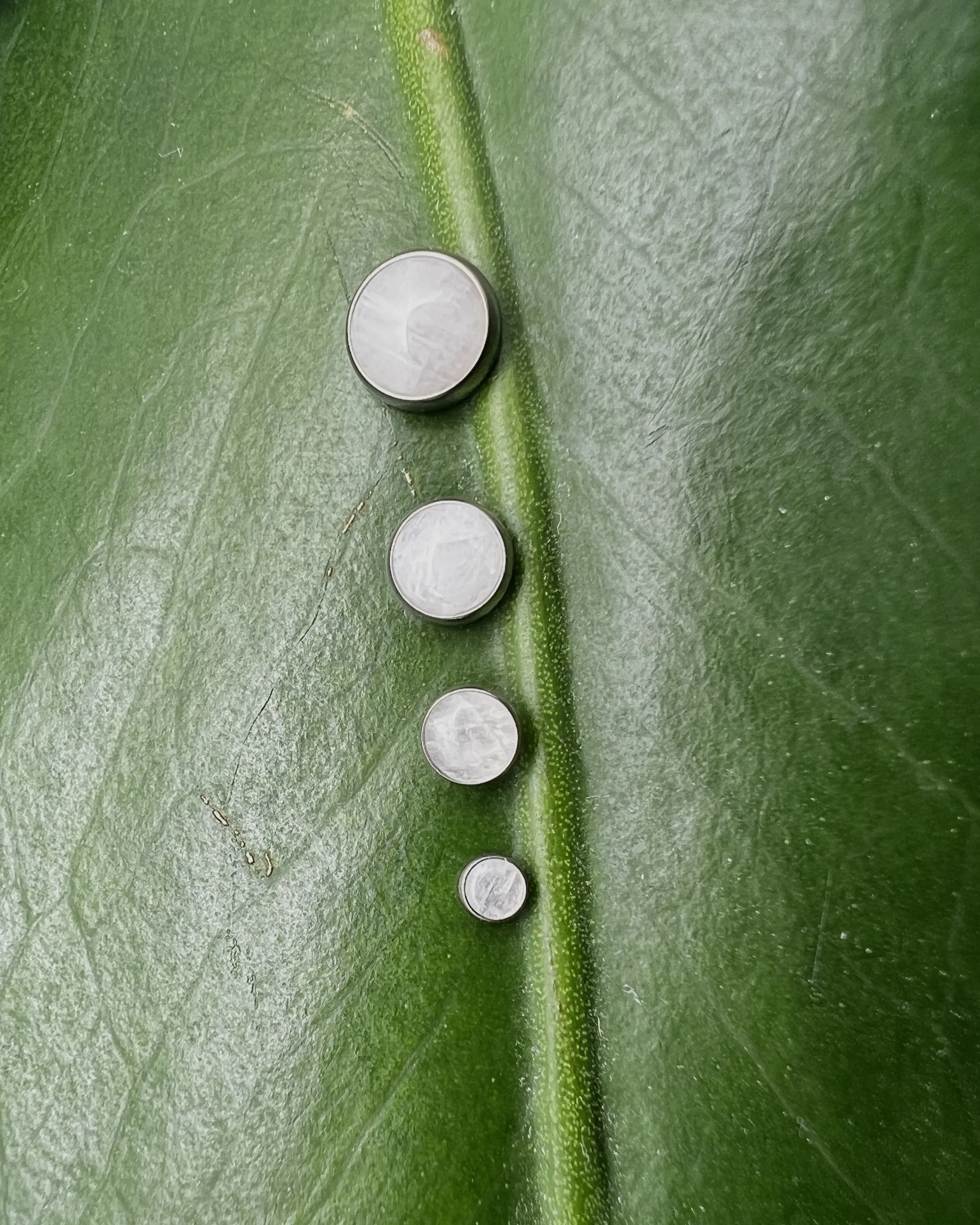
Moonstone
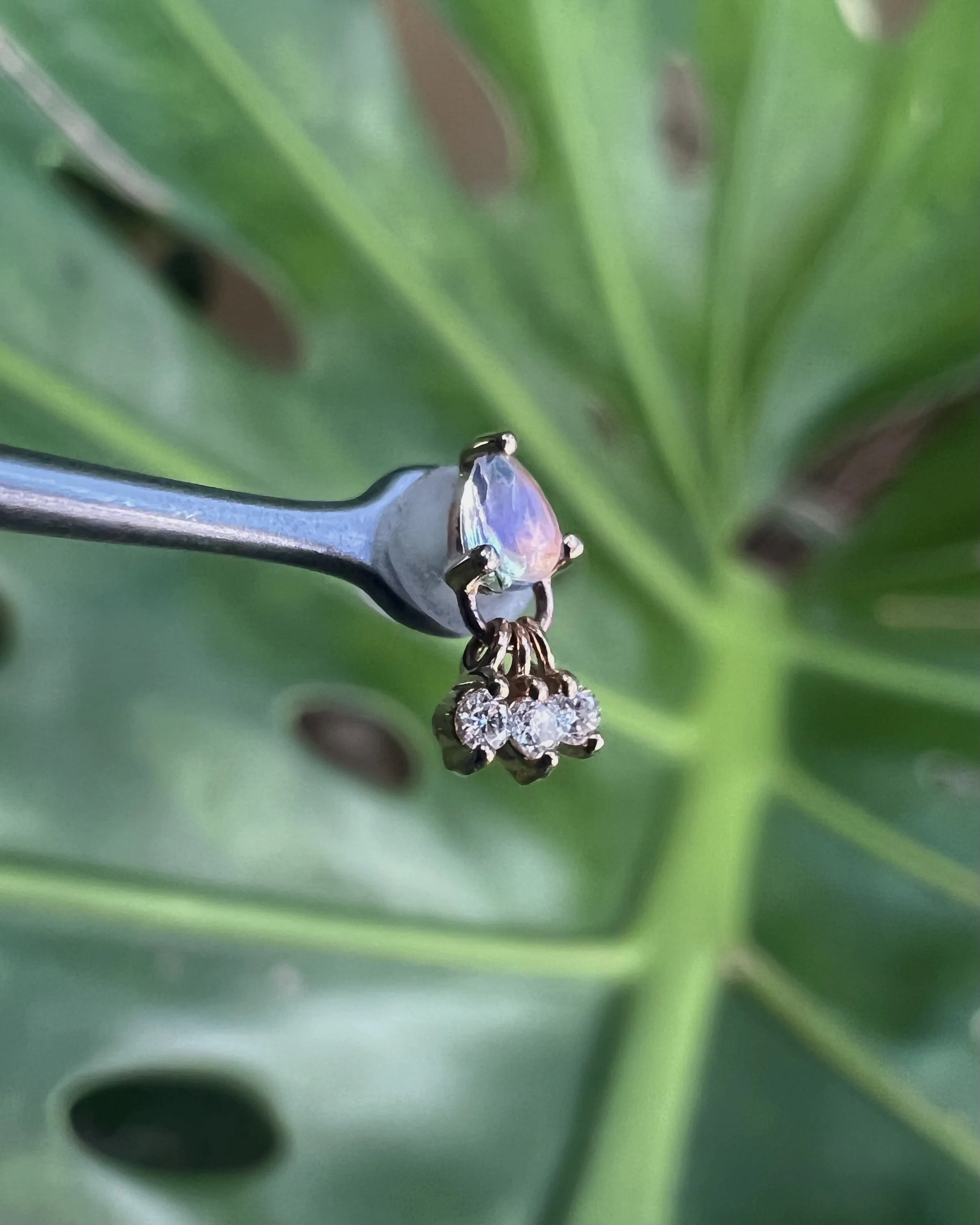
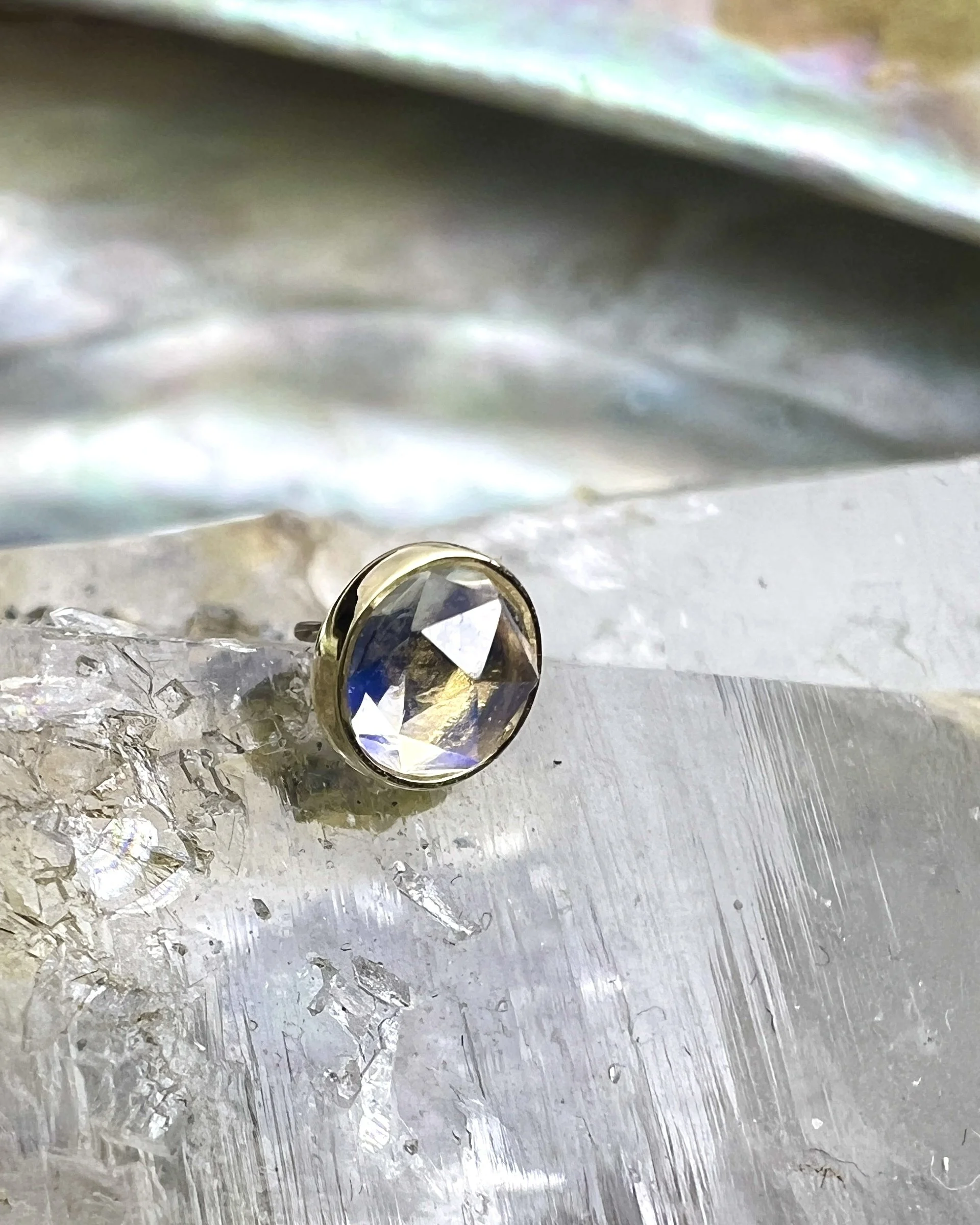
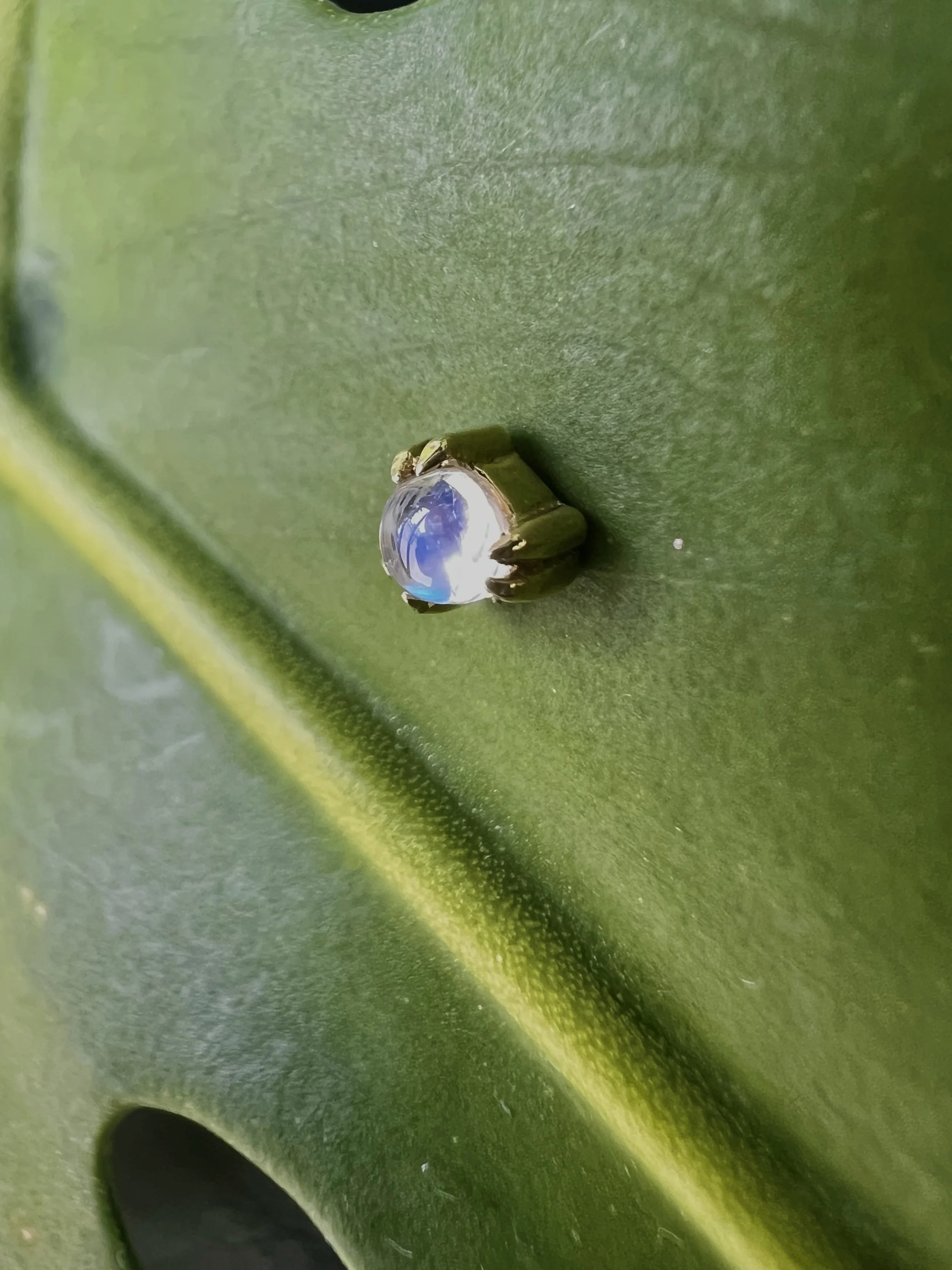
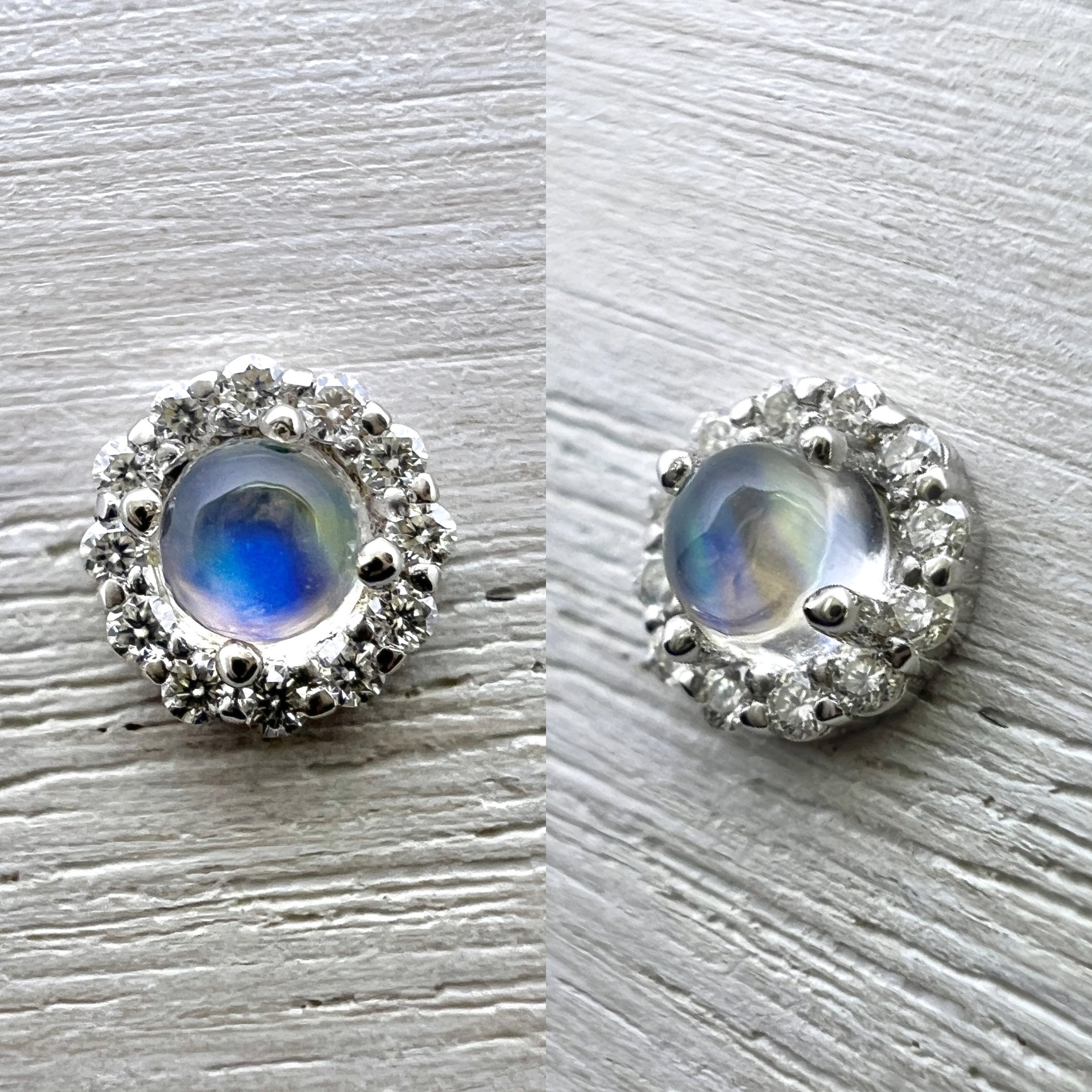
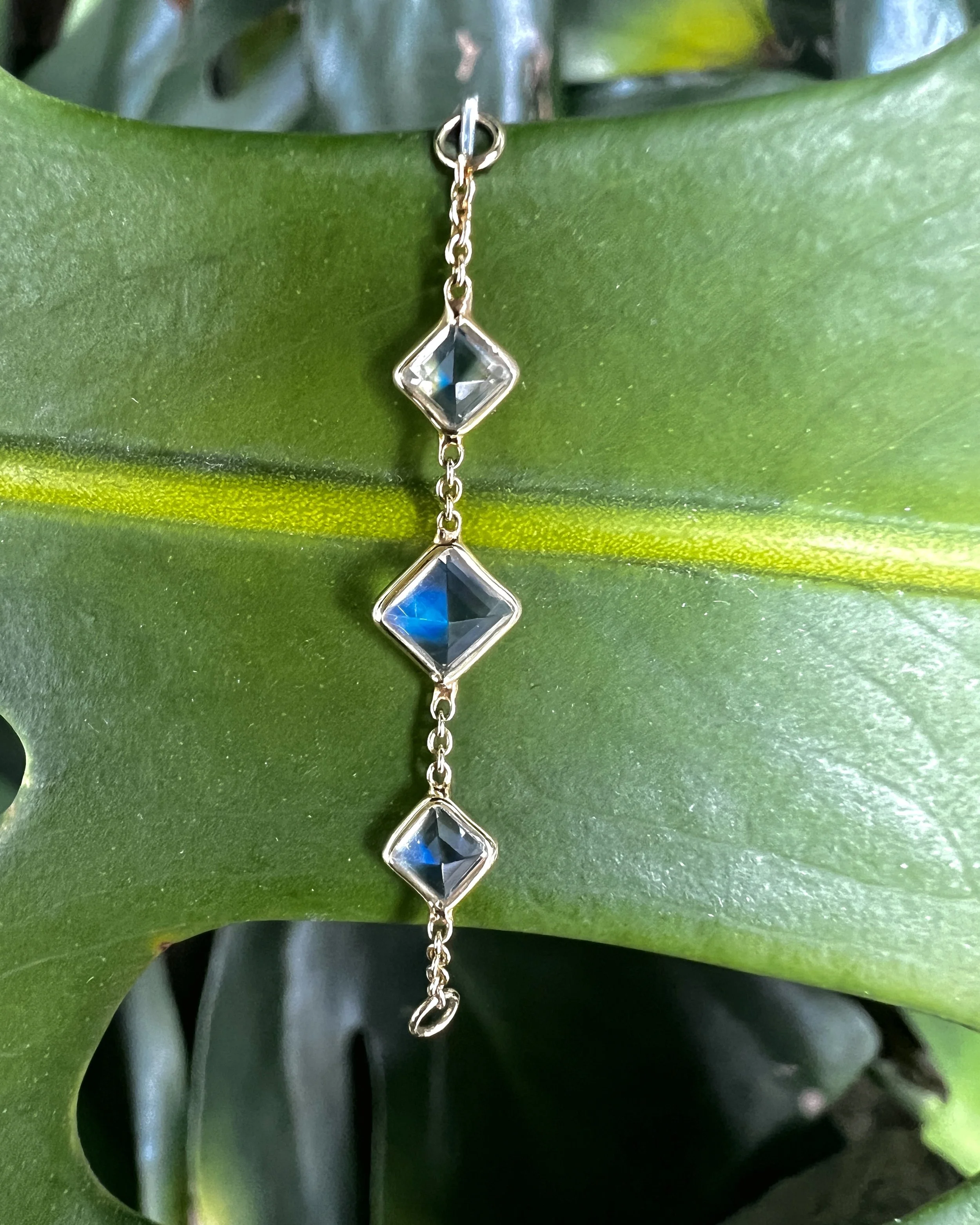
Moonstone belongs to the feldspar mineral family, and its signature optical effect, the floating, billowing glow, has its own name: adularescence. It comes from the way light scatters between the stone's internal layers, creating what looks like a soft light moving beneath the surface. Quality moonstones look like they have a light source inside them.
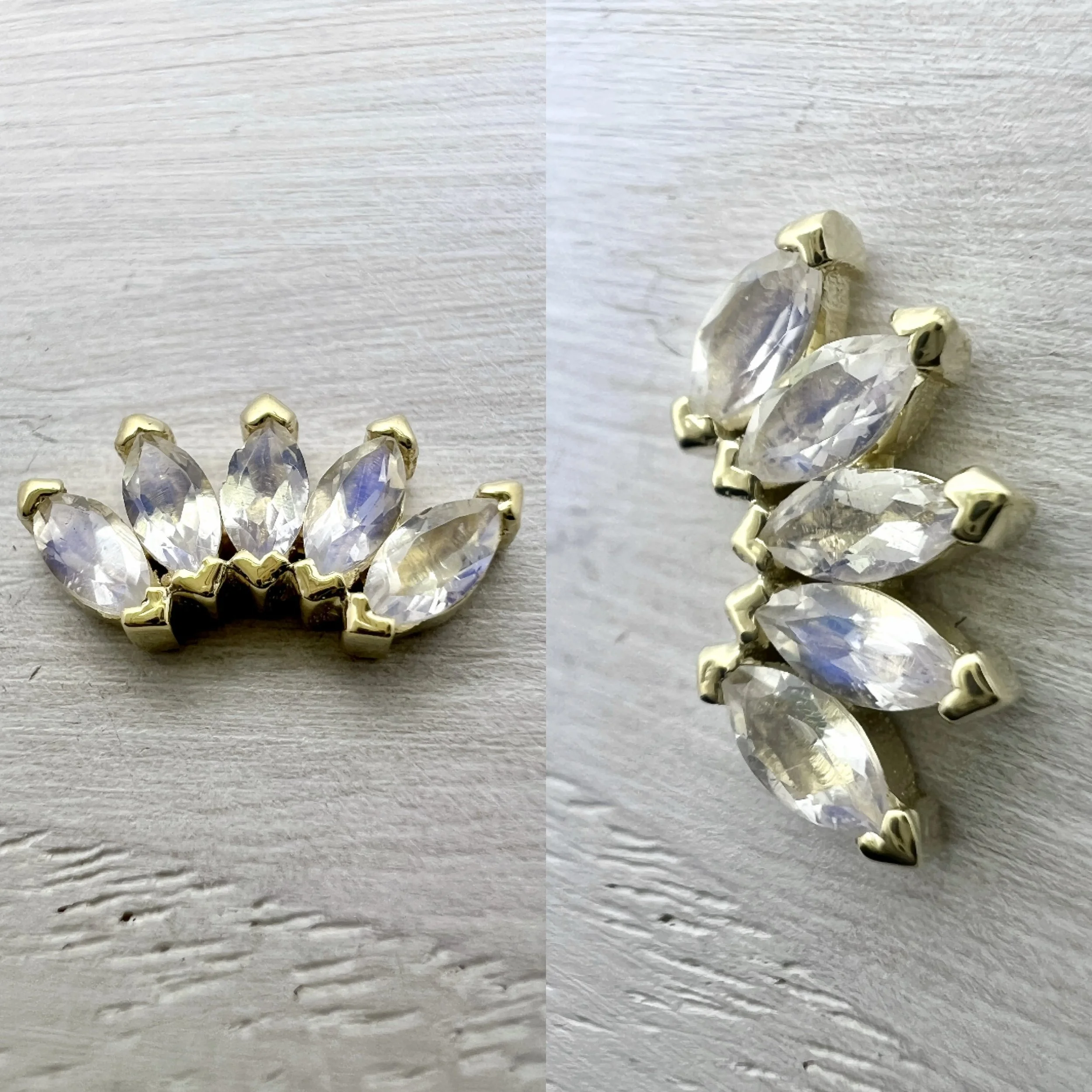
The most prized moonstones are colorless to near-colorless with a strong blue adularescence, often called blue moonstone. But moonstone also comes in peach, gray, green, and a variety known as rainbow moonstone which is technically a variety of labradorite but commonly sold under the moonstone name because of its similar appearance. Worth knowing when you're shopping.
Moonstone sits between a 6 and 6.5 on the Mohs scale, which makes it more durable than pearl but softer than alexandrite. It's prone to cleavage; meaning it can split along internal planes if struck, so placement and setting style matter.
Across cultures and centuries, moonstone has been associated with intuition, cycles, and the moon in some form or another. Ancient Romans believed it was formed from solidified moonlight. That kind of history tends to follow a stone. Whether or not you put stock in the symbolism, moonstone is one of those gems that looks genuinely otherworldly in the right setting.
Pictured below: “Rainbow moonstone”
Three Stones, Three Different Personalities
Pearl, alexandrite, and moonstone don't have a lot in common on the surface. One is organic, one changes color, one glows. What they share is that each one does something a more conventional gemstone doesn't. For people born in June, that means you have a lot to work with.
If you're interested in bringing any of these into your collection, we'd love to help you find something that fits. Book your appointment here and let's take a look at what we have.