
Diamond Is April's Birthstone — But It's Not Your Only Option
April's birthstone is diamond, and the reputation precedes it. Hardest natural material on earth. Billions of years old. The stone that's been at the center of engagements, inheritances, and heirlooms for generations. If you were born in April, you got handed a genuinely iconic birthstone.
But here's the thing: diamond in body jewelry is worth talking about beyond the prestige — and so are the alternatives. Because the world of diamond-like stones for piercing jewelry is actually really interesting, and depending on what you're after, one of them might be a better fit than you'd expect.
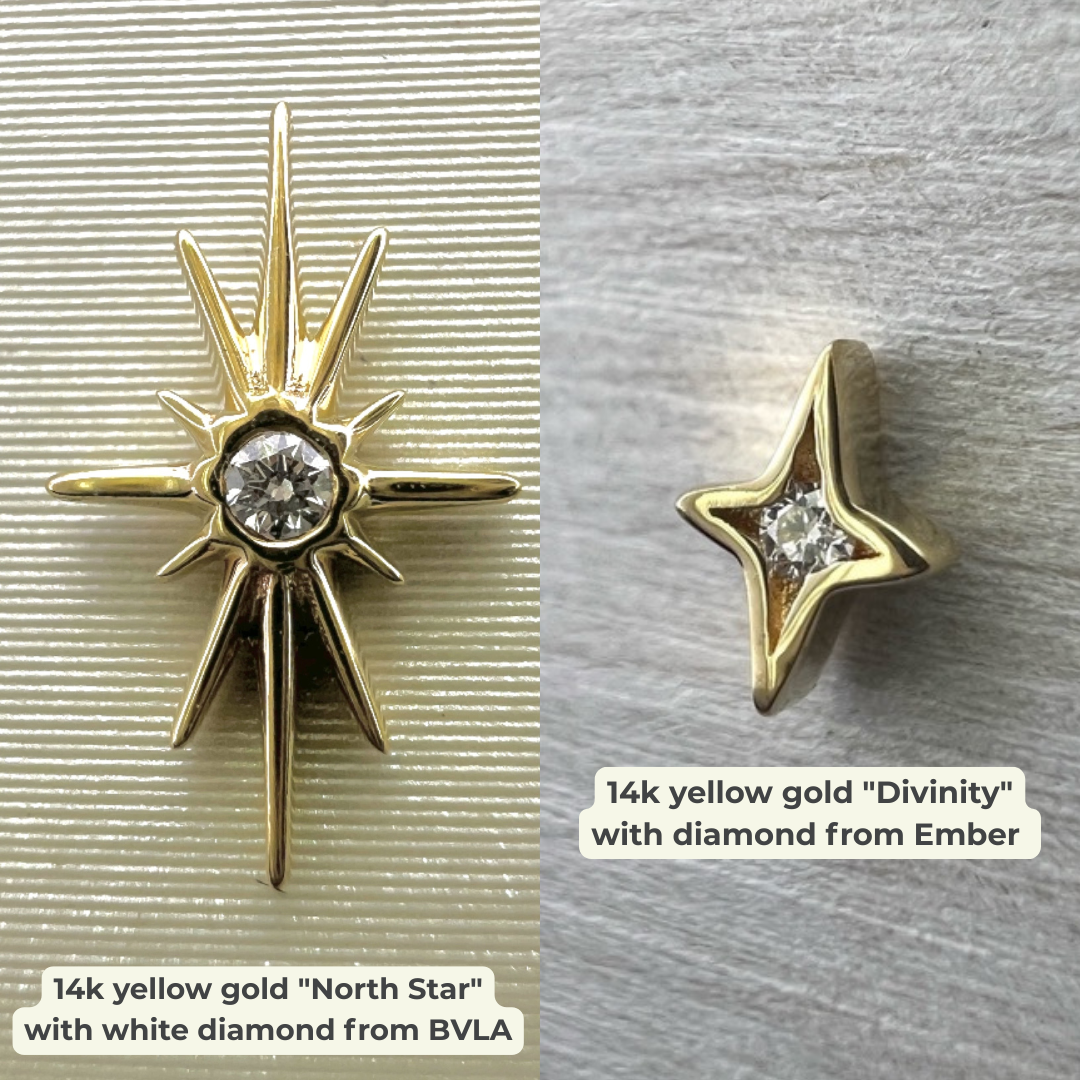
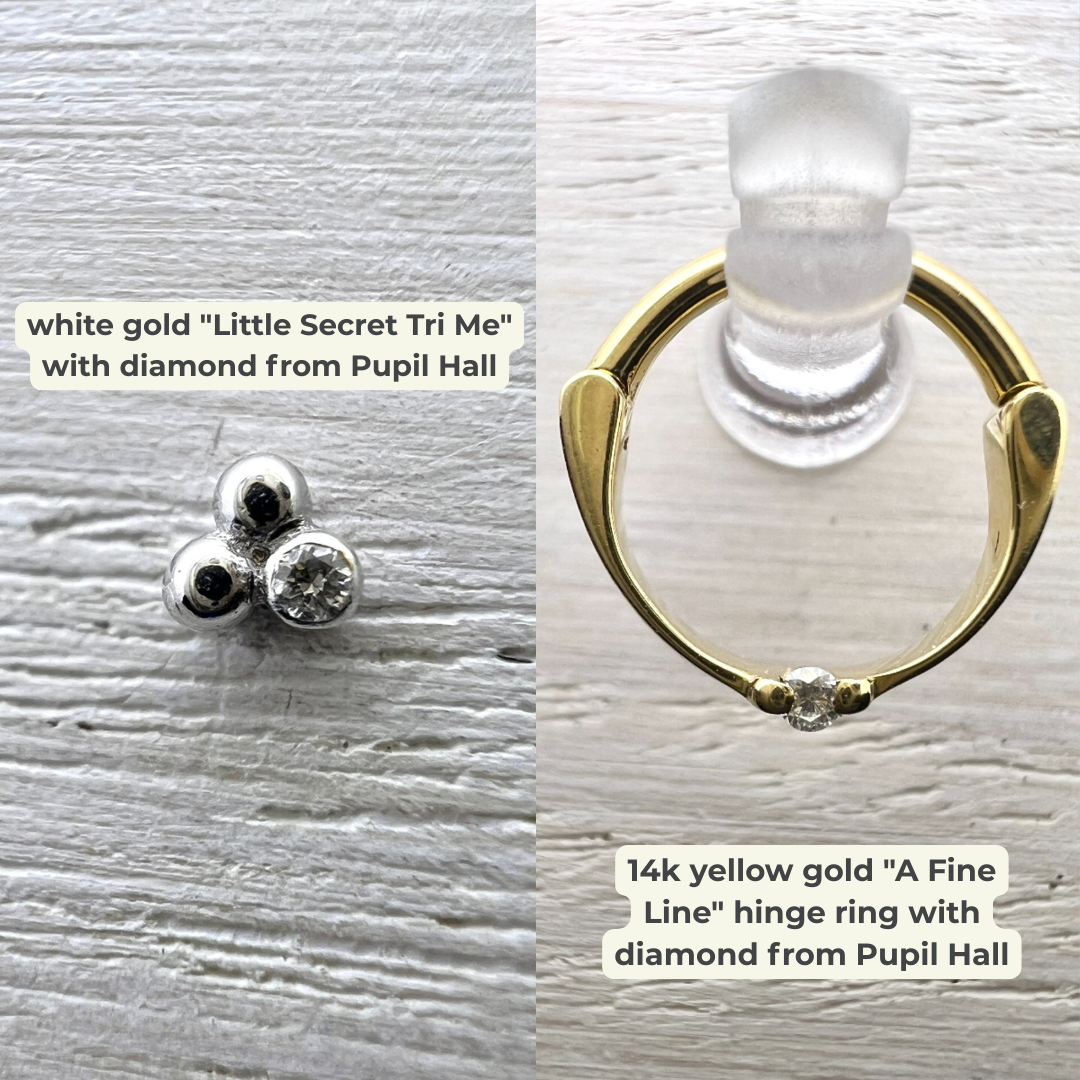
So what makes a diamond a diamond?
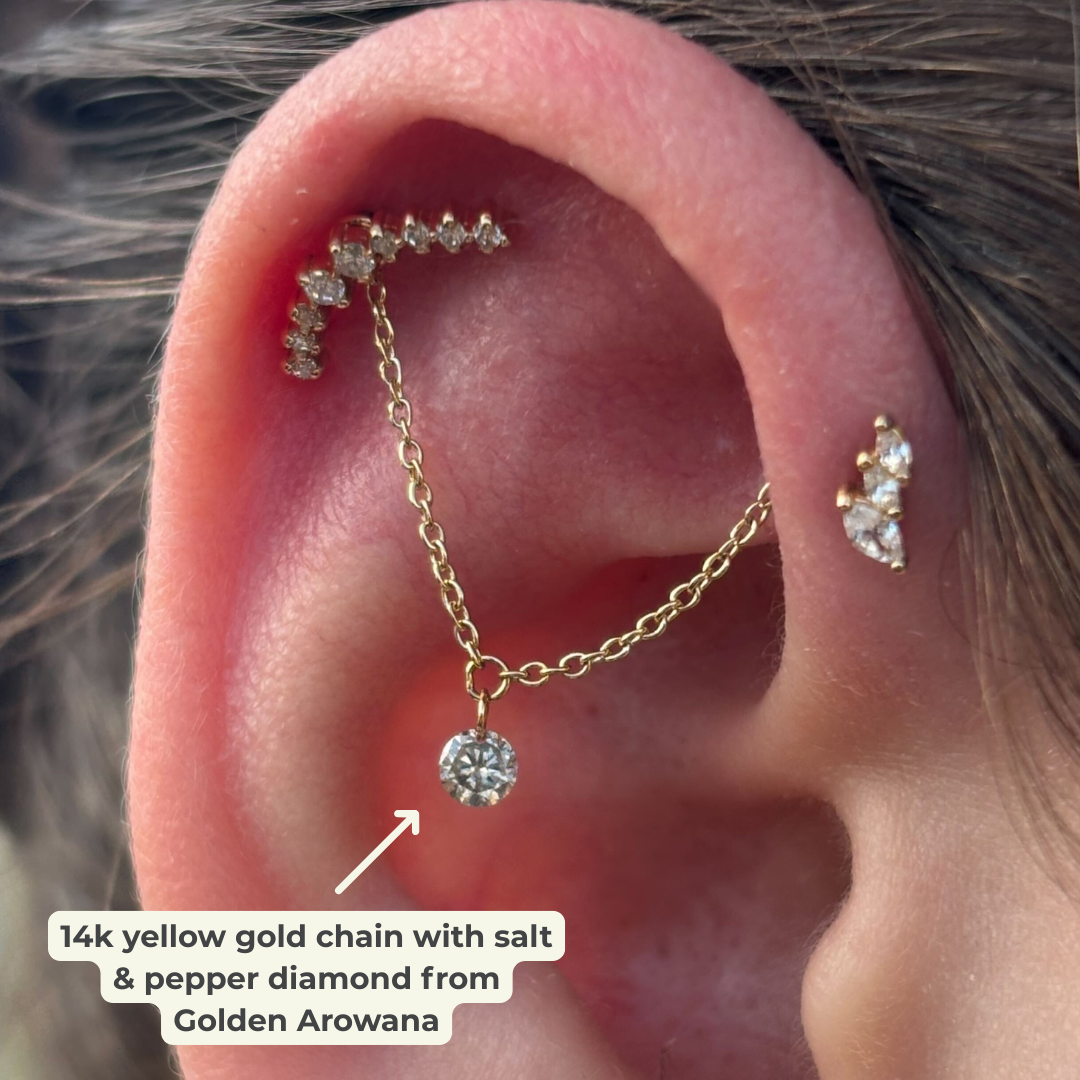
Diamond is pure carbon — compressed under extreme heat and pressure deep in the earth over billions of years until it becomes the hardest natural substance we know of. That's where the 10 on the Mohs scale comes from. Nothing scratches it. Nothing really touches it.
The classic way to evaluate diamonds is the four Cs: cut, color, clarity, and carat weight. The cut determines how much light the stone throws back at you — that signature sparkle. The color scale runs from colorless (the most prized) down through varying shades of yellow and brown. Clarity refers to how few inclusions (tiny natural imperfections) are present. Carat is the weight.
What this means for body jewelry is simple: a well-cut diamond is exceptionally brilliant, extremely durable, and built to last. It's not going to scratch. It's not going to cloud. For a healed piercing you want to wear forever, diamond is simply unmatched.
Diamond alternatives: why they exist and why they're actually great
Not everyone wants to put a diamond in their piercing, and that's a completely reasonable position. Cost is the obvious factor. But there are also people who prefer lab-created or alternative stones for ethical or personal reasons, and others who just want that clean, bright, white-stone look without the price tag. The good news is that the alternatives have come a long way, and each one has a real story.
Cubic Zirconia (CZ)
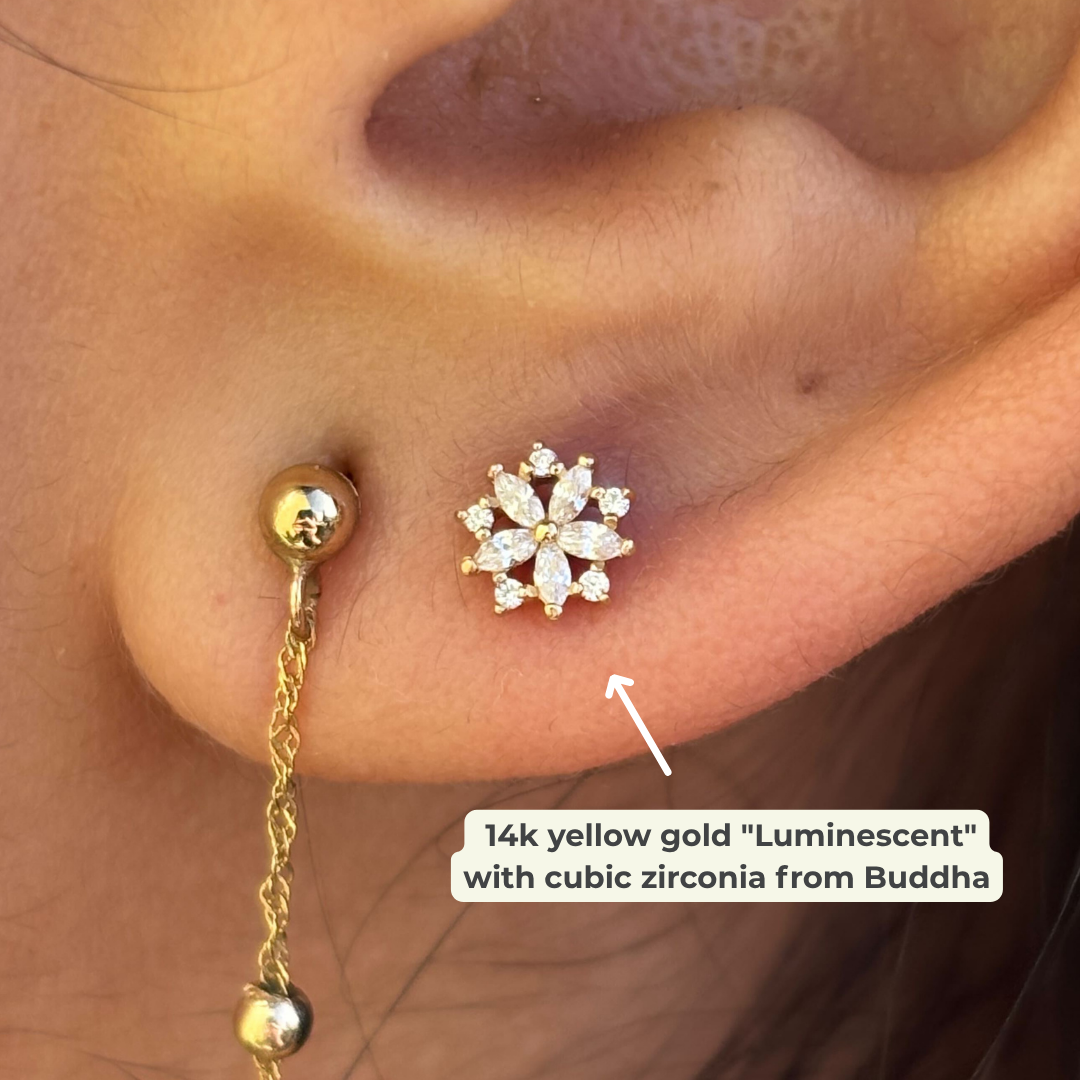
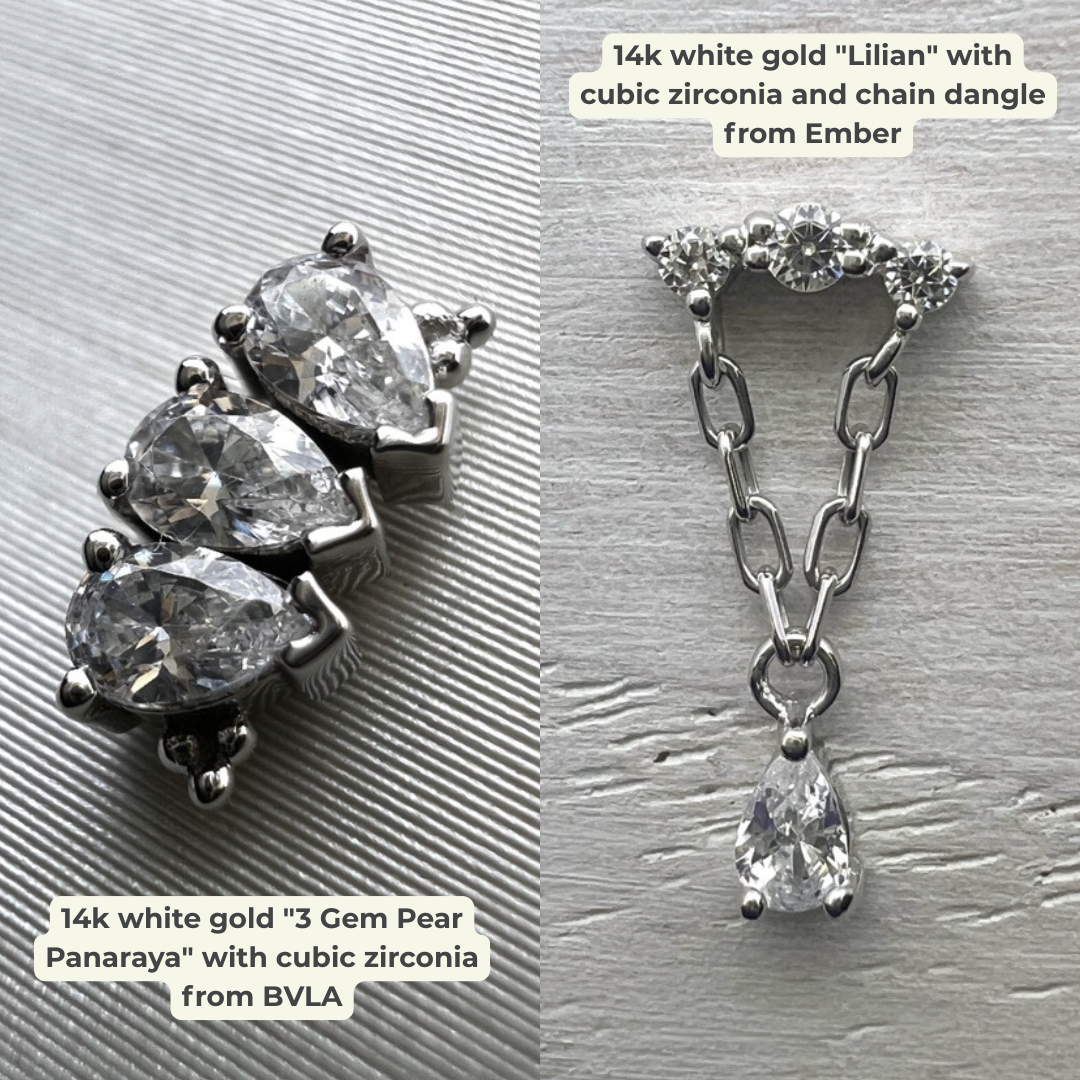
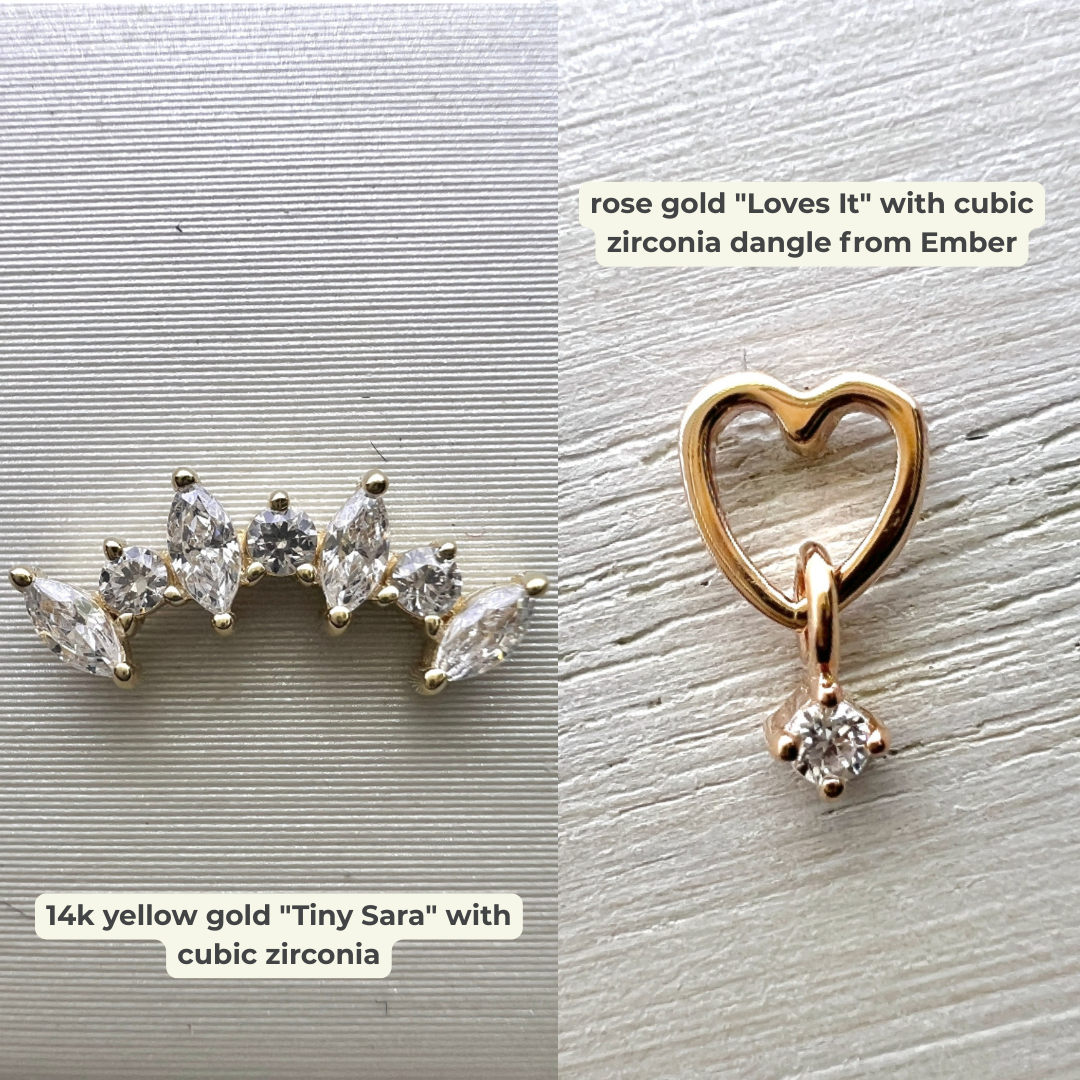
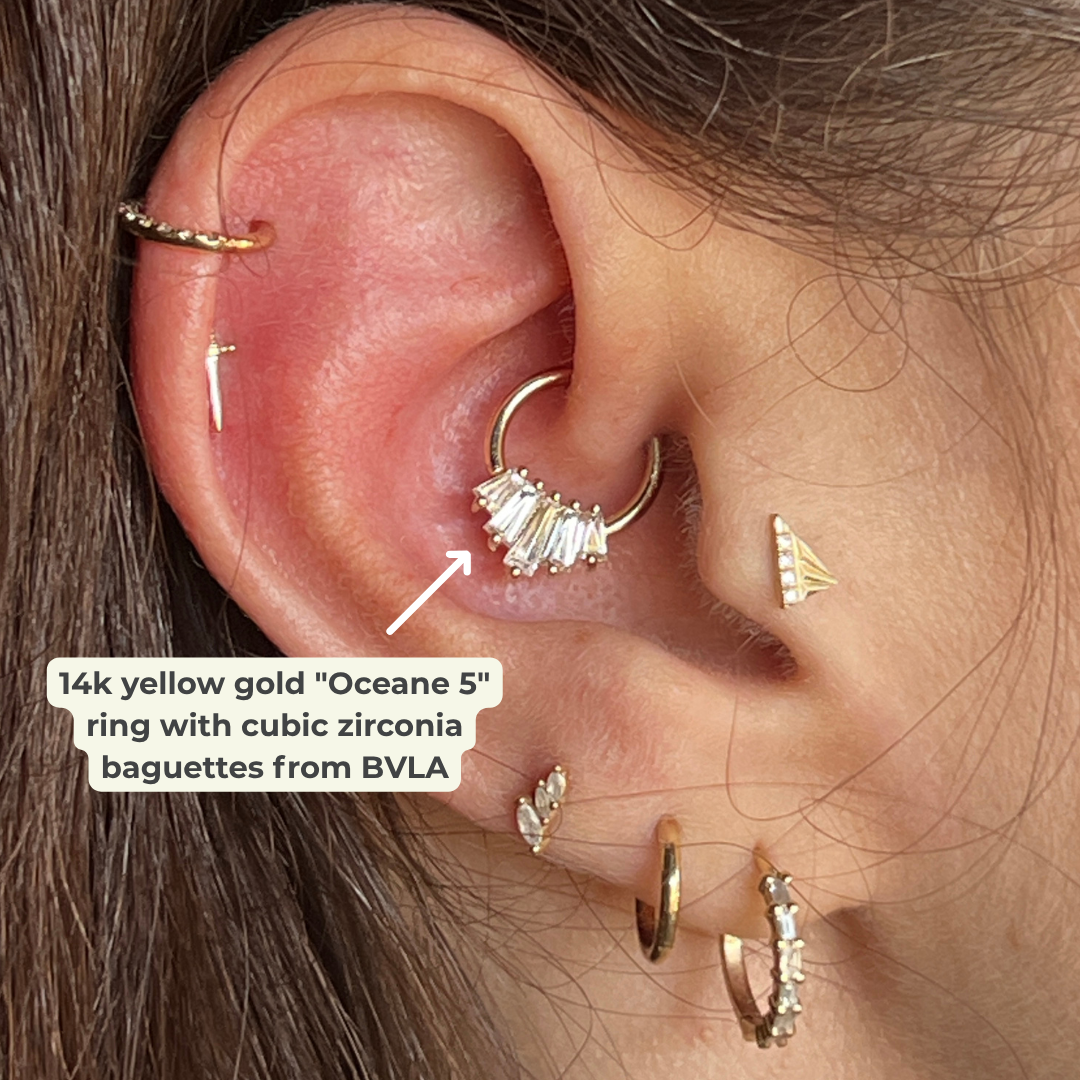
Cubic Zirconia is the most common diamond alternative in jewelry, and for good reason. It's made from zirconium dioxide, it's lab-created, and it's optically close enough to diamond that most people can't tell the difference without a loupe. It scores an 8–8.5 on the Mohs scale, which makes it solid for everyday wear in healed piercings. The main thing to know: CZ can cloud over time if it's not well-set or cared for, which is why the quality of the jewelry piece matters. In well-made body jewelry with a secure setting, it performs great.
Swarovski CZ
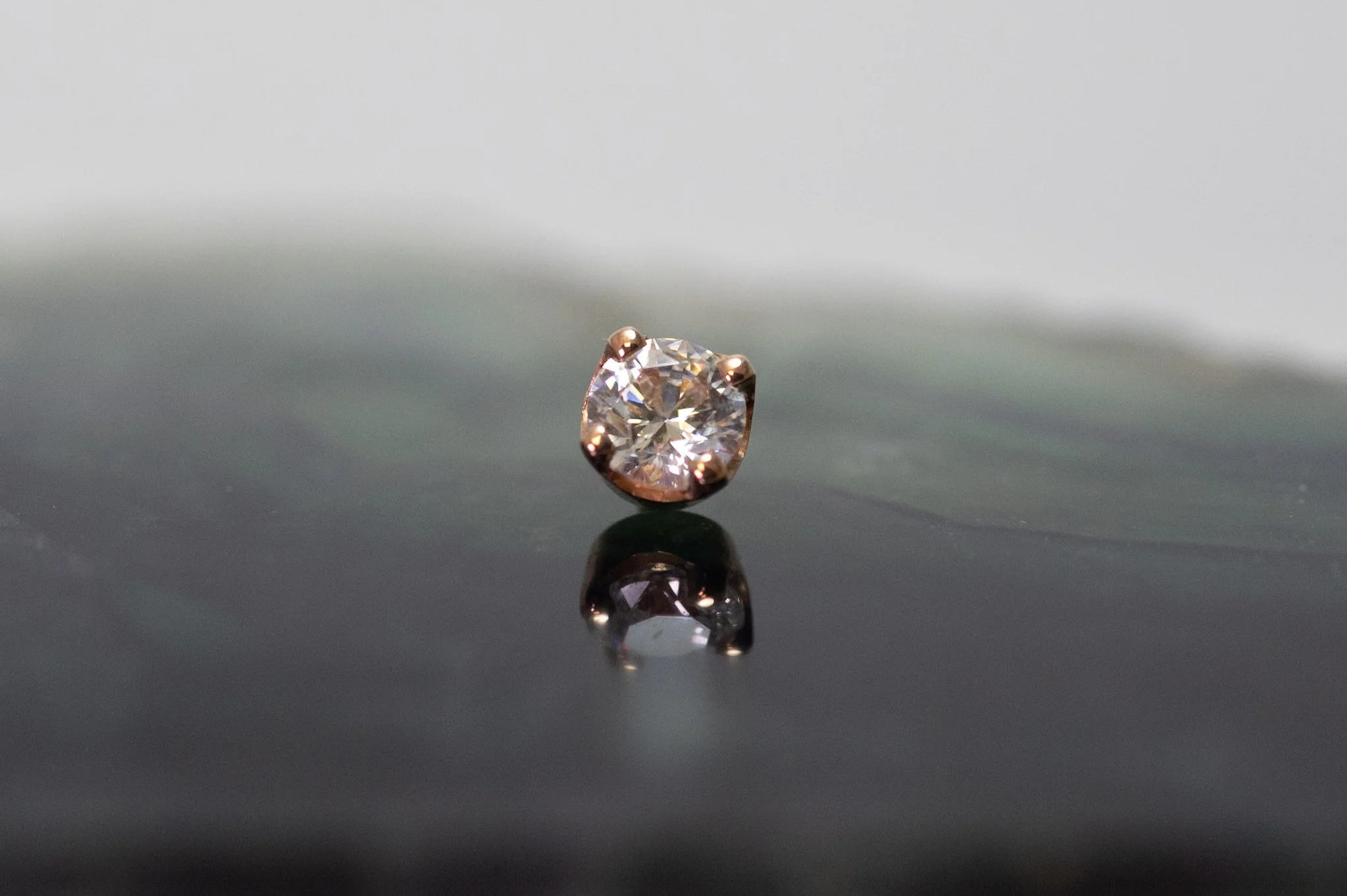
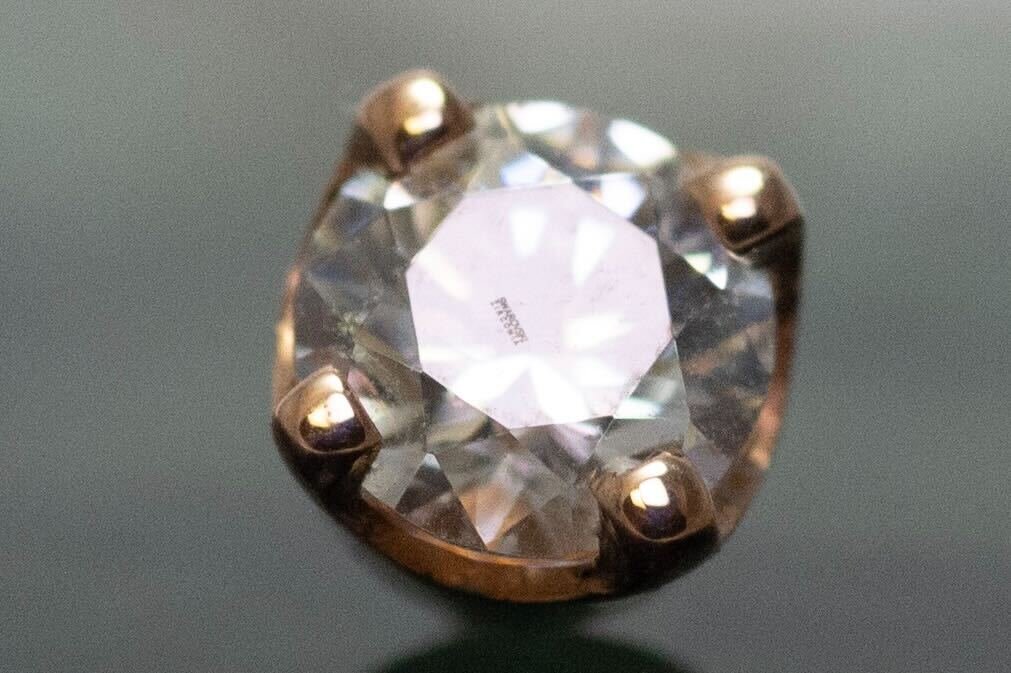
This is still cubic zirconia, but Swarovski's manufacturing process is held to a higher standard. The precision cutting and polishing is what sets it apart — the facets are more exact, the brilliance is more consistent, and the result is a stone that genuinely looks exceptional in person. If you love the look of CZ but want it done really well, Swarovski is the step up.
Fun fact: It’s hard to see especially without a jewelers loop or macro zoom lens but Swarovski CZ's are laser engraved for identification.
Moissanite
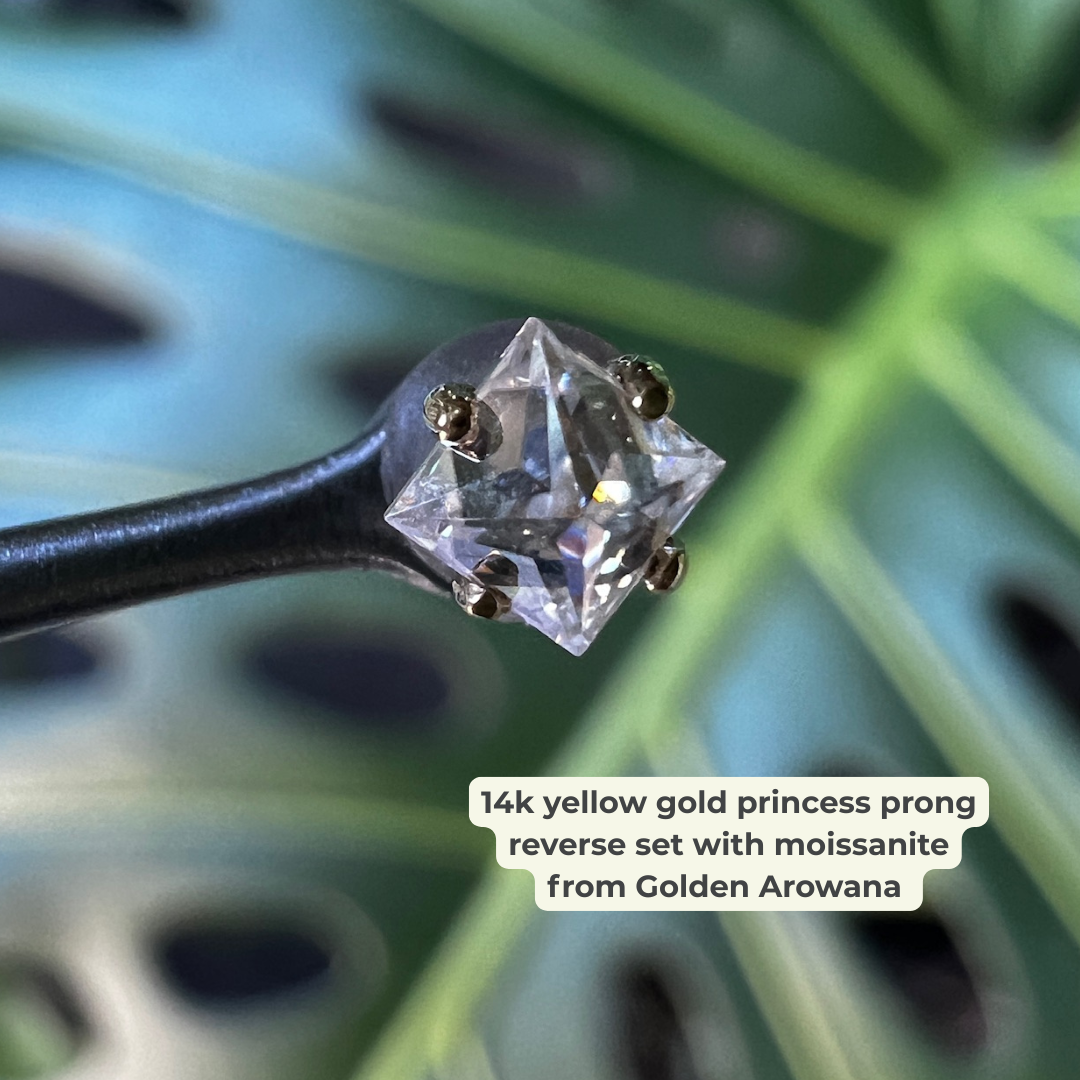
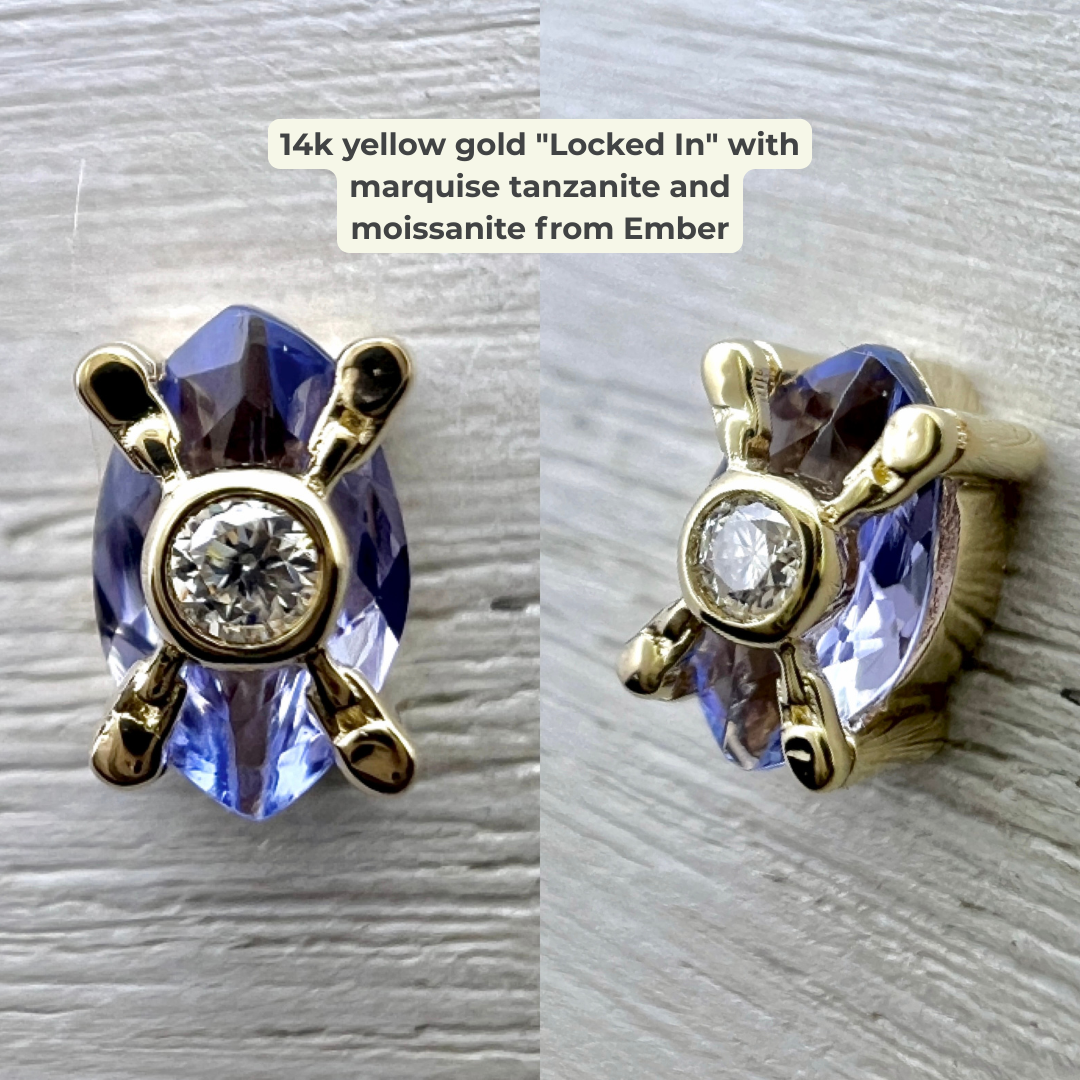
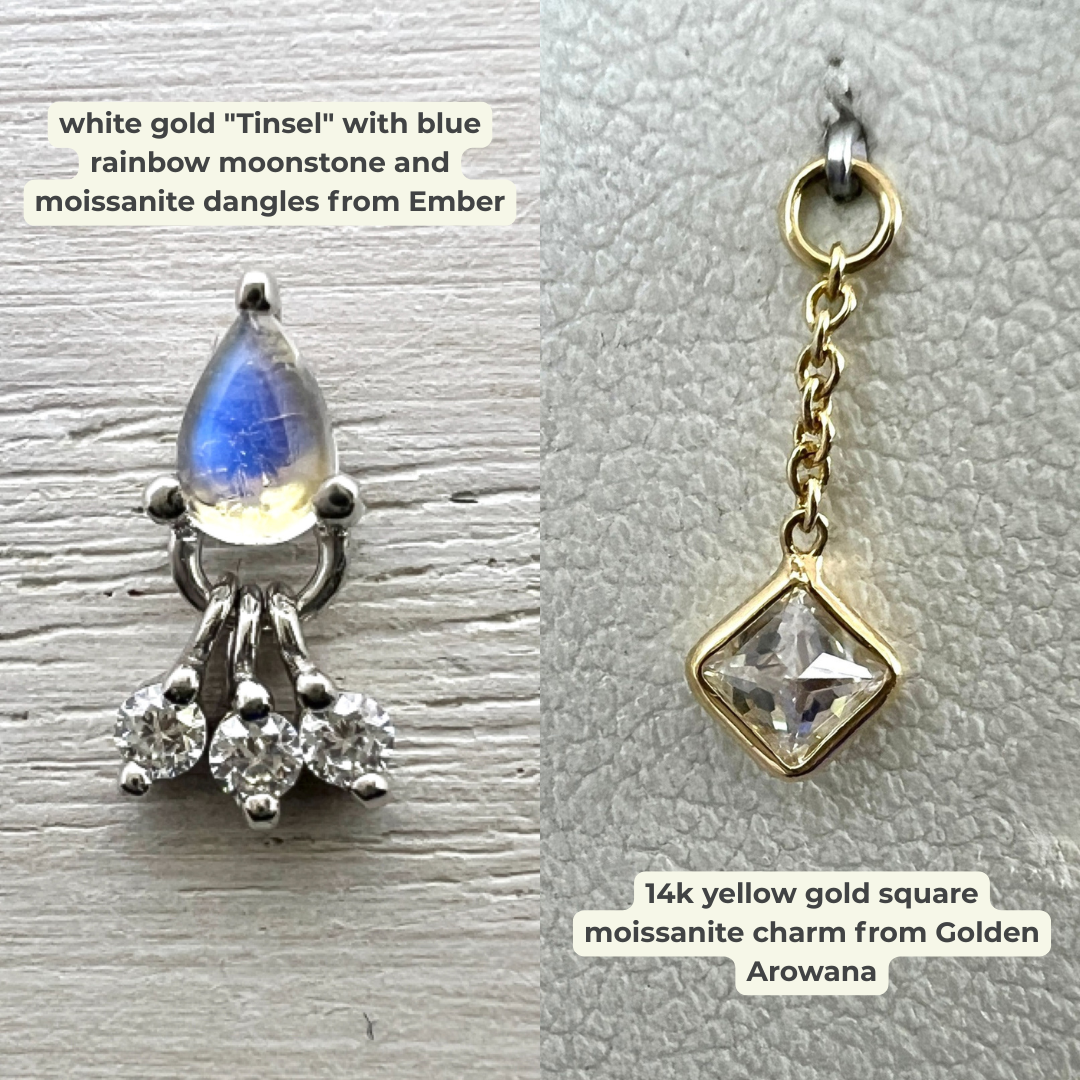
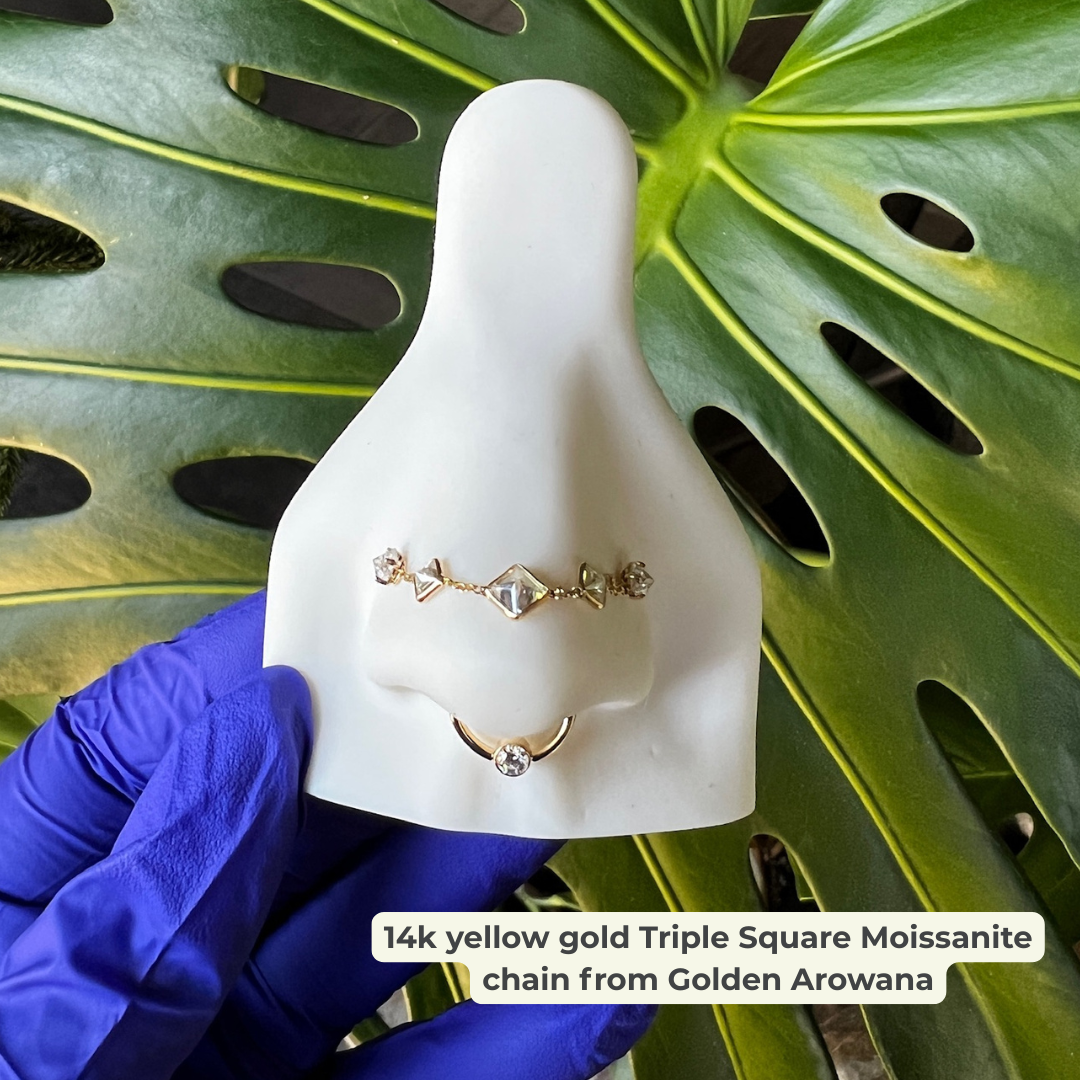
Moissanite is the overachiever of the diamond alternative world. Originally discovered in a meteor crater in the late 1800s (really — silicon carbide from outer space), it's now lab-grown and used widely in fine jewelry. It sits at 9.25 on the Mohs scale, making it the second hardest gemstone after diamond. And because of the way it refracts light, it actually has more fire — more rainbow-like color dispersion — than diamond. Some people love this. If you want a stone that absolutely catches light from across the room, moissanite delivers. It's also durable enough to be a genuinely long-term choice.
White Topaz
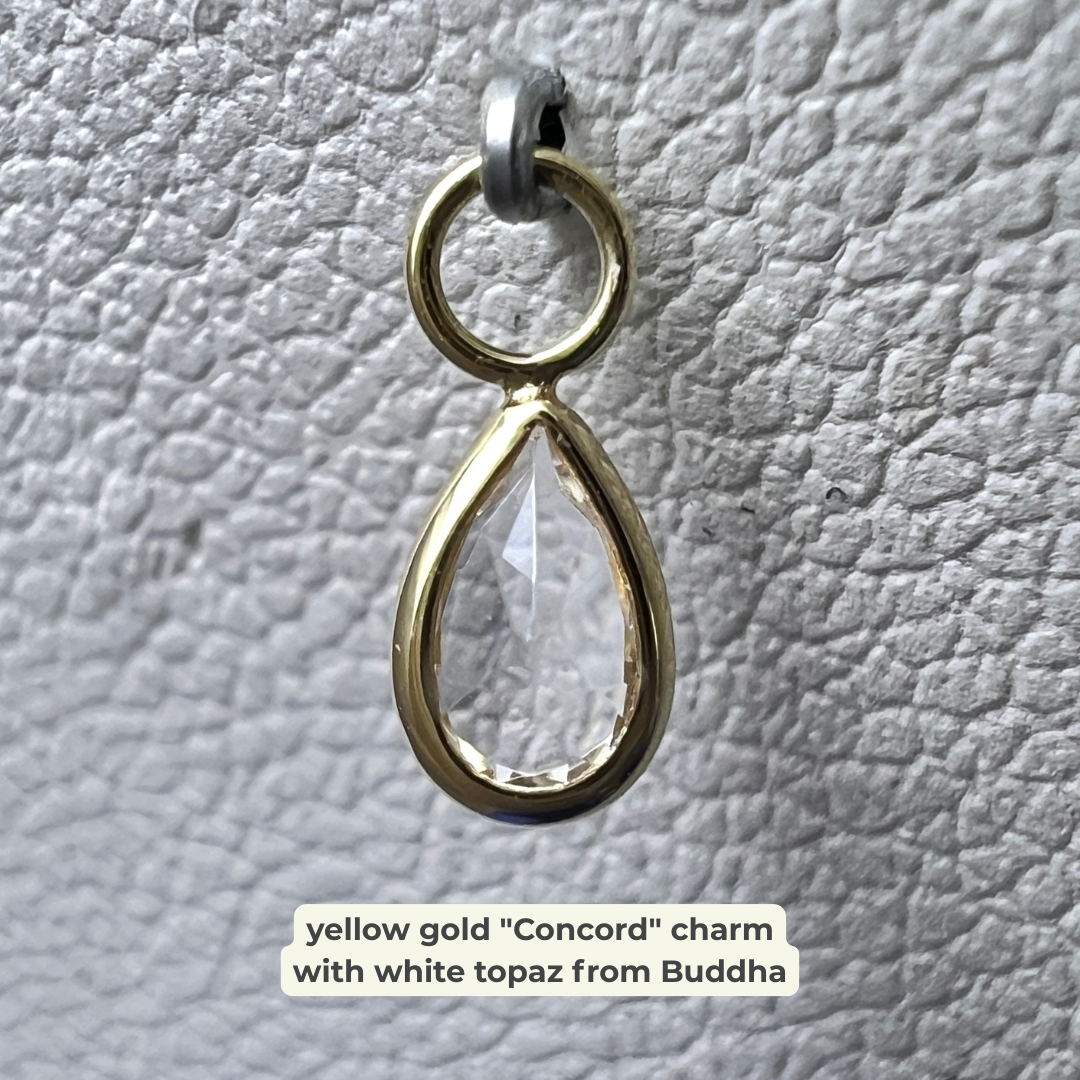
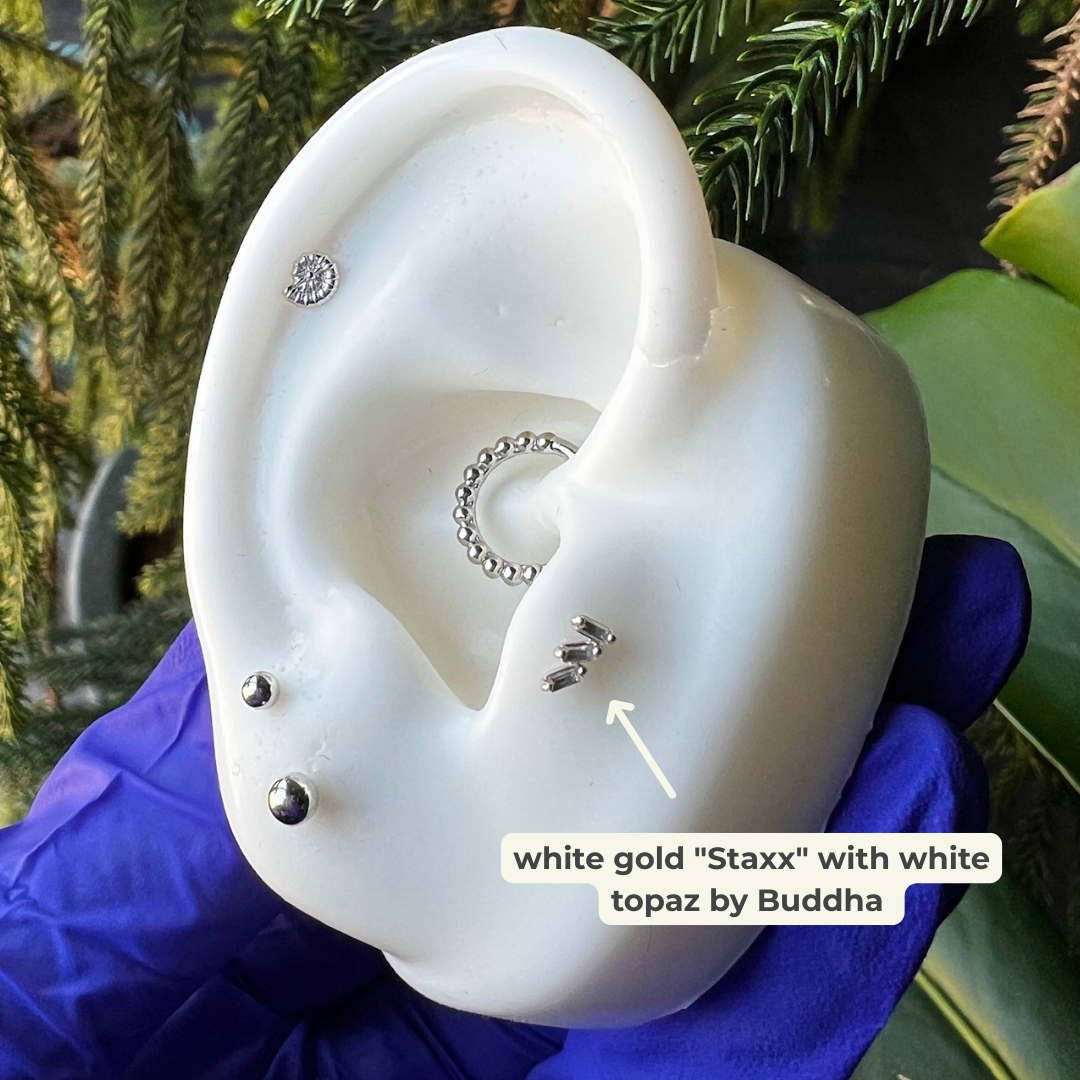
White topaz is a natural gemstone, and it's the softest of these alternatives at an 8 on the Mohs scale. It has a clean, subtle sparkle — less flashy than moissanite, more understated than CZ — which makes it appealing if you want the white-stone look without the intensity. It's also the most accessible from a price standpoint. For a healed piercing where you're not going to be doing a lot of rough activity near the jewelry, white topaz is a lovely option.
Which one is right for you?
It really depends on what you're prioritizing. If you want the real thing — the history, the durability, the prestige — diamond is diamond. If you want something that looks diamond-bright but won't require a second mortgage, Swarovski CZ or moissanite are both strong picks. If you want something natural at a lower price point, white topaz is worth considering. And if you just want a solid, sparkly, everyday option, standard CZ in well-made body jewelry does exactly what it's supposed to do.
What we'd always say: prioritize the quality of the piece, not just the stone. A beautifully made implant-grade piece with a good CZ will outperform a cheaply set diamond every time.
Thinking a white stone might be your next move?
If you're celebrating an April birthday or just drawn to that clean, bright sparkle, we'd love to help you find something that fits. Book your appointment here and let's see what speaks to you.